Strain Reshapes the Electron Map express
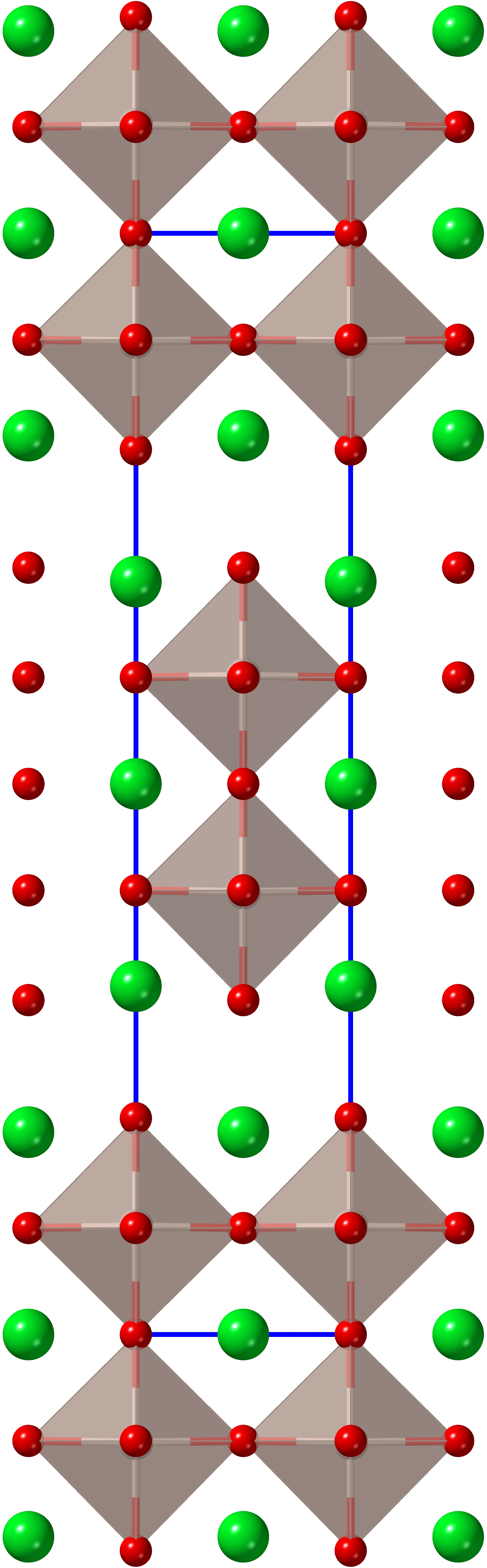
A thin film of ruthenium oxide Sr₃Ru₂O₇ grown on a foreign crystalline substrate behaves like a tightly stretched rubber sheet: the substrate either compresses it or stretches it. These deformations reshape the 'map' of electronic states — the so-called Fermi surface, which determines how the material conducts electricity and responds to magnetic fields.
The researchers grew films on two different substrates: one compressed the film, the other stretched it. Then, using ARPES (angle-resolved photoemission spectroscopy), they 'photographed' the energy distribution of electrons. In the compressed film, the Fermi surface acquired a symmetry characteristic of an orthorhombic structure, while in the stretched film, it showed tetragonal symmetry. It's as if the same rubber sheet displayed different patterns under different tensions.
Such sensitivity of the electronic structure to strain opens a path to controlling the properties of ruthenates — materials where electrons strongly interact with each other. By choosing the substrate, one can tune conductivity, magnetism, and possibly superconductivity. It's like tuning a musical instrument: without changing the material itself, but only by stretching it differently, you can achieve different 'sounds'.
Original abstract
as written by the authors arXiv:2602.07747
We report a combined study of the low-energy electronic band structure of epitaxial Sr$$_3$$Ru$$_2$$O$$_7$$ films using angle-resolved photoemission spectroscopy (ARPES) and density functional theory (DFT). To investigate the effects of substrate dependence on the band structure, Sr$$_3$$Ru$$_2$$O$$_7$$ thin films are epitaxially grown on SrTiO$$_3$$ (STO) and (LaAlO$$_{3}$$)$$_{0.3}$$(Sr$$_{2}$$TaAlO$$_{6}$$)$$_{0.7}$$ (LSAT) substrates using molecular beam epitaxy. The measured and calculated Fermi-surfaces clearly show substantial changes in the Fermi surface topologies that originate from the underlying strain states. The compressively strained film grown on LSAT exhibits Fermi-surface features consistent with an orthorhombic-like symmetry; and the tensile-strained film grown on STO features a tetragonal-like surface symmetry. In addition, the ARPES data for both films indicate weakly dispersive spectral features within $$\sim15~\text{meV}$$ below the Fermi level. These observations underscore the strong sensitivity of the electronic structure of Sr$$_3$$Ru$$_2$$O$$_7$$ to epitaxial strain and establish a foundation for future efforts to tune correlated phases in this bilayer ruthenate.
The Fermi surface is not a physical surface but an abstract boundary in momentum space that separates occupied electron states from empty ones. Its shape determines the trajectories along which electrons can move in a crystal.