Strain Reshapes the Electron Map express
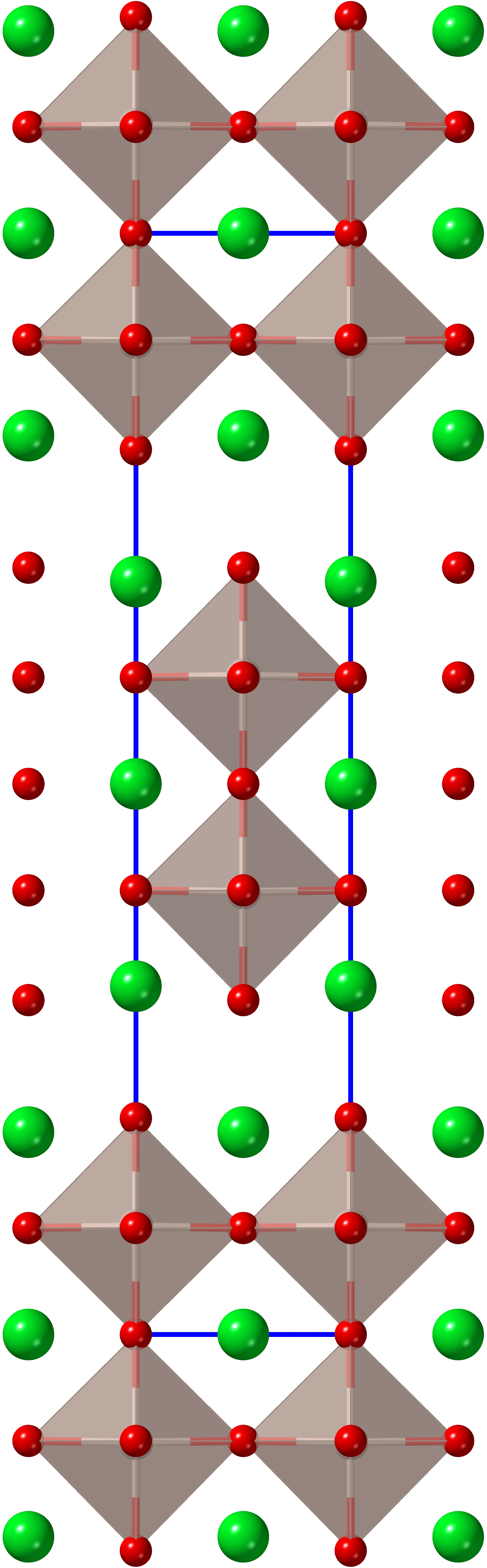
A thin film of ruthenium oxide Sr₃Ru₂O₇ grown on a foreign crystalline substrate behaves like a tightly stretched rubber sheet: the substrate either compresses it or stretches it. These deformations reshape the 'map' of electronic states — the so-called Fermi surface, which determines how the material conducts electricity and responds to magnetic fields.
The researchers grew films on two different substrates: one compressed the film, the other stretched it. Then, using ARPES (angle-resolved photoemission spectroscopy), they 'photographed' the energy distribution of electrons. In the compressed film, the Fermi surface acquired a symmetry characteristic of an orthorhombic structure, while in the stretched film, it showed tetragonal symmetry. It's as if the same rubber sheet displayed different patterns under different tensions.
Such sensitivity of the electronic structure to strain opens a path to controlling the properties of ruthenates — materials where electrons strongly interact with each other. By choosing the substrate, one can tune conductivity, magnetism, and possibly superconductivity. It's like tuning a musical instrument: without changing the material itself, but only by stretching it differently, you can achieve different 'sounds'.
The Fermi surface is not a physical surface but an abstract boundary in momentum space that separates occupied electron states from empty ones. Its shape determines the trajectories along which electrons can move in a crystal.