Glass That Remembers Touch express
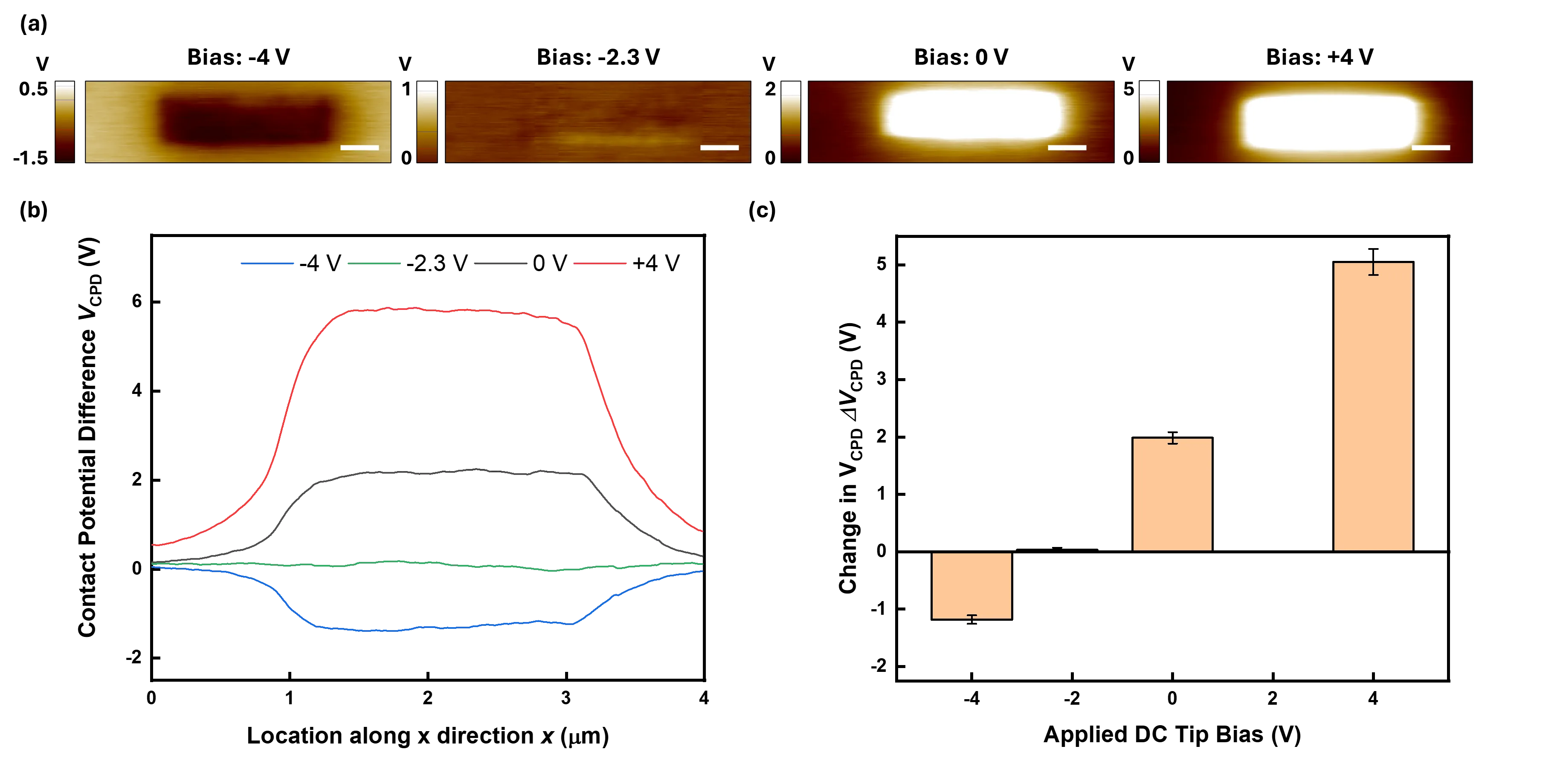
A flexible screen as thin as a human hair is glass you can bend. But this marvel has a quirk: touch it, and an invisible electric charge lingers on the surface. Like dust on polished furniture, it builds up and interferes with operation. Scientists took a piece of glass 30 micrometers thick, three times thinner than a sheet of paper, and tracked the fate of the charge.
They swept a tiny needle across the glass like a bow across a violin string, leaving an electric trail. Then they measured how that trail faded. Over four hours, the voltage dropped from 4.47 volts to 0.37 volts, like a battery slowly running down. But the charge didn't escape along the surface; it seeped through the glass's thickness, like water percolating into sand.
This behavior differs from typical thin films, where charge spreads across the surface. That means flexible screens need special protective measures. The scientists also found a way to control the charge: by applying voltage to the needle, they could strengthen, weaken, or even flip the electric trail. It's like a volume knob for static electricity.
Now engineers can predict how much charge a screen will accumulate and design coatings that shrug off touches. Flexible displays, wearable sensors, and smart windows will become more reliable. And glass that remembers every touch will stop being so temperamental.
Original abstract
as written by the authors arXiv:2602.08056
Contact electrification (CE) remains a critical challenge in advanced material technologies where uncontrolled surface charging can compromise manufacturability, reliability, and performance in practical applications. Ultrathin glass with micrometer-scale thickness is a state-of-the-art specialty oxide material for flexible touchscreens in next-generation electronic devices. Here, we visualize and quantify CE-induced surface charges on ultrathin glass using sideband-mode Kelvin probe force microscopy (KPFM). Nanoscale atomic force microscopy (AFM) probes are used to scan and induce triboelectric charges on stand-alone glass surfaces under ultra-pure N$$_2$$ conditions. Time-dependent measurements reveal that surface charges on a 30~$$\mu$$m-thick glass sample decay from 4.47~V to 0.37~V over 240~minutes. Furthermore, electrostatic charges are found to exhibit capacitor-like discharging behavior primarily through the bulk material, yielding a long relaxation time constant of approximately 41~minutes. This behavior differs from the lateral surface discharging observed in thermally grown SiO$$2$$ thin films reported previously. A self-capacitance analytical model is developed to estimate the corresponding surface charge density ($$\sigma$$), yielding comparable values of 136.26~$$\pm$$~16.25~$$\mu$$C/m$$^2$$ at 30~$$\mu$$m and 131.44~$$\pm$$~28.41~$$\mu$$C/m$$^2$$ at 100~$$\mu$$m. Additionally, external bias applied to AFM tips can be used to enhance, suppress, or invert the intrinsic CE response of glass materials.
Glass 30 micrometers thick can be wrapped around a pencil without breaking, and it holds a charge longer than ordinary window glass.