Lighthouse Stars in Distant Galaxies express
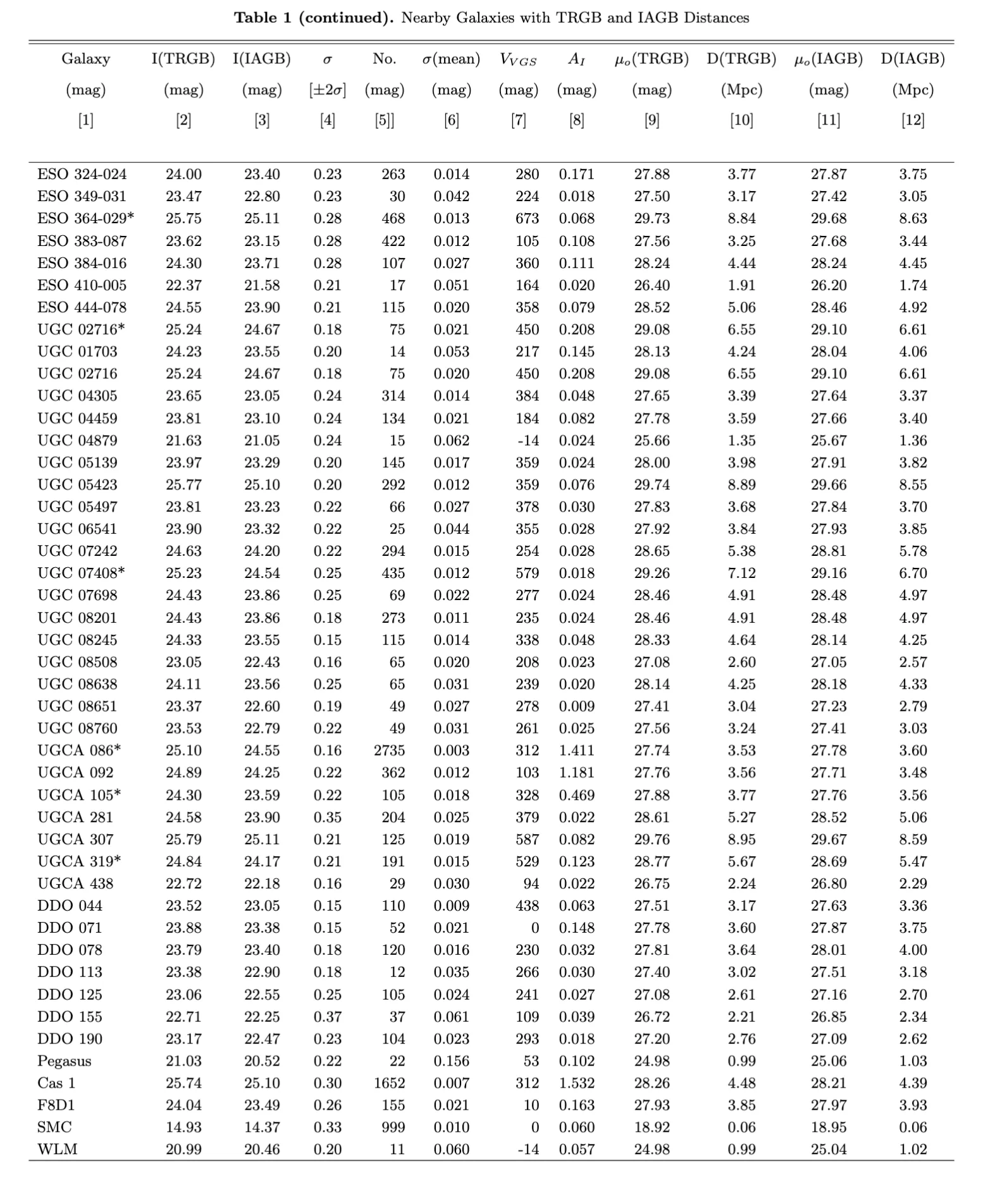
In distant galaxies, old stars swell and redden. Among them are two groups that act like lighthouses: some have just ignited helium burning, while others are already burning carbon and oxygen. Using the Hubble Space Telescope, astronomers looked into 92 galaxies and compared the brightness of these two types of stars.
It turns out that stars on the asymptotic giant branch are, on average, 0.589 magnitudes brighter than stars at the tip of the red-giant branch. It's like having a ruler with two marks, and the distance between them is always the same — in any galaxy, regardless of dust and distance. Now, by measuring the brightness of such a star, you can calculate how far away its galaxy is.
This opens the way to measuring distances to galaxies that were previously too faint for such methods. Already, archival Hubble data allow finding such lighthouse stars in galaxies up to 9 megaparsecs away — about 30 million light-years.
Stars on the asymptotic giant branch pulsate with periods of hundreds of days, and their brightness changes like a slowly blinking lightbulb.
In the novel 'Light of Distant Galaxies,' astronauts use such stars as natural navigation buoys to stay on course in intergalactic space.