Layers That Conduct Heat Differently express
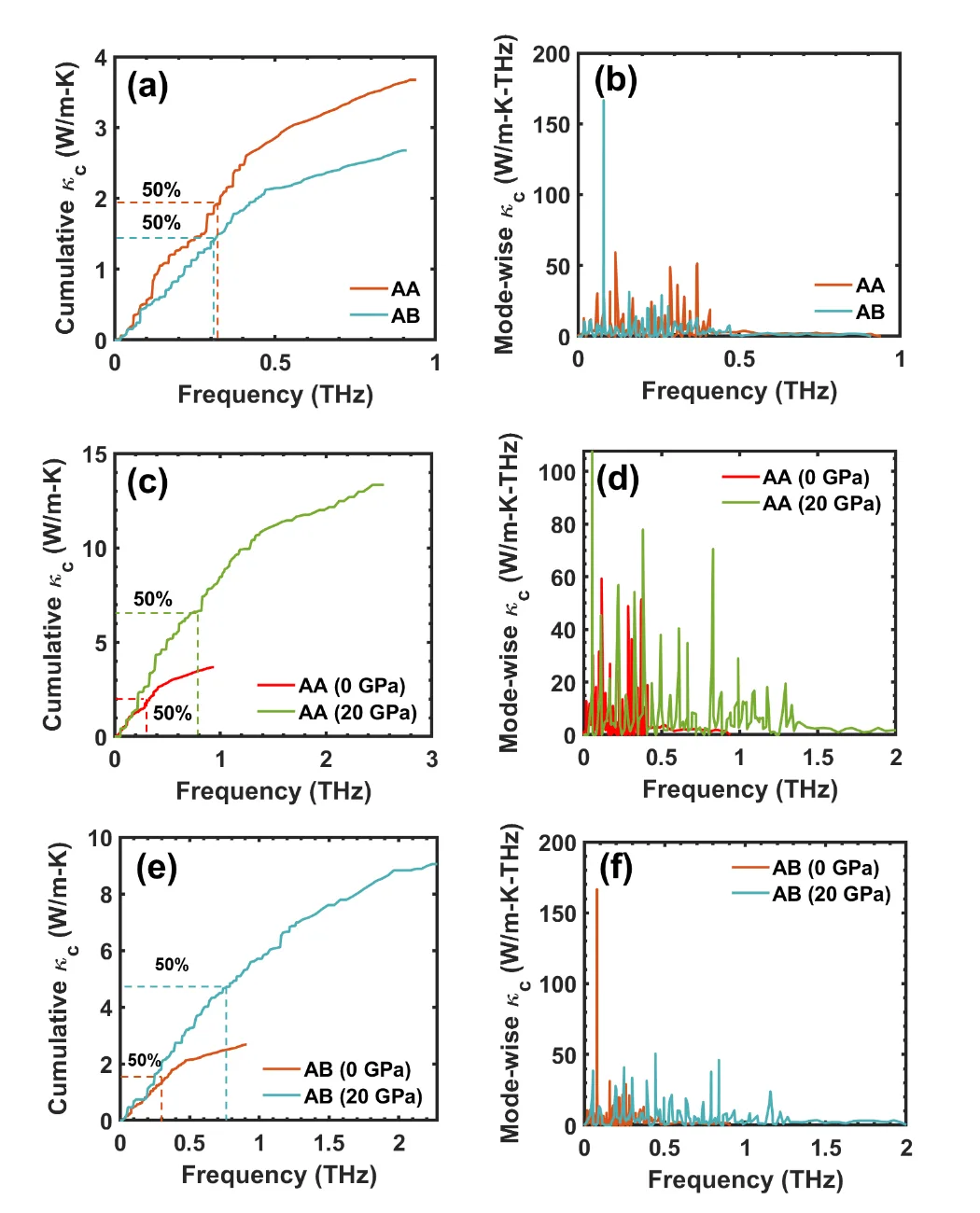
Heat dissipates poorly in thin layered materials, like a crowd in a narrow corridor. In ReS2 crystals, layers lie on top of each other, and heat can travel across them. Scientists measured how quickly this happens and found a surprise: when the layers are stacked directly one above the other, heat passes almost twice as fast as when they are shifted.
The stacking order acts as a filter: with aligned layers, atomic vibrations last longer and carry more heat. It's like soldiers marching in step — less jostling, faster progress. When layers are shifted, the formation breaks, and heat dissipates.
Now engineers can manage heat in thin electronics simply by changing the stacking order of layers. It's like choosing how wide to make the corridor for heat.
Original abstract
as written by the authors arXiv:2602.15002
Cross-plane heat transport is a critical bottleneck for van der Waals (vdW) electronics, yet its microscopic governing principles remain elusive. We demonstrate that stacking order is an effective control knob for cross-plane phonon transport in multilayer Rhenium Disulfide (ReS2). Thickness-dependent thermal conductivity measurements reveal remarkably long cross-plane phonon mean free paths (MFPs) (>= 200-300 nm) and provide a direct experimental observation of the transition from quasi-ballistic transport to a thickness-independent ballistic limit. AA stacking exhibits nearly double the cross-plane thermal conductivity of AB stacking, driven by longer acoustic phonon lifetimes from a more "coherent" interlayer registry. Integrated deep neural-network molecular dynamics reveals that phonon filtering in ReS2 is fundamentally frequency-selective: weak vdW coupling acts as a low-pass filter, whereas stronger coupling broadens the transmission passband. These results establish ReS2 as a model system where stacking order and interlayer coupling can be engineered to tune heat conduction across diffusive, quasi-ballistic, and ballistic regimes, offering a new framework for thermal management in 2D electronics.
In ReS2, heat travels across the layers almost as if down a straight corridor — phonons fly hundreds of nanometers without collisions.