The Glass That Breaks by a Single Law express
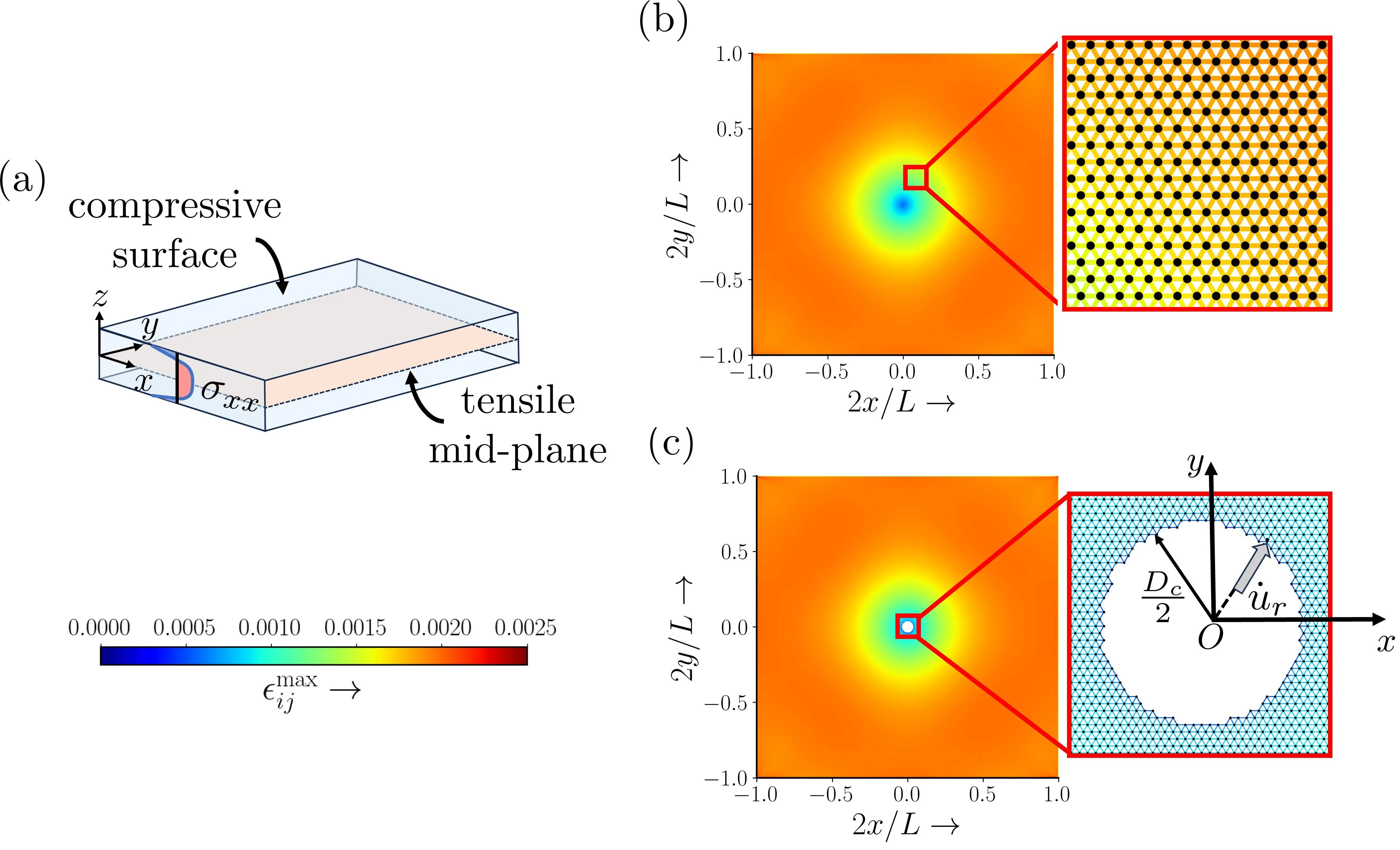
Glass is a material with attitude. It seems fragile, but powerful invisible forces can live inside it. In chemically strengthened glass, the surface is compressed like a stretched rubber band, while the interior is stretched. When a fast object hits such glass, that rubber band snaps in many places at once.
Scientists fired projectiles at glass and watched how it shattered. Then they built a computer model where the glass is represented as a network of springs, with internal stresses set as if 'frozen' deformation. The model faithfully reproduced the fracture pattern.
The big surprise: a weak impact produces large fragments, a strong one produces small ones, but if you plot 'how many fragments of each size,' all the curves collapse onto a single one. Just divide each fragment's area by the average area, and the same law holds for all impacts and all stress distributions.
At the microscale, something unusual emerged: ahead of the main crack, individual bonds snap, and for a brief moment the crack runs faster than sound in that glass. Then it stops, leaving 'tongues' and zones with tiny steps on the fracture surface: those very marks seen under a microscope.
So glass shattered in the lab tells us about how not just windows break, but also phone screens, car windshields, and protective panels.
The speed of sound in glass is about 5–6 kilometers per second. In the experiment, microcracks briefly outran it, even though that's impossible under normal conditions.