Scientist

Robert H. Dicke

1916–1997 · physics, astrophysics, cosmology
American physicist who made fundamental contributions to gravitational physics, astrophysics, and microwave technology. He developed the Dicke radiometer, which became a key instrument for the discovery of the cosmic microwave background. He independently predicted the existence of relic radiation and conducted experiments to test the equivalence principle.

Biography

Robert Henry Dicke was born in 1916. He graduated from Princeton University and worked there, heading the physics department. During World War II, he worked at the MIT Radiation Laboratory. He contributed to the creation of lasers (co-author of the maser patent). His group at Princeton was searching for the CMB when Penzias and Wilson from Bell Labs accidentally discovered it.

Key discoveries

💡 When Penzias and Wilson discovered the CMB, they initially did not know what it was. Dicke, upon learning of their observations, immediately realized that this was the very radiation his group had been preparing to search for.
"He considered that the universe was hot and that this must have observable consequences."
Concepts
big bangcosmic microwave backgroundmodified gravityradio astronomy
Laws
equivalence principle
Scientists
Arno PenziasCharles TownesRalph AlpherStephen HawkingEdwin HubbleFred HoyleGeorges LemaîtreWilhelm Wien

Related articles

HEP Phenomenology2025-11-041 minarXiv:2511.02363express
How Gravity Helps Us See the Invisible Electromagnetic Echo
Gravity works like an invisible photographer. When a piece of metal falls, inside it, according to Albert Einstein and the electromagnetism of James Clerk Maxwell, an electric field is born — that's how spacetime curvature…
Quantum Physics2025-11-211 minarXiv:2511.17022express
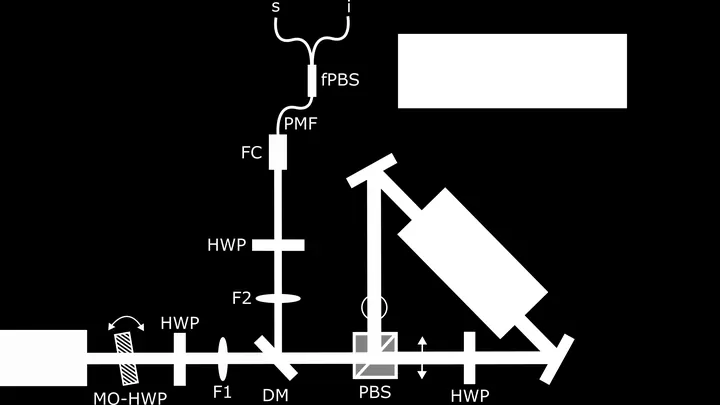
A Tabletop Light Maze Captures Gravity
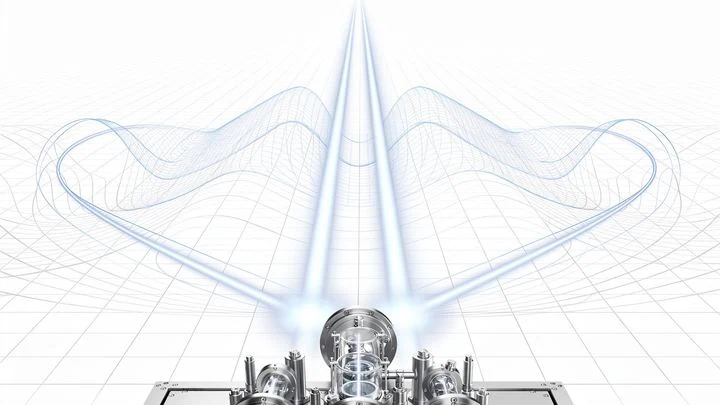
The theory of gravity by Einstein — general relativity — rarely intersects with quantum physics in direct experiments. Here, scientists built a 50-kilometer glass labyrinth on a table and sent single photons through it.
Quantum Physics2025-12-061 minarXiv:2512.06333express
Quantum Test of Falling Bodies
All bodies fall the same: this was first observed by Galileo. Einstein elevated the observation to the equivalence principle: gravity and acceleration are indistinguishable, giving birth to curved spacetime.
Turbulence doesn't always grow raindrops
In a cloud, billions of droplets swirl around, collide, and merge: that's how rain is born. But exactly how turbulence, those invisible air swirls, helps or hinders droplet growth has been unclear. In the lab, researchers recreated a slice of a cloud and tracked every droplet.
Statistical Mech2026-01-031 minarXiv:2601.01293express
How Soaring Pilots Outsmart the Wind
Paraglider, hang glider, and glider — three different wings, but in the sky they behave the same. Pilots catch invisible warm air currents, rise on them, then glide to the next. Such flight is like a game of hopscotch: a jump upward, then a glide forward, and again a search for a place to jump. Scientists analyzed thousands of real routes and found a common law.
Statistical Mech2026-01-111 minarXiv:2601.07096express
A Search Where the Team Changes on the Fly
A group of people searches for a lost item in a large park. Some get tired and leave, others join along the way. The number of searchers is constantly changing. How does this affect the search time? Until now, science had no clear answer. In a new study, a general model of such a process has been built. In it, independent participants randomly enter and leave the search.
q-bio.PE2026-01-201 minarXiv:2601.13947express
How the Weak Win: Fleeing a Neighbor Saves the Species
Two species of bacteria share a single Petri dish. Both eat the same food, and by all rules, one should outcompete the other. But in reality, they often live together for years. The secret lies in knowing when to leave. Bacteria don't stay put. When a stranger appears nearby, they start moving faster.
General Relativity2026-01-221 minarXiv:2601.16325express
Gravity and Charge: Physics' Blind Spot
Since the days of Galileo, it was believed that in a vacuum all bodies fall identically. Einstein elevated this to a principle: gravity travels at the speed of light and is the curvature of spacetime.
Fluid Dynamics2026-01-251 minarXiv:2601.17674express
Turbulence That Doesn't Get in the Way of Order
Bacteria in a drop of water jostle and swim: each on its own, but together they create patterns. With weak motion, the fluid churns like soup on a high flame: vortices collide, and the flow direction changes every second. This is called bacterial turbulence.
General Relativity2026-02-021 minarXiv:2602.02815express
How the Sun Tugs at Us: Testing the Universality of Free Fall
On a lab table sits an instrument that looks like a balance, but instead of pans it has two weights made of different metals — beryllium and aluminum. The balance is suspended from a thin fiber that twists if the weights are pulled differently. The whole apparatus turns to follow the Sun, like a sunflower tracking the light, but instead of light it catches the Sun's gravity.
Nuclear Experiment2026-02-111 minarXiv:2602.10645express
The Flow Is Not Uniform
When a proton slams into a lead nucleus at the Large Hadron Collider, a swarm of particles is born. They fly off in all directions, but not entirely randomly: their motion resembles ripples on water from a thrown stone.
Fidgety Molecules: How Internal Order Changes Behavior
A drop of ink in a glass of water spreads out on its own. But if the ink were made of tiny motors, they wouldn't just spread: they'd crawl, jostle, and cluster into swarms. Such self-propelled particles are called active. You can assemble them into molecules like beads on a bracelet. And here's the surprise: the order of beads on the bracelet changes everything.
q-bio.PE2026-02-212 minarXiv:2602.18942express
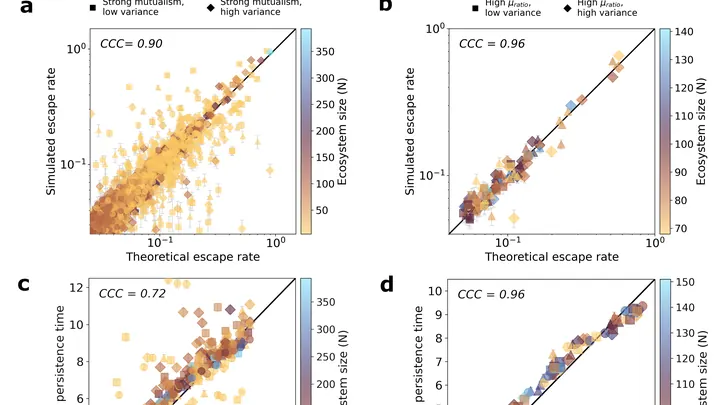
The Hidden Fragility of Ecosystems
An ecosystem is like a swing that someone is subtly pushing. Previously, it was thought that the main concern was that the swing wouldn't swing too wildly. But the authors of this work showed that the greater danger is when the equilibrium point itself slides toward a place where the swing can no longer return.
q-bio.QM2026-02-221 minarXiv:2602.19196express
The Hawk's Flight, Broken Down into Three Numbers
A hawk soars over a field, its wings tracing an intricate dance. Each flap, each tilt is not random but a combination of simple motions that can be broken down into components. Collective behavior in the air may seem intuitive, but behind it lies strict mechanics. Scientists recorded the hawks' movements using cameras that track the position of every point on the wing and tail.
Gravity That Pushes Away: Quantum Superposition Against Attraction
Gravity attracts. Anyone who has ever dropped a cup knows that. But in the quantum world, where a particle can be in several places at once, even this truth begins to crack. Physicists have proposed an experiment in which a source of gravity, smeared across two trajectories, forces a test mass to move away after a clever measurement.
q-bio.PE2026-03-021 minarXiv:2603.02403express
Why a species thrives where it doesn't belong
In two neighboring ponds, the same microorganisms swim. Food appears now in one, now in the other — randomly, with no rule. After a month, there are a hundred times more of them in the first pond than in the second. No one chose where to live. Just luck. This is how disequilibrium works. While the environment keeps changing, abundances don't have time to even out.
Disordered Systems2026-03-151 minarXiv:2603.14534express
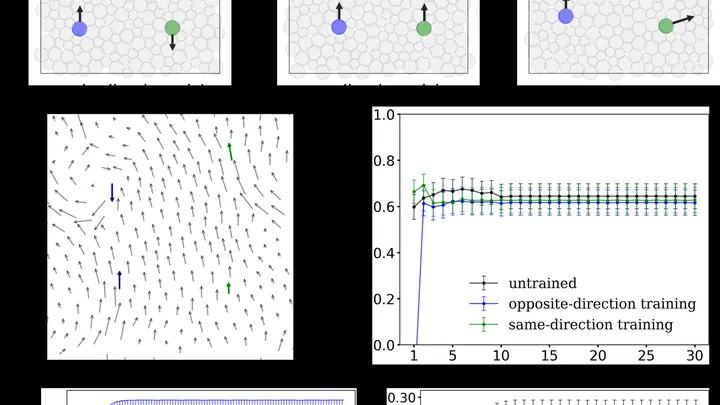
A Powder That Remembers Motion
A handful of sand on a table is just a pile. But if you shake the grains just right, the pile starts behaving like a memory: it remembers which motion follows which. In the new experiment, particles were moved cyclically, and after training, they reproduced the desired pattern even without a full command. The secret lies in the contacts between particles.
Statistical Mech2026-03-231 minarXiv:2603.22089express
A Network That Decides When to Stop
A Network That Decides When to Stop A crowd grows: each new person joins the group with a probability that depends on how large the group already is. If the group is small, joining is easy; if it is huge, people start to hesitate, and growth slows down. This mechanism, called feedback, changes the entire behavior of the network.
Atomic Physics2026-03-241 minarXiv:2603.22981express
All Atoms Fall Alike: A Cosmic Verdict
Galileo, legend has it, dropped balls from the Tower of Pisa to prove that heavy and light objects fall equally. This law formed the foundation of Einstein's theory of gravity. Today, scientists have turned an entire space station into such a tower.
Why Bacteria Swirl in a Shared Dance
When a crowd of bacteria (mostly composed of carbon) gathers in a droplet of water, a synchronized round dance begins: millions of tiny ones glide along giant ellipses, like dancers on a ballroom floor. Without a conductor, complex patterns emerge from simple movements.
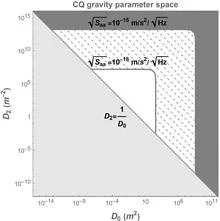
Noise as Evidence: How Much Interference Betrays Unquantized Gravity
In a dark room, an invisible clock is ticking. Its passage reveals itself only through a barely perceptible trembling of the hands. This is roughly how physicists are now trying to hear whether gravity is quantized: not through a direct conversation with carrier particles, but through the noise that any theory where the gravitational field remains classical must leave behind.
Weather Forecast: Sharp Focus
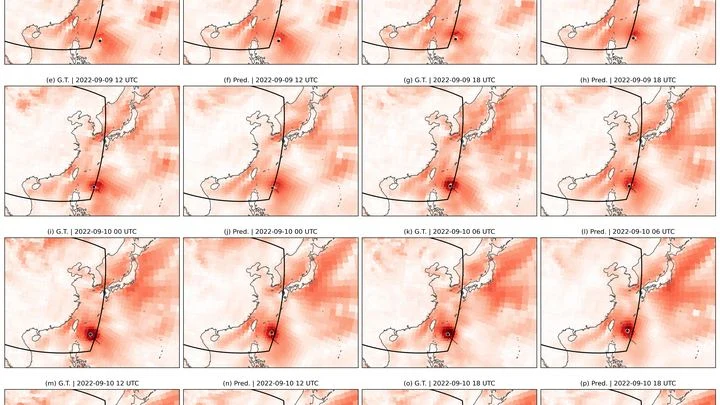
The atmosphere is a chaotic system, and a detailed global forecast requires monstrous computing power. StretchCast sidesteps this by working like the human eye: it creates 'sharp vision' over a selected region with an ultra-fine grid, while seeing the rest of the world blurry, but sharp enough to capture global connections.
q-bio.PE2026-04-111 minarXiv:2604.09966express
The Landscape Ratchet: How Fragmentation Boosts Biodiversity
A landscape cut by roads or rivers into isolated patches resembles a shared apartment after partitions are installed: residents no longer bump into each other in the common hallway. Species that once competed for the same food or space now live apart. Competition weakens, and those that would have lost to pushier neighbors in a continuous landscape now survive.
Living Crystals Spin on Their Own
A flock of birds or a school of fish sometimes swirls into a vortex, even though no individual commands 'spin.' Such collective rotation helps the group stay together and mix better. It is usually explained by the individuals being asymmetric, like a screw, or pushing each other with a twist. But a new study finds another route.
HEP Theory2026-04-241 minarXiv:2604.22418express
Gravitational Waves Without Distortion
In 2015, the LIGO detectors caught the first burst of gravitational waves — astronomers heard two black holes colliding far out in space. That ripple in spacetime reached us with its signal shape intact: like the sound of a bell traveling billions of years without distortion.
Physics and Society2026-04-252 minarXiv:2604.23337express
How a Nest Infects the Flock
Every group has its unspoken trios: three friends who are always together. And there are pairs that exist on their own. It turns out that how much trios "contain" pairs determines how everything, from a virus to a new idea, spreads through the group. Scientists introduced a measure they call the nesting coefficient.
q-bio.TO2026-04-292 minarXiv:2604.26928express
How Cells Stick Together or Scatter
A crowd in a city square behaves differently depending on whether people hold hands. If each person only lightly touches a neighbor's elbow, people easily spread out in all directions — the crowd expands as a smooth carpet. But if they interlock fingers, movement slows down and the crowd breaks into clumps: dense clusters form here and there, with empty corridors between them.
Quantum Physics2026-05-012 minarXiv:2605.00967express
Gravity Entangles Without Free Fall
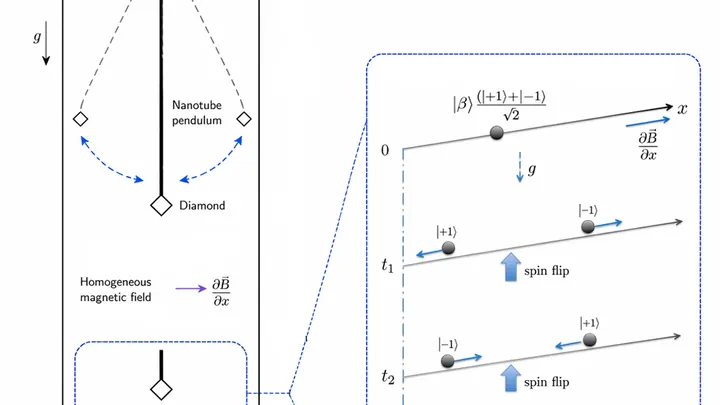
Two balls suspended on threads swing side by side. Each moves on its own, but between them is an invisible thread — the attraction of masses. If gravity is quantum, it could bind them into a single whole: nudge one, and the other responds, even without contact.
Statistical Mech2026-05-021 minarXiv:2605.01421express
Repulsion That Pretends to Be Attraction
A handful of rice thrown into a glass of water scatters — the grains spread apart. Now imagine each grain propels itself forward with stubborn persistence and bounces off softly upon collision. Such particles are called active: they spend their own energy to move, like bacteria or microscopic robots.
General Relativity2026-05-082 minarXiv:2605.07216express
Laser Clocks in Orbit Put Einstein to the Test
A stone falls into a well, and the splash reaches your ears with a delay. Something similar happens to light as it leaves Earth: its oscillations become less frequent, the beam seems to 'tire.' This is gravitational redshift — a phenomenon Einstein spoke of a century ago.
General Relativity2026-05-081 minarXiv:2605.07879express
Gravitational Memory: A Key to Testing Gravity
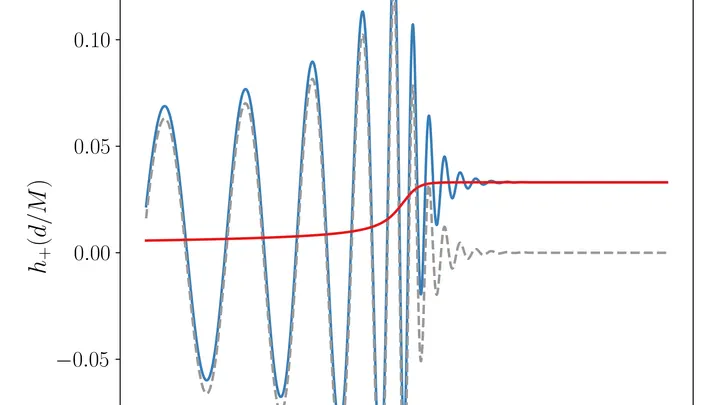
A black hole collision isn't just a burst of gravitational waves; it also leaves a lasting trace: an eternal curvature of spacetime — gravitational memory. Like a boat on water leaves a lingering wake, the cosmos 'remembers' the catastrophe.
Quantum Tremor of Parallel Worlds: Gravity on a Laboratory Table
Two parallel streams of atoms, released from Bose condensates, begin their journey in free fall. In the classical picture, their separation remains unchanged — like two skiers gliding down a perfectly smooth slope. But if spacetime is not frozen snow, but a living, rippling membrane, then every tremble of it is transmitted to matter.
Cosmic Spinning Top: Gravity vs. Quantum Superpositions
Quantum objects live in a world of superpositions — being here and there at the same time, with one spin and another. But as soon as they gain enough mass, this magic fades. Roger Penrose suggested that gravity itself is to blame.
The Silent String of Gravity: Hunting for κ
The weak equivalence principle, silently tested since the time of Galileo and laid at the foundation of general relativity, states: all bodies fall equally, regardless of their internal composition.
Statistical Mech2026-05-162 minarXiv:2605.16987express
How Connectivity Percolates Through Dimensions
A handful of matches falls on the table. Each lies however it lands, but in our minds we turn each into an arrow — from one end to the other. Now ask: can you get from one point to another by moving only in the direction of the arrows? A group of points where you can reach any one from any other is called a strongly connected cluster.
Statistical Mech2026-05-161 minarXiv:2605.17004express
A Network Where Connections Befriend in Trios
At a party, guests don't just chat in pairs; they gather in circles of shared interests: three discussing movies, four debating sports. The usual acquaintance map, like a phone's contact list, can't capture that: it only sees one-on-one links.
Quantum Physics2026-05-251 minarXiv:2605.26240express
Gravity creates a quantum dance of two mirrors
Two tiny mirrors in a vacuum are like figure skaters in a pairs routine. Their oscillations are synchronized by an invisible gravitational thread. When cooled to millionths of a degree above zero, this thread turns them into a single quantum link — the motion of one instantly echoes in the other.
Gravity as an imitation game
Two pendulums hang in a vacuum chamber, and one of them sends the other an invisible signal. That is the gist of a new test: make gravity play the role of a quantum teleporter and see whether it handles the job better than classical physics allows. The idea is simple.
HEP Theory2026-06-162 minarXiv:2606.18343express
Graviton Without Extra Surprises
The quantum world and gravity have long struggled to get along. Einstein's general relativity beautifully describes the gravity of planets and stars, but at atomic scales its equations break down — infinities appear. One approach to solving this problem is called Asymptotic Safety.
HEP Theory2026-06-191 minarXiv:2606.21522express
Quantum Gravity Finds a Foothold in Symmetry
When a grain of sand falls on a table, its impact is predictable. But if you squeezed it down to the size of an atomic nucleus, the familiar laws of gravity would break down — the force of gravity would grow without bound.