Light as Translator: Getting Slow and Fast Quantum Pendulums to Talk
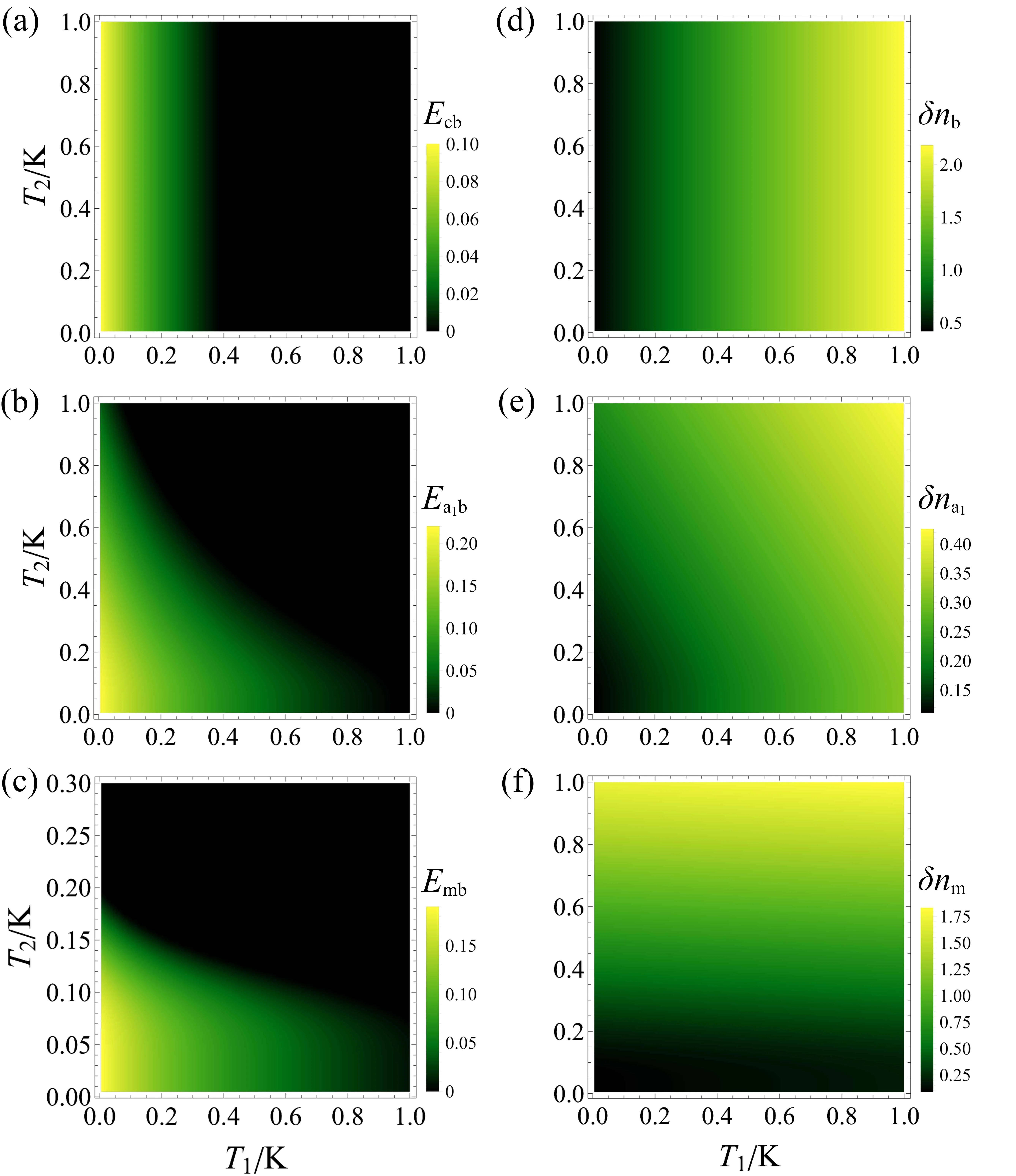
A translator who gets distracted by every rustle in the room turns a one-hour meeting into two. The same goes for two quantum pendulums: they just can't 'agree.' One trembles slowly (a million times per second), the other quickly (a billion times). But put a translator between them who understands both tempos, and communication is restored.
That translator is light. In the first approach, a laser cools the slow pendulum while coupling it to a particle of light. This pair travels down a glass fiber to the fast pendulum, where another laser transfers the coupling to it. In the second approach, it's the other way around: the fast pendulum couples to a light pulse that travels to the slow one.
Until now, no one knew how to entangle pendulums with such different tempos. Now it can be done even across tens of kilometers. The first step is to test it in the lab. If it works, quantum networks will become more flexible: slow nodes will remember, fast ones will compute.
The meeting that once seemed hopeless can now proceed without losing meaning: the translator has been found.
The mechanical resonators used in such experiments can be the size of a human hair, yet behave as quantum objects. Their vibrations are cooled to the ground state, where thermal motion almost completely disappears.
The idea of a quantum network uniting mechanical oscillators resembles the ansible from Ursula K. Le Guin's novels: a device for instantaneous communication based on entanglement. In reality, though, information transfer is still limited by the speed of light.