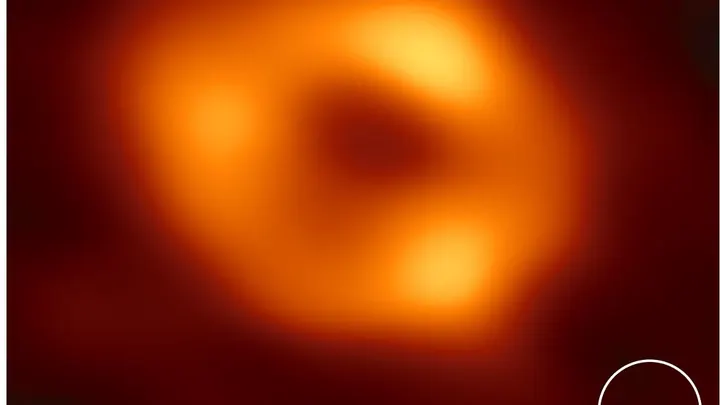
Very Long Baseline Interferometry (VLBI) is a technique that links multiple radio telescopes spread across the globe into a single, virtual observatory with an effective diameter equal to the maximum distance between them. By synchronizing the signals received at each antenna and combining them, astronomers can achieve angular resolution far exceeding that of any single dish. This method has been instrumental in imaging the shadow of the black hole at the center of galaxy M87, mapping the structure of distant quasars, and tracking spacecraft in deep space.
History
The technique was developed in the 1960s, with the first successful transcontinental interferometry experiments conducted by Canadian and American groups in 1967. The method was later refined by the U.S. National Radio AstronomyObservatory and others, leading to the establishment of the Very Long Baseline Array in 1993.
How it works
Each telescope records the radio signal from a target source with an extremely precise atomic clock. The recorded data are later correlated in a supercomputer, which aligns the signals by accounting for the exact arrival time differences at each antenna. This process effectively synthesizes a single aperture as large as the Earth, allowing the reconstruction of images with milliarcsecond or even microarcsecond resolution.
In practice
VLBI is used in astrometry to measure the positions of celestial objects with extreme precision, in geodesy to track Earth's rotation and tectonic plate motion, and in deep-space navigation to determine spacecraft trajectories.
Fun fact
The Event Horizon Telescope, which produced the first image of a black hole in 2019, used VLBI with a virtual dish the size of the Earth, achieving a resolution equivalent to reading a newspaper from a distance of 5,000 kilometers.
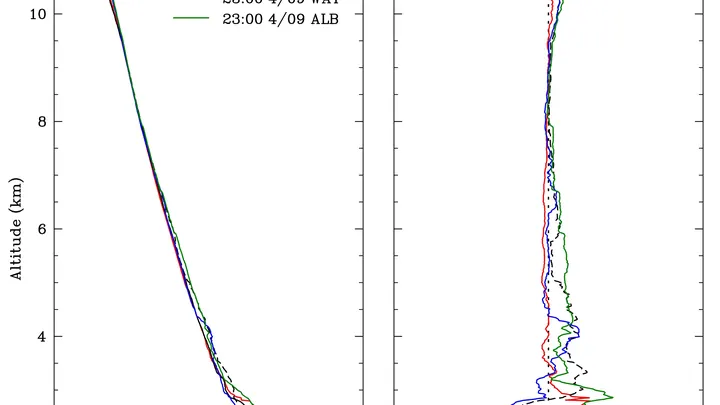
Every second, thousands of passenger aircraft in the sky transmit radio signals: that's how air traffic controllers track where each flight is. These signals don't travel in a straight line: air of varying humidity bends them like a lens. If you can measure that bending, you can work out where the air is drier and where it's more humid.
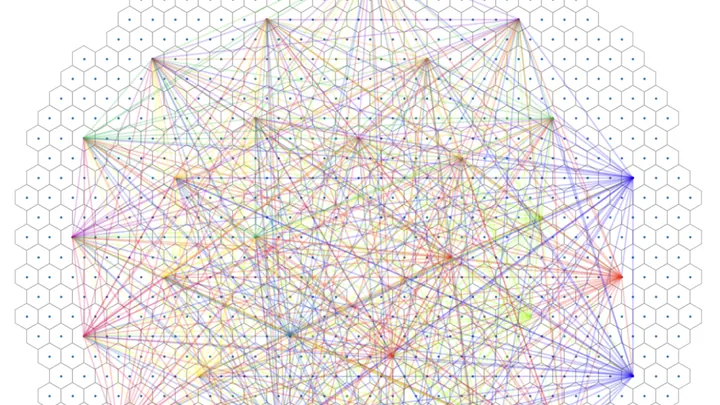
A network of radio telescopes scattered across the planet catches the whisper of a distant black hole. Each antenna records a signal, but how do you combine these recordings if the clocks at the stations tick at different rates and the atmosphere distorts incoming waves?
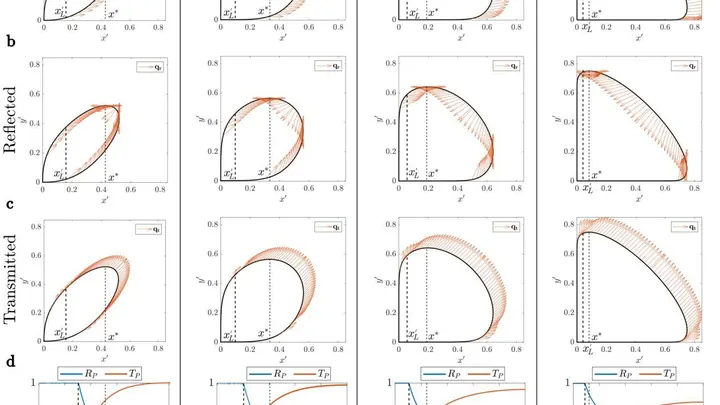
Throw a stone into water: right at the point of impact, the waves are chaotic — that's the near field. Farther out, they spread in smooth circles — the far field. This same principle governs antennas for terahertz communications — the future of super-fast internet.
A city signal bounces between walls like a ball, and your phone catches dozens of its 'reflections'—echoes. Each microsecond of delay adds 300 meters to the path.
The signal's speed is constant, like that of light (speed of light).
Astronomers build maps of galaxies and listen to the radio whisper of neutral hydrogen. The signal is so faint that even a working TV would drown it out, but sensitive antennas pick it up from the depths of the Universe.
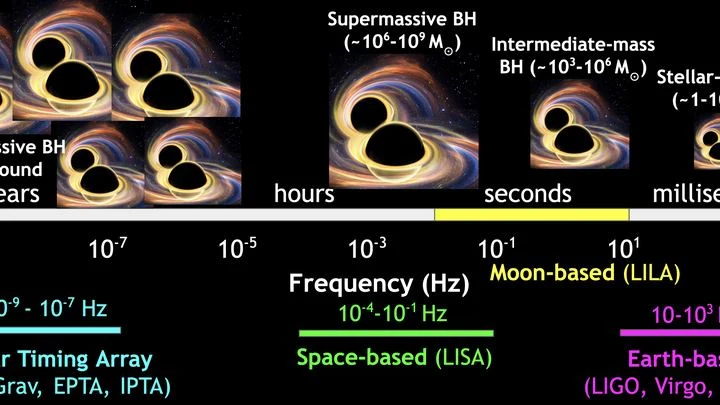
Black holes come in lightweights, born from dying stars, and supermassive ones at galactic cores. The missing intermediate link had been hiding. Fast radio bursts, cosmic signals lasting milliseconds but carrying the energy of days of sunlight, helped crack the case. Think of these bursts as cries from the depths of the universe.
For decades, the search for extraterrestrial intelligence has waited for quiet, coherent signals from space — a kind of 'whistle' in the radio silence. However, our own technosphere has created a continuous radio background — the hum of a vast metropolis, emitted by all communications, radars, and broadcasting stations.
Gravitational waves are ripples in the fabric of space, like circles on water from a thrown stone. On Earth, they are drowned out by traffic, tides, and earthquakes, like a storm beating on a lake, making it impossible to notice faint splashes. The LILA project moves the detector to the Moon, where windless silence reigns.
Einstein's theory of gravity explains how mass warps space and time. Its predictions have been tested near Earth, but the most grueling tests lie around black holes, where distortions reach their breaking point. Until now, astronomers saw them as blurry smudges on an underexposed photo.
A pair of figure skaters spins while holding hands. If their path is a perfect circle, each push from a partner is predictable. But stretch that path into an oval, and the effort becomes uneven: a jerk as they come together, a lull as they pull apart. Something similar happens with two black holes in the final minutes before they merge.
A huge pond, with ripples spreading from two heavy stones circling each other. The stones draw closer, the ripples become more frequent and stronger, and soon the stones will collide. Gravitational waves are like those ripples, but not on water — in the very fabric of spacetime.
An orchestra where musicians play in different cities, and the conductor hears them with a fraction-of-a-second delay. That's roughly how radio telescope networks like the Very Long Baseline Array work — a dozen antennas from Hawaii to the Virgin Islands catch the whispers of distant galaxies.
A river flows in one direction, but a wave on its surface travels in the opposite direction. The same splitting happens in hyperbolic materials: the energy of a light wave and its fronts diverge, preventing a sharp lens from being created.
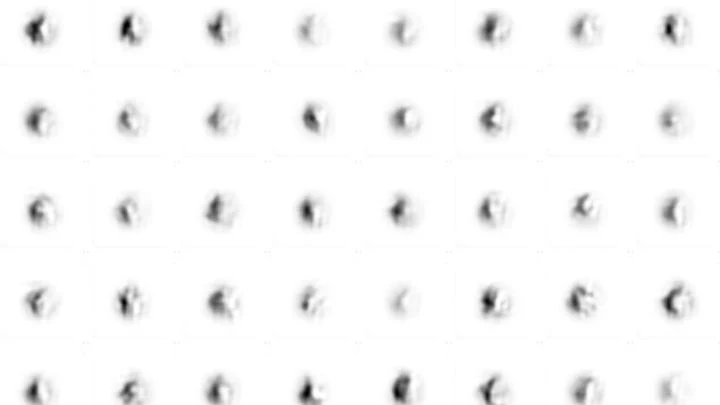
Light from a star travels for millions of years, yet in a telescope it still appears as a point: it's just too far away. To see a star's surface, you need an instrument the size of a city. In Chile, such a giant is already under construction: ELT with a 39-meter mirror made of 798 hexagonal segments.
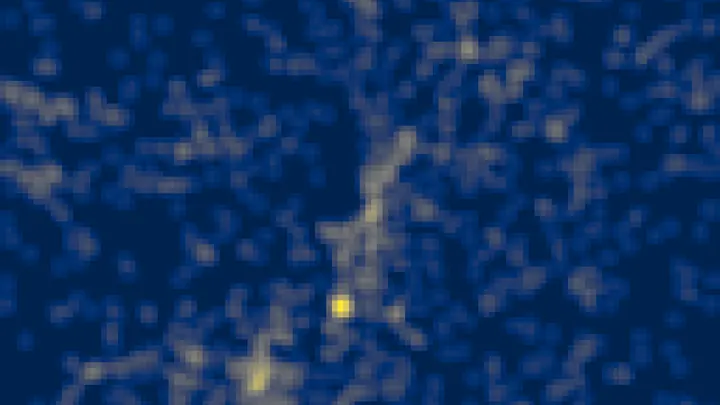
The distant galaxy TXS 2005+403, located in the constellation Cygnus, behaves like a lighthouse whose beam shines through fog. Light from its active nucleus, a region where a supermassive black hole heats infalling matter, crosses clouds of charged gas in our Galaxy on its way to us.
Light from a streetlamp passing through blinds flickers: the stripes shift, and brightness rises and falls. From that rhythm, you can guess how wide the lamp is. The new method for measuring stars works similarly: instead of capturing a sharp image, astronomers monitor the "twinkling" of light collected by two or more telescopes simultaneously.
Cells breathe. They need oxygen, and they take it from the blood flowing through the tiniest vessels. If blood flow is weak or oxygen is scarce, cells start to suffocate. Doctors need to see this as early as possible. But how do you look inside living tissue without cutting it open?
The new device does it in two ways at once.
Radio telescopes scattered across the globe pick up waves from distant black holes. But two telescopes placed almost side by side see only a blurry blob — fine details are beyond them. Usually, such pairs are considered useless and discarded. But that's a mistake: even a blurry blob holds clues.
Two black holes circle each other, and their dance isn't always a smooth waltz. If the holes spin on their own axes, their orbit can start to tumble, like a top that's been pushed and wobbles on its side while still spinning.
The farther apart the antennas, the finer the details they pick up. By merging signals, astronomers effectively turn multiple dishes into a single telescope as big as the distance between them. Add a lunar antenna to the Earth-based array, and you get a virtual eye 384 000 km wide.
The black hole in the binary system V4641 Sagittarii behaves like a giant blender. It sucks in matter from its companion star and flings it back into space in two narrow jets. These jets slam into the surrounding gas like a water jet hitting sand, gradually carving out a huge cavity around the hole.