Gamma Rays Without Protons express
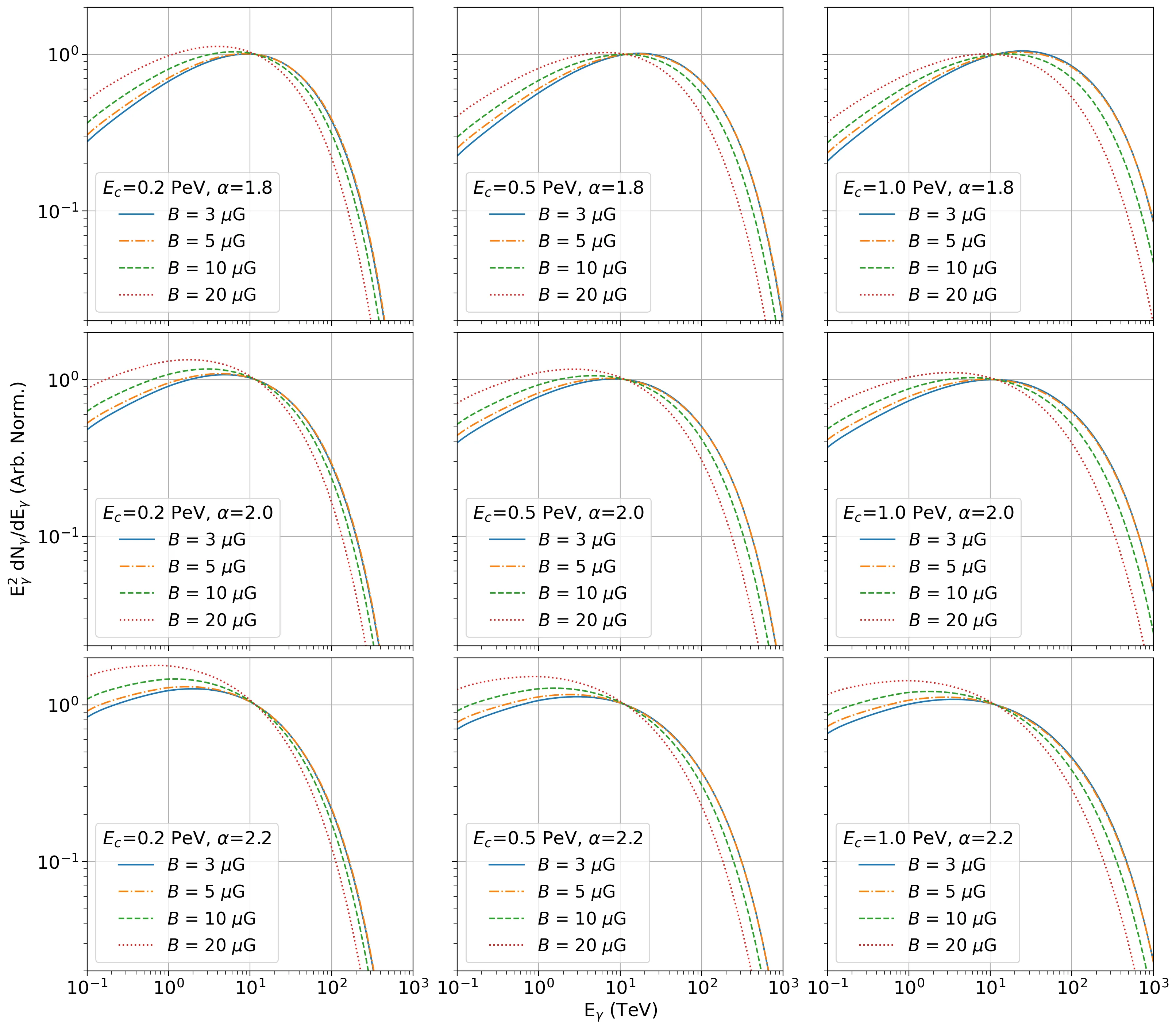
Gamma rays with energies above one hundred trillion electronvolts are like stones thrown with incredible force. For a long time, it was believed that only protons, heavy particles accelerated in cosmic accelerators, could launch such 'stones.' But new work shows that sometimes light electrons are enough.
The authors examined three objects: the microquasar SS 433, the center of our Galaxy, and TeV halos — clouds around pulsars. In all three cases, the observations are explained by simple models where electrons, not protons, produce the gamma rays. The model matched especially well with the size of SS 433: the calculated width of the source coincided with the measured one.
To pinpoint a proton accelerator, additional clues are needed. For example, a burst of neutrinos — particles that are born only together with protons. Or a coincidence of gamma-ray emission with gas clouds: protons colliding with gas produce a characteristic signal.
Ultra-high-energy gamma rays are like the signature of an invisible artist. Previously, it was thought that only protons could leave this signature. Now it's clear: electrons can sign their names too.
Original abstract
as written by the authors arXiv:2603.17012
Ultrahigh-energy gamma rays ($$E_{\gamma}>100 \, {\rm TeV}$$) have been detected from a handful of astrophysical sources. Due to the Klein-Nishina suppression of inverse Compton scattering at such high energies, it has sometimes been argued that these sources must be accelerators of PeV-scale protons, making them the long-sought-after Galactic ''PeVatrons.'' Here, we challenge this conclusion, demonstrating that these sources can be straightforwardly explained by simple leptonic models. In this context, we consider the microquasar SS 433, the Galactic Center, and TeV halos, showing in each case that the observation of PeV-scale gamma rays from these sources does not indicate that they are accelerators of hadronic cosmic rays. We also note that the measured angular extension of SS 433 is in good agreement with the predictions of our model, favoring a leptonic origin for the gamma-ray emission from this source. A definitive identification of a PeVatron would require additional information, such as the combined observation of the pion bump and synchrotron peak, the spatial correlation of gamma-ray emission with gas, or the detection of neutrinos with $$E_{ u} \gtrsim 100 \, {\rm TeV}$$.
The microquasar SS 433 ejects jets of matter at about a quarter of the speed of light, like a giant hose spraying the cosmos.