Galactic outflow acceleration is the process by which gas, dust, and cosmic rays are expelled from a galaxy's central regions and accelerated to high velocities, often forming large-scale winds that can extend far beyond the galactic disk. These outflows are typically driven by intense star formation, supernova explosions, or the activity of a supermassive black hole at the galaxy's core. The accelerated material can carry energy and heavy elements into the intergalactic medium, influencing the galaxy's evolution by removing gas that would otherwise form new stars and enriching the surrounding environment.
History
The concept of galactic outflows has been developed over several decades, with early observations in the 1960s and 1970s revealing gas moving at high velocities in the halos of galaxies. The role of cosmic rays in driving these outflows was proposed in the 1980s and has been refined through subsequent theoretical work and simulations.
How it works
The acceleration mechanism involves a combination of thermal pressure from supernova explosions, radiation pressure from hot young stars, and cosmic rays that couple to the gas via magnetic fields. Cosmic rays, being charged particles, can stream through the galaxy and transfer momentum to the surrounding gas through collisions and magnetic field interactions, effectively pushing the material outward. In the case of active galactic nuclei, relativistic jets and intense radiation from the accretion disk around the black hole can also drive outflows, accelerating material to speeds of hundreds to thousands of kilometers per second.
In practice
Understanding galactic outflow acceleration is crucial for modeling galaxy formation and evolution, as well as for interpreting observations of the circumgalactic medium in large-scale surveys.
Fun fact
Some galactic outflows are so powerful that they can eject material from the galaxy entirely, escaping into intergalactic space and carrying heavy elements over millions of light-years.
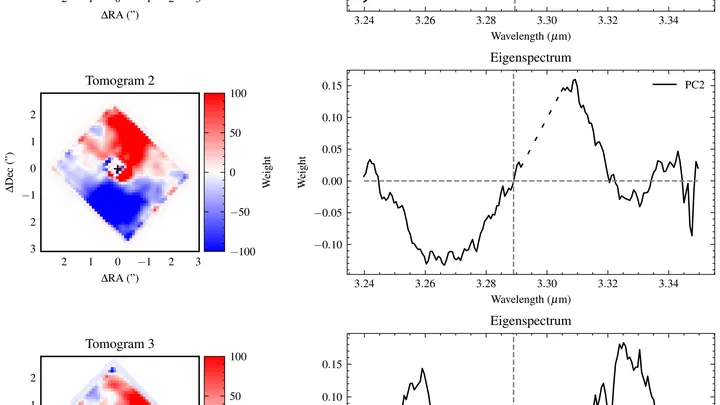
A disk of gas and dust spins around the young star HV Tau C, nearly edge-on to us. The James Webb Space Telescope examined its spectrum and detected the glow of hot molecular hydrogen (H₂). This revealed a wide, bipolar wind blasting from the inner regions far beyond the disk.
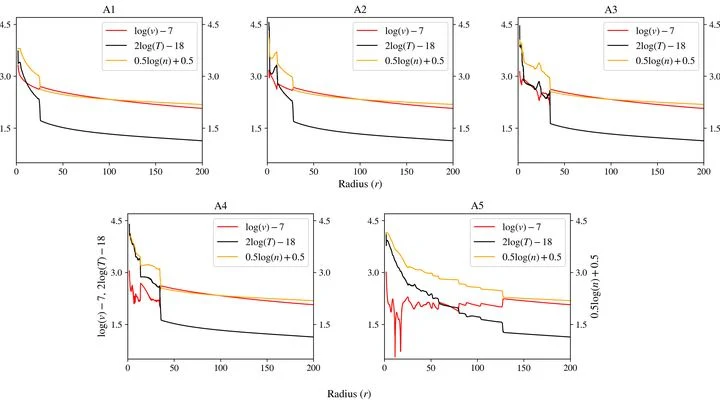
295 000 meters per second. Not even particles in solar coronal ejecta move that fast. But at the center of the galaxy cluster H1821+643, hot gas does exactly that. The quasar at its heart takes a breath, and its breath stirs everything around for 60 thousand light-years.
At the heart of the giant galaxy Hydra-A, there's a hive of activity. A supermassive black hole shoots out two powerful plasma jets. They punch through the surrounding cloud of hot gas and inflate giant bubbles within it.
The mystery of the radius valley — a sharp drop in the number of exoplanets with radii ~1.8 Earth — haunts astronomers. JWST, transit surveys like Kepler and TESS draw a clear gap: rocky super-Earths and gaseous sub-Neptunes are separated by almost a chasm.
At the center of a tiny galaxy lies a dense clump of stars and dark matter. This clump, called a soliton, is not frozen in place: it quivers and oscillates like jelly on a plate.
Massive gas outflows from active galactic nuclei are a key regulator of galactic evolution. They sweep out the interstellar medium, quench star formation, and dictate the growth of supermassive black holes.
A world where a year lasts just one and a half Earth days, and the star in its sky is hundreds of times larger than our Sun. This is KELT-9 b — a gas giant heated to temperatures at which iron vaporizes. Its atmosphere is not just hot; it is literally boiling away into space, like steam rising from a giant cauldron.
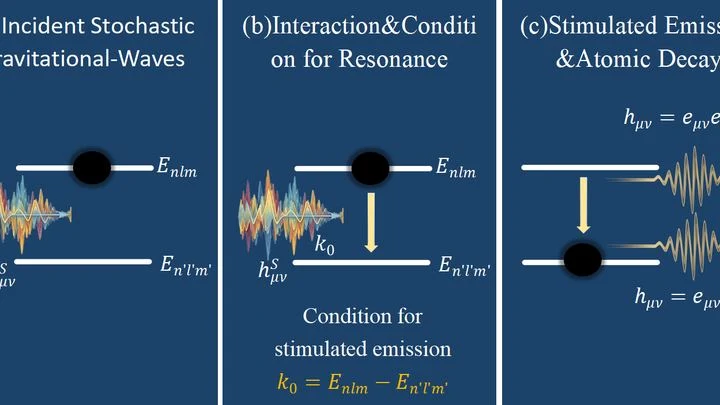
If a black hole spins quickly, it can hold a cloud of ultralight particles around it, so light that their mass almost vanishes. They arrange themselves in layers, like electrons in an atom, only here gravity does the job instead of electric forces. This structure stores energy, like a coiled spring.
A planet the size of Neptune wandered too close to its star. The star begins to pull the planet's outer layers onto itself — gas streams off the planet like water from an overflowing bucket. This process is called Roche-lobe overflow (astronomers use this term for the boundary beyond which a star can tear material away from a planet).
Gravitational waves — the cosmic tremors from distant cataclysms — are so faint that detecting them is like trying to hear a whisper in a hurricane. But a black hole can amplify that whisper many times over.
In 1963, Maarten Schmidt unraveled the nature of quasars — distant active nuclei outshining entire galaxies. Since then, we've learned that at their hearts lurk supermassive black holes, converting infalling matter into blinding light.
Using the James Webb telescope, astronomers peered into an ancient quasar — the dazzling heart of a galaxy where a giant black hole sucks in matter. It turns out it doesn't just destroy, but also creates: its powerful outflows and shock waves act like a true cosmic mill.
A black hole rips apart a star, and we see a dazzling flare. Then, a couple of years later, when everyone has forgotten about it, radio telescopes suddenly pick up a new signal, like an echo from the past.
A street where houses have just been built. Some shine with clean windows, others are covered in construction dust. That's roughly what galaxies looked like when the universe was only a few hundred million years old. The new James Webb telescope peered into that era and saw dozens of bright star islands.
A fountain shoots from the center of the city at a speed thousands of times faster than a courier bike. Such a 'fountain'—a stream of gas accelerated to 5500 kilometers per second — has been spotted by astronomers in the galaxy GLIMPSED-329380.
When a massive star dies, a supernova explosion occurs, so powerful that a single flash outshines an entire galaxy. In this fire, billions of axions are born — invisible particles that leave almost no trace. Every second, trillions of these tiny things fly right through each of us, completely unnoticed.
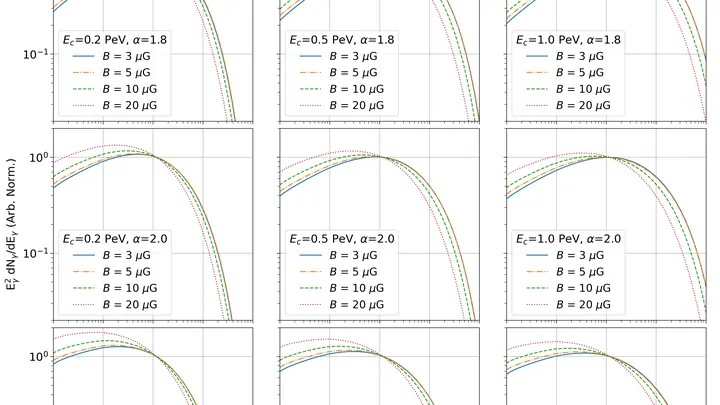
Gamma rays with energies above one hundred trillion electronvolts are like stones thrown with incredible force. For a long time, it was believed that only protons, heavy particles accelerated in cosmic accelerators, could launch such 'stones.' But new work shows that sometimes light electrons are enough.
At the center of every large galaxy, including our own Milky Way, resides a supermassive black hole. It doesn't just sit there — sometimes it pulls in gas and dust, and part of that material is blasted back out in powerful outflows. These outflows, or "winds," carry material far from the center and affect the entire galaxy.
Not all water in a whirlpool goes down the drain: some splashes back up in narrow sprays. Gas near a black hole behaves similarly. It falls, heats up, collides with itself, and part of it is ejected back into space in two narrow jets that fly in opposite directions.
Black holes are cosmic drains, gravitational funnels that pull in matter from their surroundings. This process, called accretion, doesn't always go smoothly: some of the infalling gas can be ejected back as narrow relativistic jets — jets.
In the Antennae Galaxies, which are crashing into each other, giant gas clouds collided at a speed of 50 kilometers per second. It's like two trains hurtling toward each other — the impact compressed the gas, and it ignited with new stars.
Two galaxies collided, and from their center an invisible fountain erupts. The ALMA and VLT telescopes peered into the heart of the IRAS20100-4156 system — where two stellar islands are merging. There, work is in full swing: hundreds of new suns are being born, and their heat drives a stream of cold gas outward.
This stream is like a giant's exhale.
At night, invisible bullets streak across the sky — cosmic rays. These are atomic nuclei accelerated to near-light speeds. The Galaxy's magnetic fields tangle their paths, making it hard to pinpoint where they were born.
About 25,000 light-years from Earth, in the constellation Sagittarius, a dense veil wraps around the neutron star GX 13+1. It scatters X-ray photons the way fog scatters streetlight, and for a long time it hid the source's true power from astronomers.
On October 9, 2022, detectors on Earth recorded a gamma-ray burst of unprecedented power. GRB 221009A was so bright that its radiation ionized the upper layers of the ionosphere, and satellite instruments were temporarily blinded.