Popular

Arthur Compton

1892–1962 · physics, quantum mechanics, nuclear physics
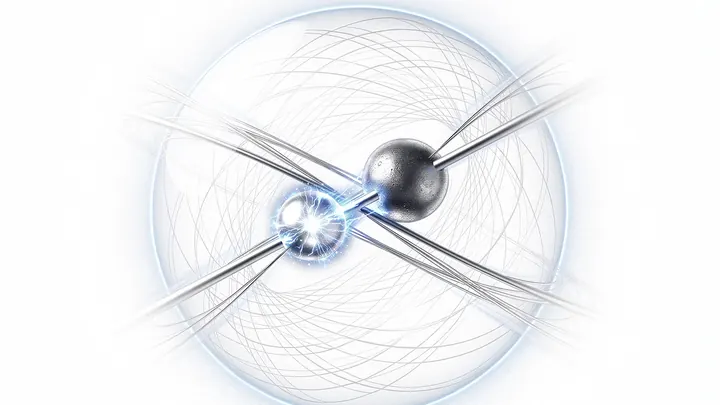
Arthur Compton was an American physicist and Nobel laureate (1927) for his discovery of the effect confirming the dual particle-wave nature of light. In 1923, he experimentally showed that X-ray radiation scatters on electrons with a change in wavelength, exactly as predicted by quantum theory: the photon behaves like a particle with momentum proportional to its frequency. The Compton effect became one of the cornerstone experiments of quantum mechanics, vividly demonstrating that light is not only a wave but also a stream of particles. The scientist also contributed to the study of cosmic rays and participated in the Manhattan Project. His path — from academic physics to applied science — symbolizes a new era in natural science.

Biography

He studied physics at Princeton University, where he received his doctorate. He worked in corporate research laboratories, then at Washington University in St. Louis, and later at the University of Chicago, where he directed a metallurgical laboratory during the war. Nobel Prize in 1927, Hughes Medal, Gold Medal of the Royal Astronomical Society.
Key discoveries

💡 To conduct the fateful experiment with X-rays, Compton personally built a device from scrap materials, including a scale from an apothecary balance and a sulfur detector; when the wavelength shift was observed, he realized he had caught a 'bullet of light' in flight.
Quote: "In science, the most important thing is not so much to obtain new facts as to discover new ways of thinking about them."
Links in the knowledge graph 1
Related tags
wave-particle dualityspeed of light
Related scientists
Henri PoincaréRobert HookeJames Clerk MaxwellLouis de BroglieHendrik LorentzChristian DopplerLeo EsakiWilliam Lawrence Bragg

Related articles

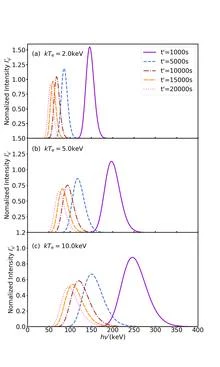
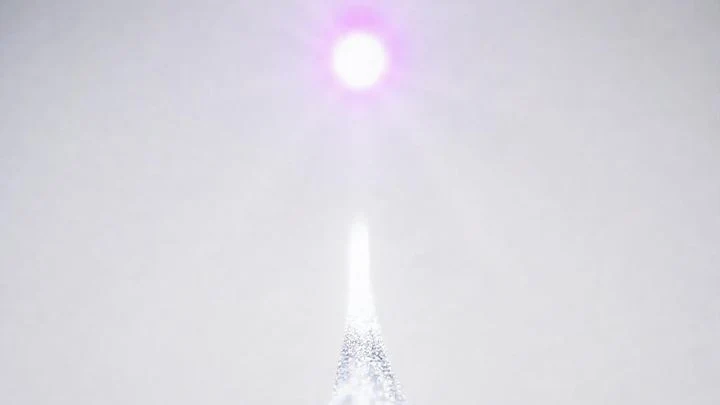
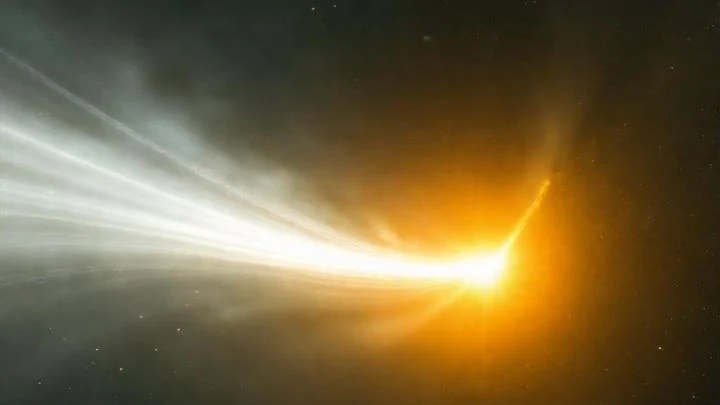
A Cosmic Blast Showed How Its Light Is Born

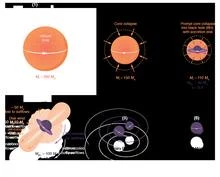
For the first time in a gamma-ray burst GRB 221009A, astronomers noticed how the light fingerprints of elements were born and reddened. It turned out that particles of light emerged when matter met antimatter, and then, colliding with electrons, lost energy — like a billiard ball after a series of h
arXiv:2509.14715 · 2025-09-18