Simple

Quantum Arrows for DNA: A New Speed Record ⚡ экспресс

Original: "RotorMap and Quantum Fingerprints of DNA Sequences via Rotary Position Embeddings"
arXiv:2603.22245 · 2026-03-23 · CC BY 4.0 · ⏱ 1 min · Quantum Physics
Rotating arrows instead of DNA letters allow comparing genomes hundreds of times faster and pave the way for quantum authentication.
Abstract

What if DNA were like a text and mutations were just typos? Scientists have developed a way to encode genetic sequences so a quantum computer can 'feel' how similar they are—almost like an expert. This opens up possibilities for lightning-fast genome comparisons and even quantum DNA verification. Could this someday replace traditional gene decoding?

Links in the knowledge graph 1

DNA is a long carbon necklace made of four types of beads. Biologists often need to compare two strands to find differences. Normally this requires a lengthy brute-force search. Researchers came up with a clever trick: encode each bead as an arrow that rotates based on its neighbors. The idea came from language models, where words also 'know' context.

For similar DNA sequences, the arrows point in nearly the same direction. Similarity is measured by comparing arrow directions — which boils down to estimating the system's entropy.

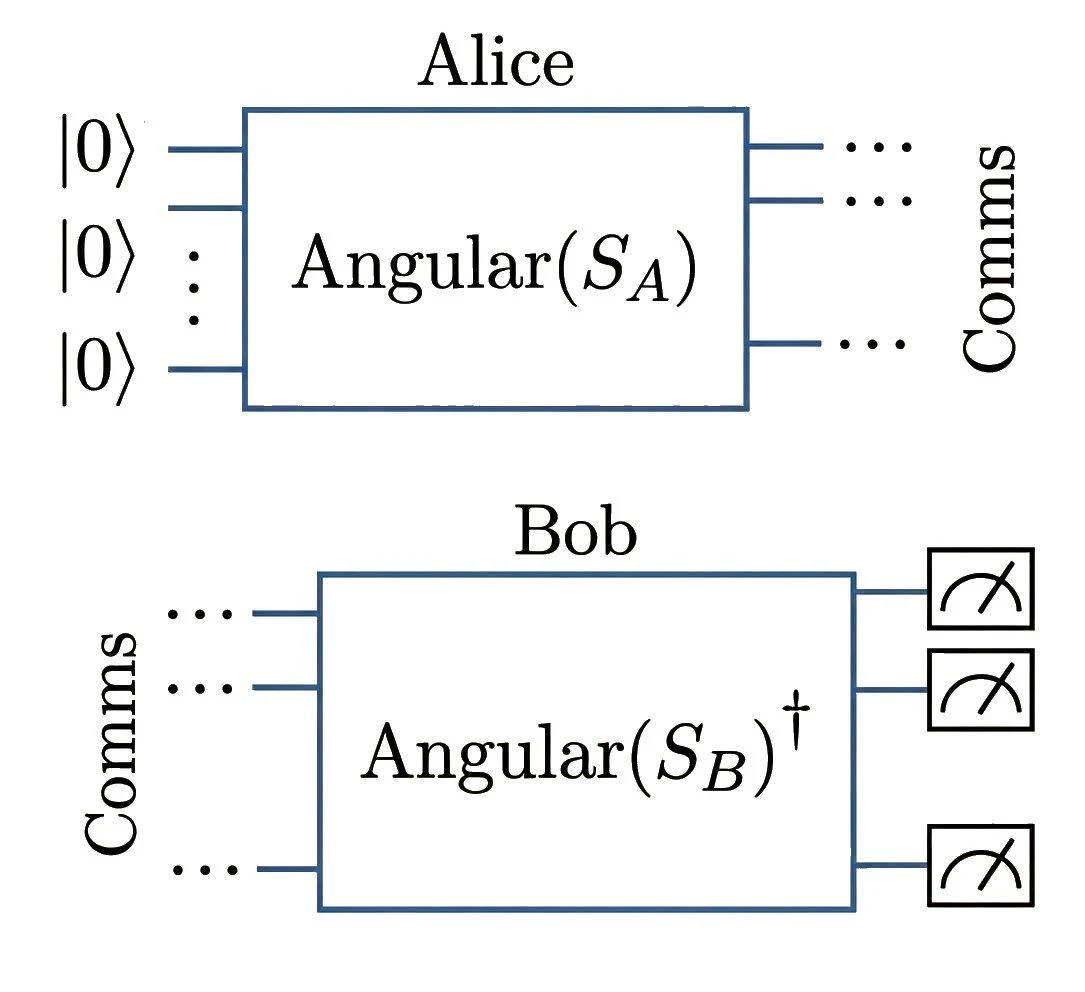
The RotorMap method, using lightning-fast computation on GPUs, outperforms standard tools by 50–700 times. For quantum computers, a version was created where arrow directions determine particle states. The algorithm was tested on Quantinuum quantum machines, reading data via spectroscopy — analysis of emitted radiation.

The application is a quantum DNA signature, akin to an envelope that glows when opened. Any interception attempt is immediately noticeable, providing quantum protection for data.

🎯 The human genome is 3 billion letters. Comparing two genomes used to take hours, now it takes seconds.

🎬 Quantum DNA signatures resemble technology from 'Gattaca', but with protection that can't be hacked.

Scientists
Christian DopplerD. B. McLaughlinDidier QuelozMichel MayorR. A. RossiterAlbert Einstein
Tags
entropy carbon speed of light spectroscopy
Laws
second law of thermodynamicsDoppler effectprinciple of constancy of the speed of lightBekenstein-Hawking entropymass–energy equivalenceMaxwell's equations
Original: arXiv:2603.22245 · CC BY 4.0 · bridge42worlds