Thousands of Dim Stars Found by the Crowd express
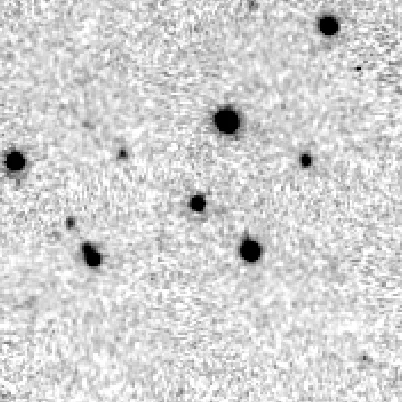
There are faint points in the sky that slowly crawl among the stars. They are cooler than embers in a fireplace and smaller than the Sun: these are brown dwarfs. There are so many of them that astronomers can't keep up with reviewing all the images. That's when volunteers stepped in: ordinary people examined pictures from the telescope and flagged moving objects.
The Backyard Worlds: Planet 9 project collected 3006 new such bodies. Most are L dwarfs (2 357 of them), the rest are T dwarfs (649 of them). For each one, they measured how fast it moves across the sky and estimated its distance. Some turned out to be pairs: two dwarfs orbiting a common center of gravity, like dancers holding hands.
Now astronomers have twice as many samples to study. They can use them to understand how often such objects form, what they are like inside, and whether they have planets. Volunteers sitting at their computers helped map the Sun's immediate neighborhood.
Original abstract
as written by the authors arXiv:2604.01323
The Backyard Worlds: Planet 9 citizen science project uses data from the Wide-field Infrared Survey Explorer to detect infrared objects with significant motion. In this work, we present the majority of the L and T dwarf candidates discovered through this effort. For each candidate, we provide proper motion measurements as well as optical, near-infrared, and mid-infrared photometry (when available), photometric spectral types and distance estimates. Three thousand and six new motion-confirmed discoveries are presented in this work, 2,357 with L-type photometric spectral types and 649 with T-type photometric spectral types. We also present an additional 80 objects as likely L or T dwarfs based on available photometry, but for which a significant motion measurement could not be obtained. We identify 28 objects in this sample as new comoving companions to higher-mass stars, and an additional 9 sources that are candidate binary systems made up of two ultracool dwarfs of L-type or later. Follow-up spectroscopic observations will be necessary to confirm spectral types and further characterize the sources discovered through this project. This work presents the largest single sample of motion-confirmed L and T dwarf discoveries to date, which would more than double the number of known L and T dwarfs, if confirmed. We wish to sincerely thank our citizen scientist collaborators for their monumental efforts that have directly impacted this project's success.
The coolest of the found objects have a temperature of only about 300 degrees Celsius, like a hot oven, not a star.