The Very Large Telescope (VLT) is an array of four optical telescopes, each with an 8.2-meter mirror, operated by the European Southern Observatory at Cerro Paranal in the Atacama Desert, Chile. It is one of the most powerful ground-based observatories for high-resolution spectroscopy and imaging. The VLT can work as four independent telescopes or combine light from all four to act as a single giant interferometer, achieving the resolution of a telescope with a mirror up to 200 meters across.
History
The VLT was conceived in the 1980s, with the first unit telescope ('Antu') seeing first light in 1998; all four units were operational by 2000. It was built by the European Southern Observatory, which had previously pioneered interferometry at its La Silla site.
How it works
Each unit telescope collects light and feeds it to a suite of instruments, including spectrographs that split light into its constituent wavelengths. For interferometry, beams from separate telescopes are combined in a central facility, where the interference pattern reveals details far finer than any single mirror could resolve. Adaptive optics systems deform the mirrors in real time to cancel out the blurring effect of Earth's atmosphere, making images nearly as sharp as if the telescope were in space.
In practice
The VLT is used to study exoplanet atmospheres, measure the acceleration of the universe's expansion, probe the environment around supermassive black holes, and track near-Earth asteroids.
Fun fact
The VLT's four main mirrors are each polished to an accuracy of about 8.5 nanometers — roughly one ten-thousandth the width of a human hair.
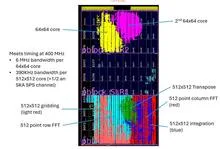
A radio telescope with thousands of antennas is like a giant ear that hears the whole sky at once. But an ear cannot draw a picture: signals from every pair of antennas must be multiplied, and in an array of ten thousand elements there are already fifty million pairs. A classical correlator does exactly that, and its complexity grows as the square of the number of antennas.
Photographing an exoplanet orbiting another star is like trying to spot a firefly in front of a spotlight. Earth's atmosphere is constantly churning, which makes stars appear as dancing speckles through a telescope.
Dark matter is an invisible substance that reveals itself only through gravitational effects: it bends the light of distant galaxies, much like an unseen window that alters the path of light rays.
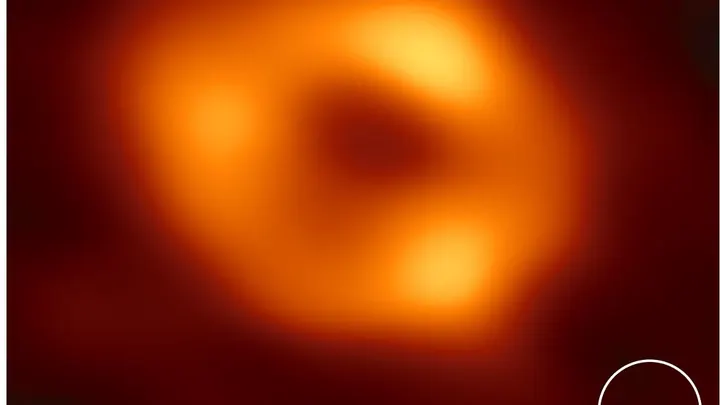
Einstein's theory of gravity explains how mass warps space and time. Its predictions have been tested near Earth, but the most grueling tests lie around black holes, where distortions reach their breaking point. Until now, astronomers saw them as blurry smudges on an underexposed photo.
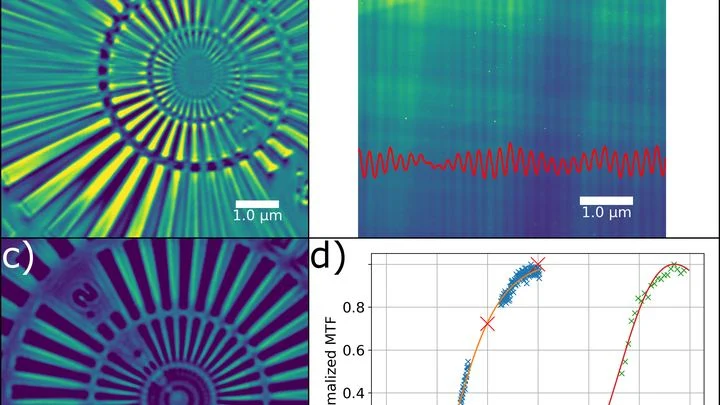
An X-ray beam can peer inside an opaque piece of metal and show where cracks or stresses are hiding. But to see such defects, the beam must be focused into a very narrow pencil, just as sunlight is focused by a magnifying glass into a hot spot. In an X-ray microscope, the lens plays the role of the magnifying glass.
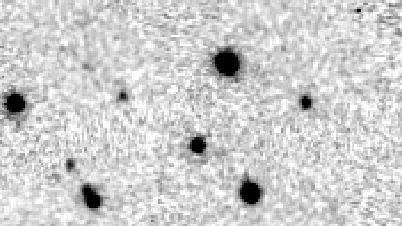
There are faint points in the sky that slowly crawl among the stars. They are cooler than embers in a fireplace and smaller than the Sun: these are brown dwarfs. There are so many of them that astronomers can't keep up with reviewing all the images. That's when volunteers stepped in: ordinary people examined pictures from the telescope and flagged moving objects.
Astronomers have tested the new Vera C. Rubin telescope in Chile, much like adjusting the focus and aperture on a brand-new camera. The first images covered a patch of sky the size of 60 full Moons, and immediately revealed millions of galaxies and stars. The imaging was done in various colors, from invisible ultraviolet to thermal infrared.
Neutrinos — elementary particles rightly dubbed “ghosts”—barely interact with matter, making their detection a formidable challenge. The existence of neutrinos was predicted by Wolfgang Pauli, and the name was coined by Enrico Fermi.
Titan, Saturn's largest moon, is wrapped in a thick orange haze. It's made of hydrocarbons and other organic molecules that are born when sunlight breaks apart methane and nitrogen in the upper atmosphere.
A glass marble in a glass of water is nearly invisible, but if you look through it at a checkered tablecloth, the lines behind it appear distorted. Transparent cells behave the same way: light passes through them but is slightly slowed and changes direction.
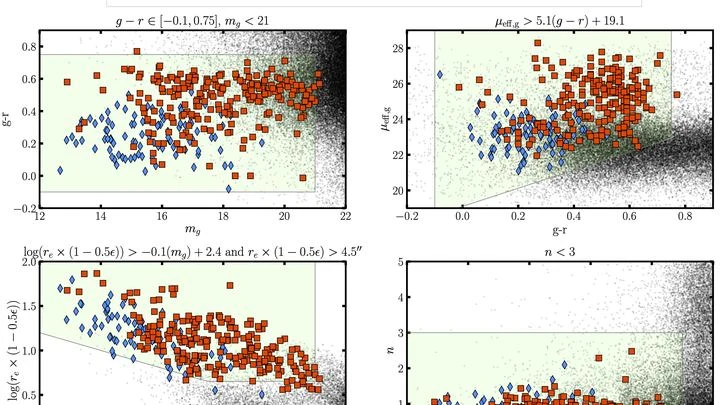
A population census, but instead of houses (galaxies, and instead of residents) stars. Astronomers set out to count the smallest and faintest "homesteads" in our cosmic neighborhood: dwarf galaxies. They are thousands of times fainter than the Milky Way, and spotting them in images is as hard as picking out a firefly in front of a spotlight.
Galaxies, like giant whirlpools, sometimes collide and merge. In this chaos, gas compresses, new stars flare up, and a bright radio beacon is born at the very center. Its light — not visible to the eye, but radio waves — pierces through dust and gas like a siren through fog.
In the dark, a tiny spark flashes. A gamma ray born inside a patient's body strikes a crystal and knocks out a shower of light. The detector's job is to figure out exactly where that happened. The more precise the answer, the sharper the image on the tomograph screen.
The new detector resembles a honeycomb, but not a flat one — the cells narrow toward the bottom.
In the Tarantula Nebula, where thousands of stars are born, one bright blue star is behaving strangely. It moves toward us and then away, as if something is tugging it on an invisible string. That 'something' completes an orbit every 17 days, but telescopes can't see it.
Astronomers observed the star 30 times with a spectrograph, which splits light into colors like a prism.
Radio telescopes scattered across the globe pick up waves from distant black holes. But two telescopes placed almost side by side see only a blurry blob — fine details are beyond them. Usually, such pairs are considered useless and discarded. But that's a mistake: even a blurry blob holds clues.
A pebble drops into a pond, and ripples spread across the water. But sometimes the pebble doesn't sink right away: it skims beneath the surface, travels a few meters, and only then surfaces, creating ripples in an unexpected spot.
Dark matter is the invisible scaffold of the Universe, revealing itself only through gravity. Vera Rubin, studying the rotation of galaxies, found that stars at the periphery move too fast, as if held by an unseen mass. This became compelling evidence for the existence of dark matter, yet its particles still elude direct detection.
At the heart of many galaxies lies an invisible beacon — a supermassive black hole. As it devours matter, it blasts a dazzling beam of gamma rays into space. If that beam points towards Earth, astronomers see a blazar — a bright but fickle point.
Every clear night, a telescope in the Chilean desert records light from distant stars, and in those recordings, like old ship logs, traces of weather remain. The thin dark bands in the spectrum are imprints of water vapor that hung over the observatory at the moment of observation.
Every night, an invisible sentinel hangs over the Andes. The GOES-12 satellite, and later its successor GOES-13, watches Earth from an altitude of 36,000 kilometers, recording how the mountains breathe clouds. For five straight years, it tracked where the sky stayed clear and where it got wrapped in cotton.