We have retold 5 papers by this author. 1 of them with a full read. most often about: brown dwarf, red dwarf, white dwarf. 30 co-authors across our retellings.
Brown dwarfs are objects that sit between planets and stars: they are more massive than planets but not heavy enough to sustain stable fusion in their cores.
Two new planets are circling dim red stars. One is nearly the size of Earth, the other is three and a half times larger. Both lie in what astronomers call the warm zone: a region where starlight doesn't scorch the surface but also doesn't leave it in perpetual cold.
The host stars are red dwarfs, the most common stars in the galaxy.
A distant red object usually means one thing: we're seeing a dust veil over a scorching disk falling into a black hole. But when the James Webb split its light into shades, a shadow appeared inside — just like steam from boiling water intercepts rays.
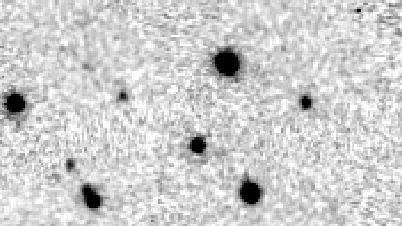
There are faint points in the sky that slowly crawl among the stars. They are cooler than embers in a fireplace and smaller than the Sun: these are brown dwarfs. There are so many of them that astronomers can't keep up with reviewing all the images. That's when volunteers stepped in: ordinary people examined pictures from the telescope and flagged moving objects.
A quarter-century ago, Michel Mayor and Didier Queloz discovered the first hot Jupiter, and shattered all the rules of planet formation. A gas giant on a days-long orbit couldn't have formed next to the star: it's far too hot and lacks building material. So, it must have been born far away and then migrated.