Blood Pressure on a Tiny Chip express
Smartwatches measure your pulse with light: an LED shines through the skin, and a sensor picks up the reflected signal. By analyzing the fluctuations in this signal, you can estimate blood pressure, but accurate calculation requires a powerful neural network — usually running in the cloud, so data leaves the device. That's inconvenient and insecure: personal medical information travels across the network.
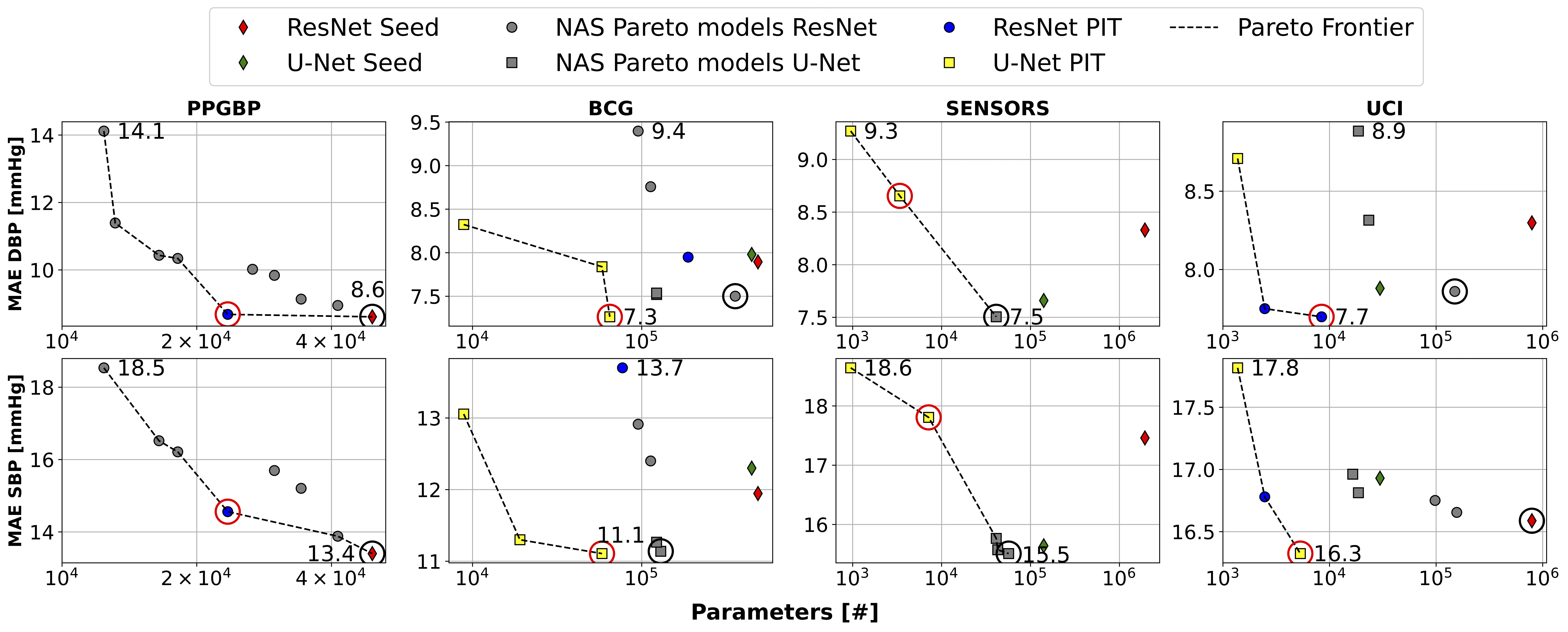
This new approach compresses the neural network to the size of a matchbox. A special algorithm automatically explores architecture options, prunes unnecessary connections, and tunes the precision of numbers — like an editor cutting everything unnecessary from a draft. The resulting model takes up less than 55 kilobytes — ten times smaller than a photo on your phone. Meanwhile, the error in blood pressure estimation dropped by 8%, and if you fine-tune the model for a specific person, accuracy improves by another 64%.
This approach paves the way for fully autonomous wearable devices. Watches could monitor blood pressure around the clock without contacting a server or draining the battery in a couple of hours. Personalization for the wearer makes readings more accurate, and privacy stays on your wrist.
The model fits in 512 kilobytes of memory — about half the capacity of a 1980s floppy disk, which stored a single text document.
In the series "Black Mirror," there's an episode where an implant continuously monitors health and streams data to a doctor — a similar technology, but without the cloud and with data protection.