A deep neural network is an artificial intelligence model composed of multiple layers of interconnected nodes (neurons), each layer transforming the input data into increasingly abstract representations. The 'deep' in the name refers to the many hidden layers between input and output, which allow the network to learn hierarchical features — from simple edges in images to complex objects, or from phonemes to full sentences in speech.
History
The concept of deep architectures dates back to the 1960s with the perceptron, but training deep networks was impractical until the 2000s when techniques like layer-wise pre-training and ReLU activations, along with GPU computing, made deep learning feasible. The 2012 AlexNet victory in ImageNet marked the modern deep learning revolution.
How it works
Each neuron in a layer computes a weighted sum of its inputs, adds a bias, and applies a nonlinear activation function (e.g., ReLU). During training, the network adjusts these weights using backpropagation, which calculates the gradient of a loss function with respect to each weight and updates them via gradient descent. With enough data and computational power, the network learns to minimize prediction errors. The hierarchical structure means early layers capture low-level features, while deeper layers combine them into high-level concepts.
In practice
Deep neural networks are used in image recognition, natural language processing, autonomous driving, medical diagnosis, and scientific research — from detecting gravitational waves to classifying galaxies.
Fun fact
Deep neural networks can be fooled by adding tiny, imperceptible perturbations to images, causing them to misclassify a panda as a gibbon with high confidence — a phenomenon called adversarial examples.
In a nine-story building with a thousand rooms on each floor, some people whisper and others shout. Neighbors pass the message along, but if everyone speaks too softly, the message fades by the third floor. If too loudly, by the top floor it becomes an unintelligible roar. Between these extremes, there is a regime where a whisper makes it all the way through without distortion.
A single DNA molecule, squeezed into a tiny metal slit, trembles and flickers under the laser. Its signal is not a clear string of letters but a chaotic mix of flashes and shadows. Deciphering this noise is like trying to make out a whisper in a crowded room.
The new neural network works like an attentive interpreter.
Each morning, dozens of telescopes swing toward the Sun. Their cameras catch a narrow band of red light — the Hα line, discovered by Johann Balmer. The images reveal dark, whimsically curved threads. They look like stitches in a giant tapestry sewn through the blazing corona.
A typical tracking program resembles a navigator steering a ship by the stars. But as soon as the sky clouds over, coordinates drift, and entropy (a measure of uncertainty) builds up in the data. The new algorithm gets a ‘co‑pilot’ — a module that monitors how confident the main navigator is.
A cook who learns to cook from hand-drawn pictures risks ruining every dish. The same trap awaits computer vision: models need thousands of labeled images, but collecting them manually is expensive and tedious. Synthetic frames solve the problem, but only if they look real.
Engineers create an alloy for solar concentrators by adding hard particles — like raisins in dough, to help it hold its shape under extreme heat. Too big a raisin and the material cracks. Previously, scientists manually counted these particles on microscope images.
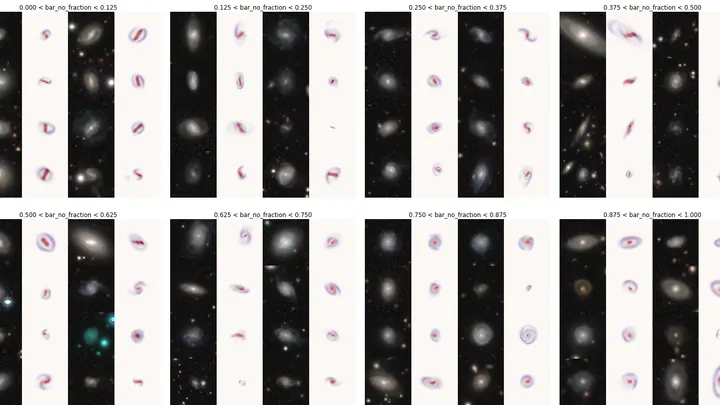
An ordinary photo editor highlights objects in an image. The ZooBot:3D neural network works with distant galaxies like a cartographer drawing a map of an unexplored land.
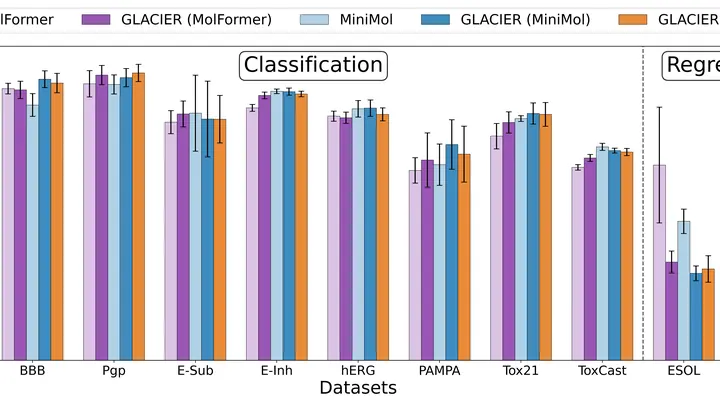
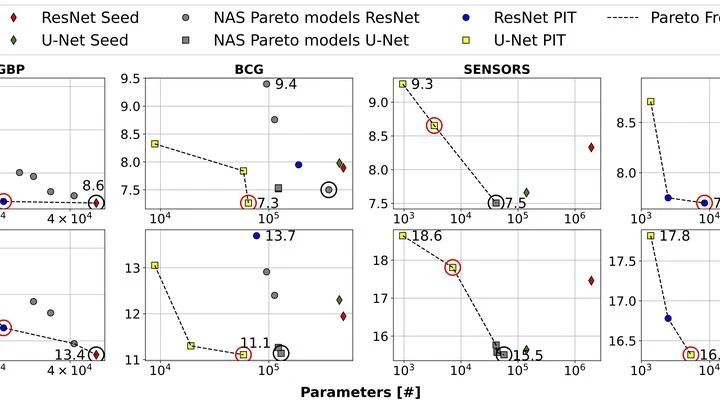
Finding the right molecule among billions of options is like finding a single grain in a sack of rice. To avoid sifting through everything by hand, chemists increasingly turn to neural networks. But large models require powerful computers, while small ones often lack the big picture.
GLACIER tackles this problem like a bright student learning from several mentors at once.
Imagine an interpreter sitting in a meeting room, translating every word. But then they notice their translation could improve if they learned from their mistakes. They start noting which phrases caused confusion and adjust them. Within an hour, their translation is more accurate and the meeting runs smoother.
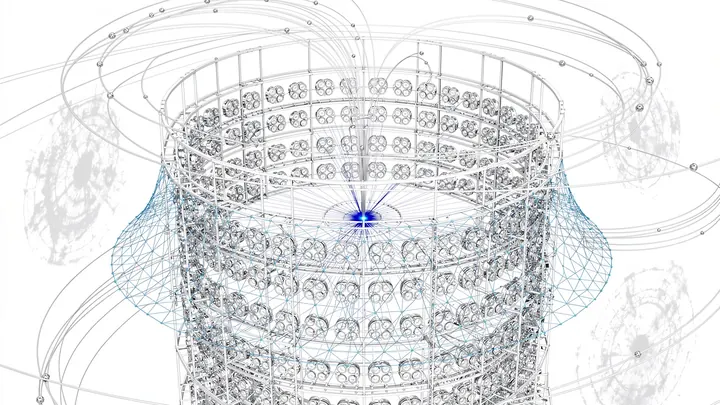
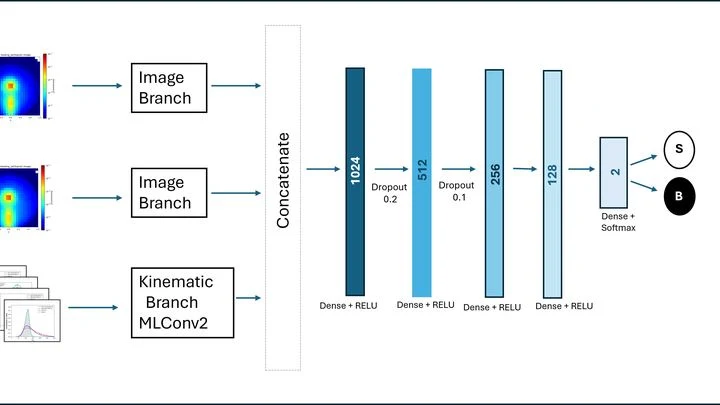
Deep inside the detector at the Large Hadron Collider, protons collide, and for a fleeting moment something heavy is born. It instantly shatters into two Higgs bosons — particles that, like nesting dolls, each hide two pairs of b-quarks.
A photographer shoots a night forest, trying to catch fireflies in the frame. The flashes are rare and faint, while around there's the noise of wind and distant lights.
A proofreader checks a manuscript before it goes to print. They don't know every possible mistake, but they know exactly what flawless text looks like. Spotting a strange symbol or a blurred word, they immediately circle it in red. That's roughly how the new program for checking medical images works.
Molecules float in a test tube. Their abundance (say, the concentration of some protein) becomes the input signal. And the output isn't just a cloudy solution but a clear yes-or-no answer.
The authors build a chemical cascade that does exactly that.
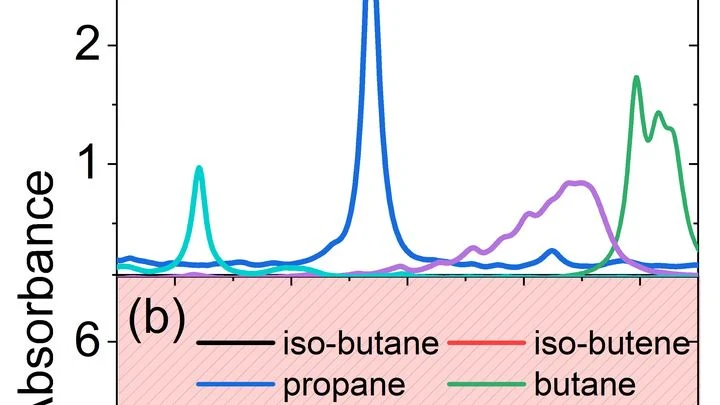
A hundred people are talking at once in a large hall. You try to hear one, but voices blend, some whisper, and you don't even suspect the existence of others. That's roughly how a conventional laser gas analyzer feels when dozens of substances mix in a combustion chamber or a factory pipe.
You taste a fruit smoothie through two different straws. One lets through only the big chunks, the other only the liquid. Individually, the sensations are misleading, but together they give you the key: here, it seems, is banana, and here, strawberry.
Smartwatches measure your pulse with light: an LED shines through the skin, and a sensor picks up the reflected signal. By analyzing the fluctuations in this signal, you can estimate blood pressure, but accurate calculation requires a powerful neural network — usually running in the cloud, so data leaves the device.
In collisions of heavy nuclei at colliders, quark-gluon plasma is born — a state of matter where quarks and gluons are as free as water in steam. Heavy quarks, such as b-quarks, entering this plasma lose energy, and their bound states, bottomonia, are destroyed.
On the surface of a thin film of bismuth iron oxide, you can see neat stripes, like furrows in a plowed field. What lies beneath them has remained a mystery until now.
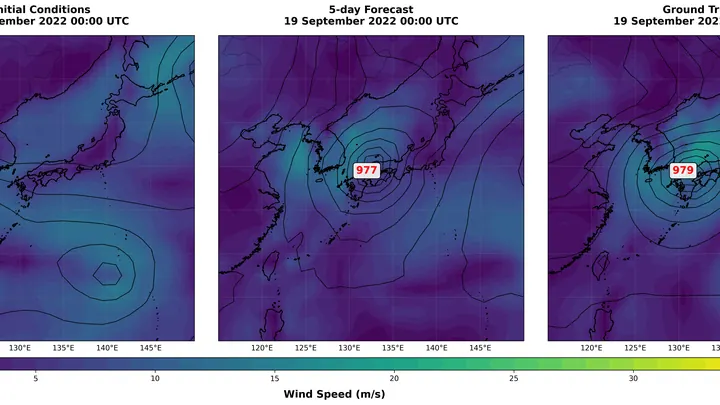
Weather forecasting is like trying to predict where a rock will roll down a slope, knowing the shape of every bump and the force of the wind. Make a mistake at the start, and a week later that error grows into a full-blown storm. In the past, accurate forecasts required massive computers and days of computation.
Thousands of kilometers of fiber-optic cables lie on the ocean floor. They carry internet traffic, but the cables themselves sense the slightest vibrations in the water and the seabed. If you listen closely to such a cable, you can hear a blue whale singing or the ground trembling thousands of kilometers away.
A typical machine learning model looks at one object at a time: one brain, one patient, one engine. But biologists need the big picture: how the brain of a species works as a whole, not just that of a particular fish.
A particle detector at the Large Hadron Collider runs for years without stopping. Its sensors produce mountains of data every second, and among it all, you need to spot a fault quickly, like overheating or a broken channel. In the past, simple rules did this, but they often made mistakes.
Two lanterns on a distant shore at night merge into a single blob of light. Likewise, a conventional flat antenna cannot tell apart two radio transmitters placed too close together: their signals mix, and the receiver sees only a jumbled mess. Engineers found a way out: they made the antenna not flat but like a stack of transparent plates.
An electrocardiogram is like a long strip of paper on which the heart leaves its signature. A doctor studies it to catch rhythm disturbances, but when the recording lasts for days, the strip stretches for miles. The eye tires, attention wanders, and rare but dangerous irregularities can slip by.
AI-HEART works like a tireless assistant that scans the entire strip without a break.
For years, an X-ray telescope in orbit recorded how binary systems shine, where an ordinary star orbits a black hole or a neutron star. Matter from the companion falls onto the compact object, heats up to millions of degrees, and emits X-rays.
When a guest molecule enters a host molecule, it's like a key going into a lock. But molecules don't have rigid shapes: they bend a little, charges on their surfaces attract or repel, and predicting exactly how they'll fit together has been very hard.
DeepHostGuest learns from thousands of known host-guest pairs.
A brain tissue slice is just 5 microns thick, twenty times thinner than a human hair. On such a slice, a pathologist looks for signs of a tumor: altered nuclear shapes, cell crowding, abnormal blood vessels. It is painstaking work, and two specialists can disagree on the same image.
In 2008, a group of physicists spent months of supercomputer time to compute a single quantity in quantum gravity theory. This is the vertex amplitude of spinfoam, a number that sets the probability of a local quantum transition of spacetime.
A translator in a large hall hears both a whisper right next to their ear and a conversation at the far end. The same mind picks up local nuances while keeping track of the overall discussion. That is how ResoNet works: a neural network that predicts El Niño.
El Niño is a warm current in the equatorial Pacific that, every few years, alters weather across all continents.
The orchestra plays a symphony, and you listen only to the first violin. That is roughly how river discharge forecasts have worked for decades: the entire El Niño signal is reduced to a single number calculated from a small rectangle in the Pacific Ocean. Yet the ocean is a vast ensemble, where heat flows from one region to another, and its full score contains far more information than a single note.