The Milky Way's Halo: Stars Dance to Different Tunes express
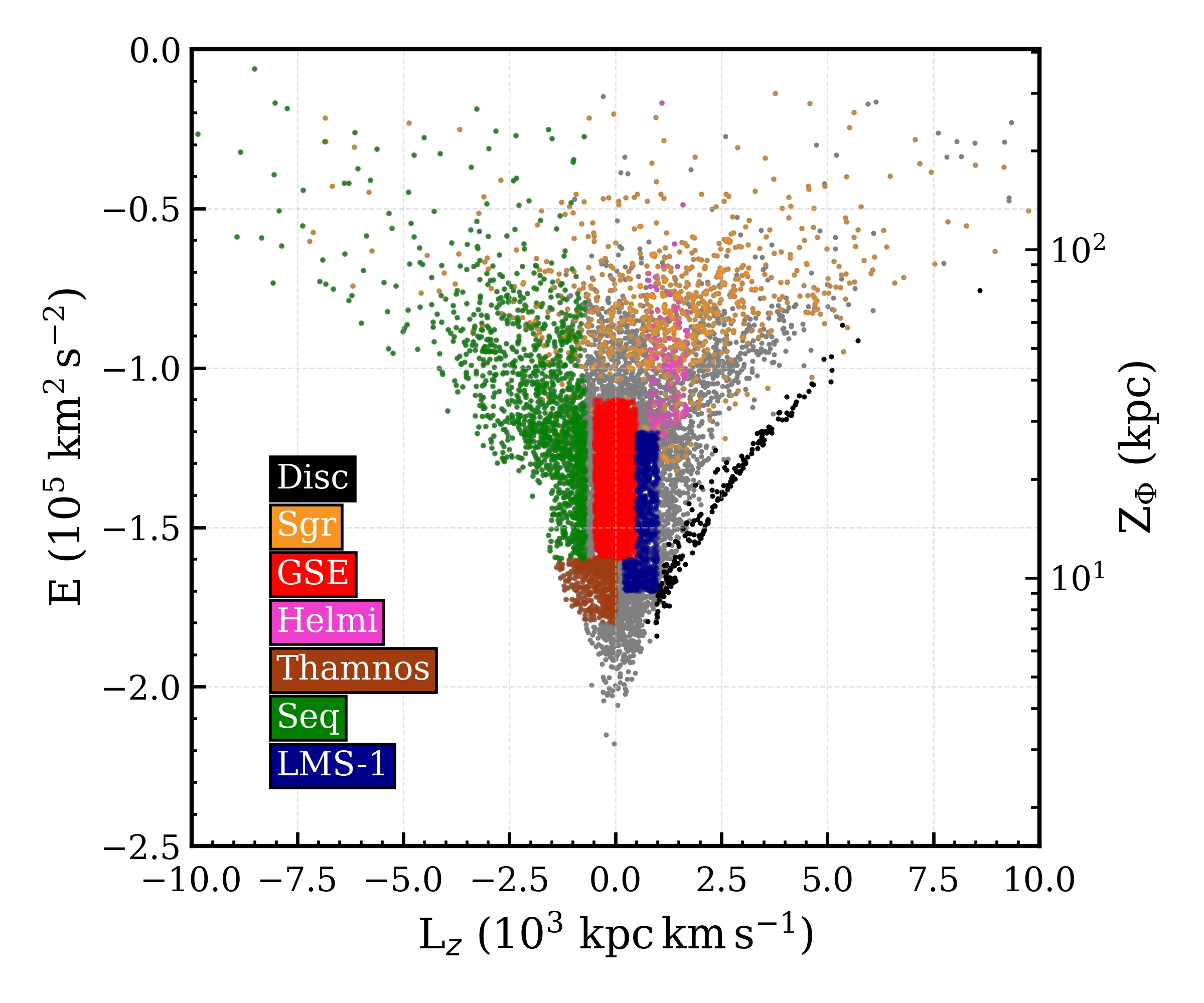
The halo of our Galaxy is a huge, sparse cloud of old stars that envelops the familiar disk. It holds the story of how the Milky Way grew by gobbling up neighboring dwarf galaxies. To read that story, astronomers measured the motions of more than 10,000 stars out to a distance of 50 kiloparsecs from the center — one and a half times farther out than the edge of the visible disk.
It turns out that in the inner halo (within 30 kiloparsecs), stars more often travel on elongated orbits, like comets around the Sun. Farther out, orbits become more and more circular, and at the halo's outskirts, stars move predominantly in circles. But when the scientists excluded from their calculations the stars that entered the Milky Way from outside during mergers with other galaxies, the picture changed: the entire halo is filled with stars on elongated orbits.
This work is like a census for the halo. It shows that the character of stellar motion is strongly influenced by events in the Galaxy's past, not just by its current shape. The older the stars, the more calmly they move: in the inner halo, old stars are less likely to be on elongated orbits than younger ones.
A distance of 50 kiloparsecs is roughly 163,000 light-years. For comparison, we are about 26,000 light-years from the Galactic center, and the nearest major galaxy, Andromeda, is 2.5 million light-years away.
In the series 'Star Trek', the galactic halo is often depicted as a place where ancient civilizations hide, and indeed, the stars there remember the earliest times.