Halos Around Galaxies: Where Is the Missing Oxygen Hiding? express
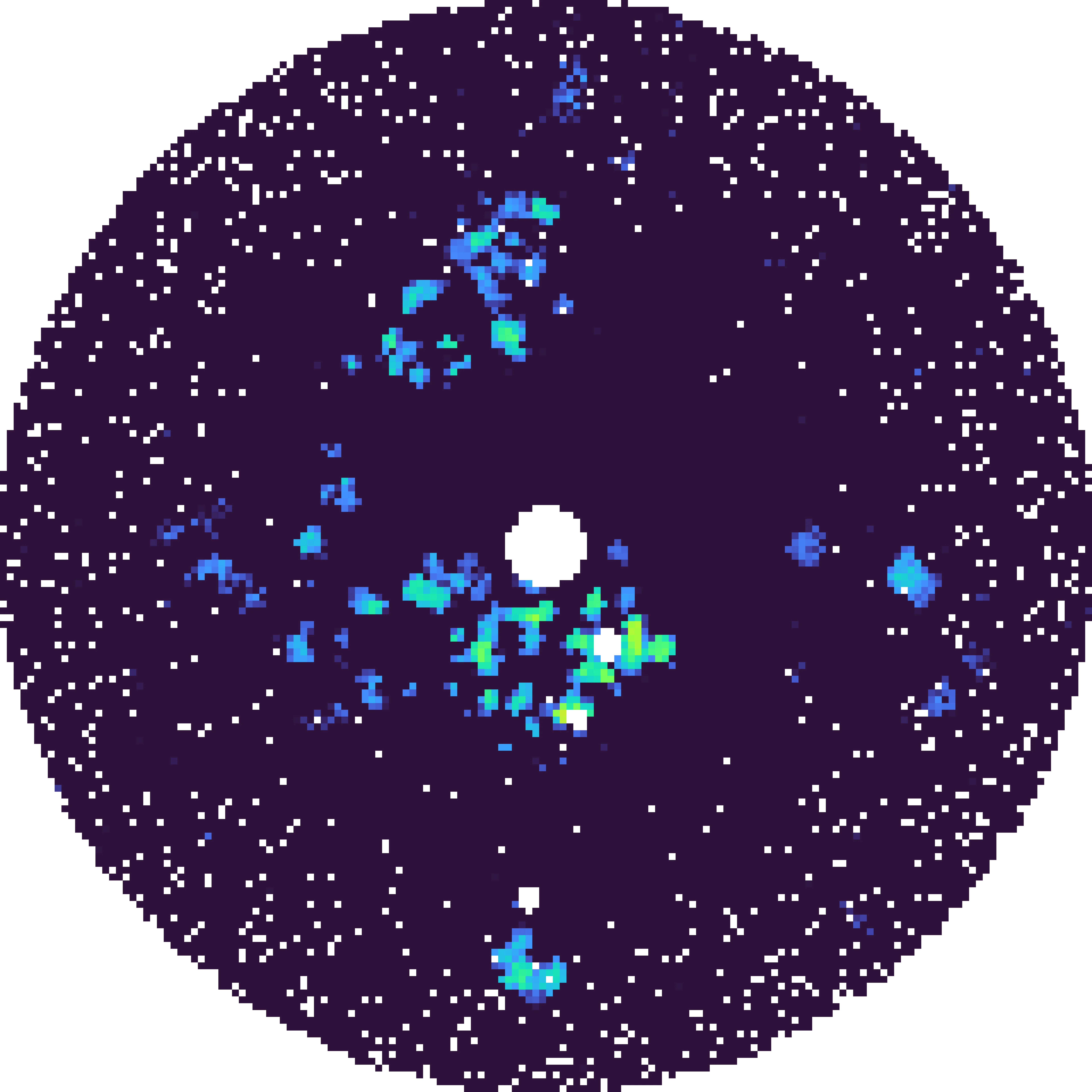
Galaxies don't hang in a void: they're surrounded by tenuous gas, like invisible steam over a pot of soup. This gas contains oxygen ejected by stellar explosions. Astronomers detect it via dark lines in the spectra of distant quasars: oxygen atoms absorb ultraviolet light, creating dips in the rainbow.
Two computer simulations, TNG50 and SIMBA, attempted to reproduce such observations. The researchers took 14 galaxy groups from each simulation, generated 90,000 synthetic spectra, and compared them with data from the COS-IGrM survey. The result: in TNG50, oxygen clouds appeared in 21% of cases, in SIMBA only 6%, but in reality 44%. The simulations clearly underproduce hot gas.
The difference between the simulations hints at where to look for the cause. In TNG50, strong oxygen clouds sit near galaxies with active star formation — meaning they were ejected by supernova explosions. In SIMBA, no such correlation exists. It seems the issue lies in how the simulations model stellar feedback: how strongly stars blow out gas and how fine the details they can resolve.
This isn't just a dispute between two programs. If simulations underestimate the amount of oxygen, then we're missing an important mechanism — how galaxies exchange matter with their environment. This affects their growth, the quenching of star formation, and the entire history of the universe. Now, knowing the discrepancy, scientists can tune the simulations more precisely, and then the steam over the pot won't be so elusive.
Oxygen in intergalactic gas is the 'ash' from explosions of massive stars. So, looking at oxygen absorption lines, we see the traces of supernovae that exploded billions of years ago.