Graphene from the Cold: How to Make Layers Even express
A graphene sheet is a one-atom-thick grid of carbon atoms. Stacking several such sheets with a specific twist yields a material with unusual properties: it can be a magnet or a superconductor depending on how you poke it. The trouble is that in natural graphite, such 'properly twisted' layers are rare, and growing them artificially is tricky.
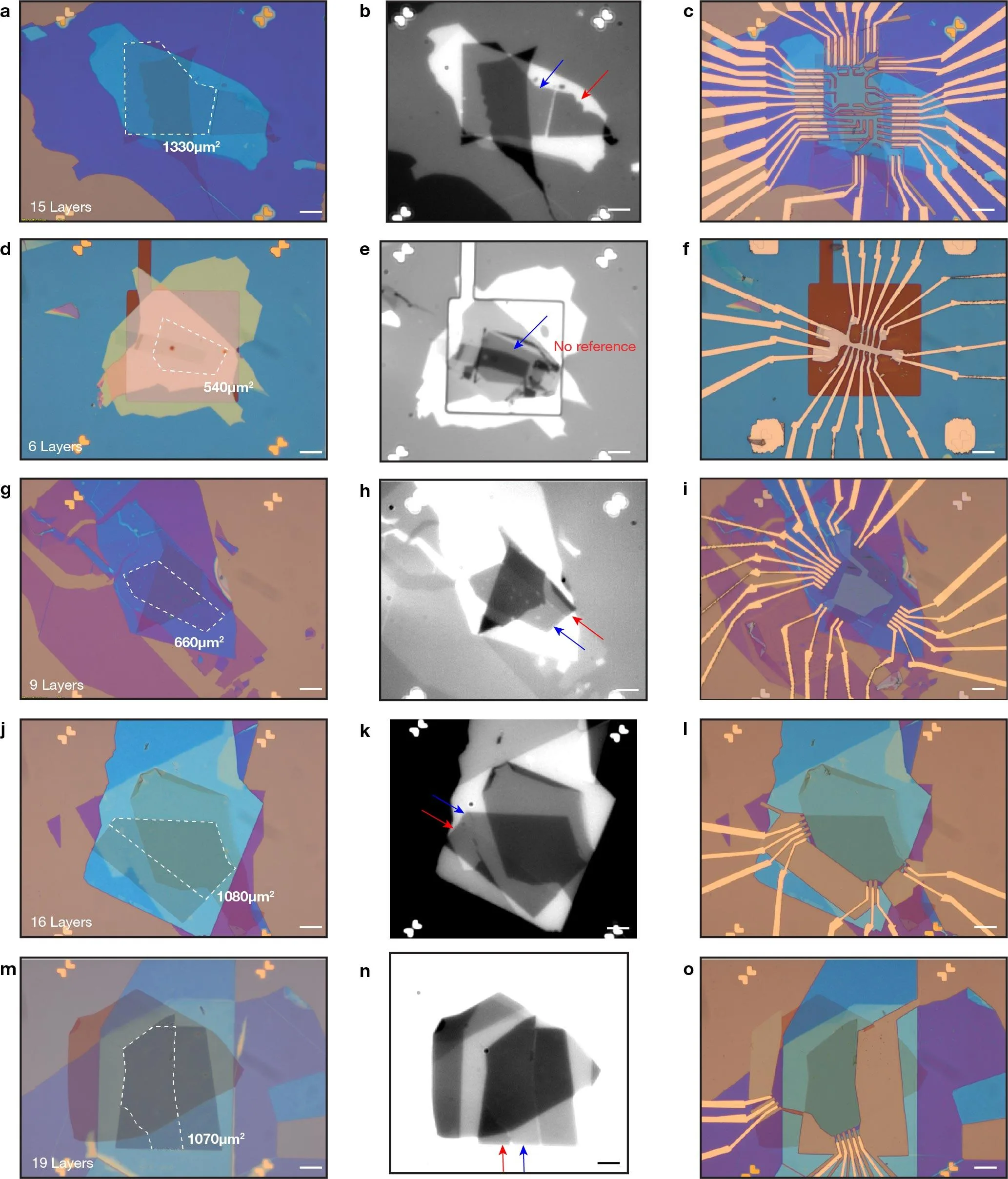
A team of researchers figured out how to extract the right pieces from graphite: they cooled it to ultra-low temperatures and split it with a sharp blow. This 'cold shock' yields large, flat pieces with the desired stacking. Then they carefully stacked these pieces under light pressure to avoid crumpling the layers. The result was flakes with an area of over 1300 square micrometers — roughly the size of several rice grains in a row. Nine out of ten attempts succeeded.
The cleanliness of the layers allowed them to see how the electron flow changes character: as temperature rises, it stops flowing in a smooth layer, like water through a pipe, and starts going around obstacles, like water through a sponge. This transition is a sign that the material is nearly perfect. Now such large, clean sheets can be used to assemble electronic circuits where layers work together, like notes in a chord.
A square meter of graphene weighs less than a milligram, but it can support the weight of a cat if stretched over a cup.
In Neal Stephenson's novel 'The Diamond Age,' carbon structures become the basis for smart materials — graphene with controlled layers brings that idea closer.