How Supernovas Ignite from Within express
A campfire that always blazes up to the same temperature — whether you toss a match into the center of a log or light several kindling sticks at the edges. That's roughly how Type Ia supernovas behave: cosmic explosions that astronomers use as rulers to measure distances across the universe.
For a long time, it was thought that such an explosion occurs when a white dwarf, the ultra-dense remnant of a star, siphons matter from a companion star and reaches a critical mass. But how exactly the detonation begins, the sudden explosive transition from relatively slow burning, remained a mystery. In the new study, scientists for the first time applied a mechanism that works not only in theory but has also been tested in terrestrial laboratories: the transition from burning to detonation driven by turbulence (tDDT). It's as if a fireplace flame suddenly accelerates into a supersonic shock wave due to chaotic air swirls.
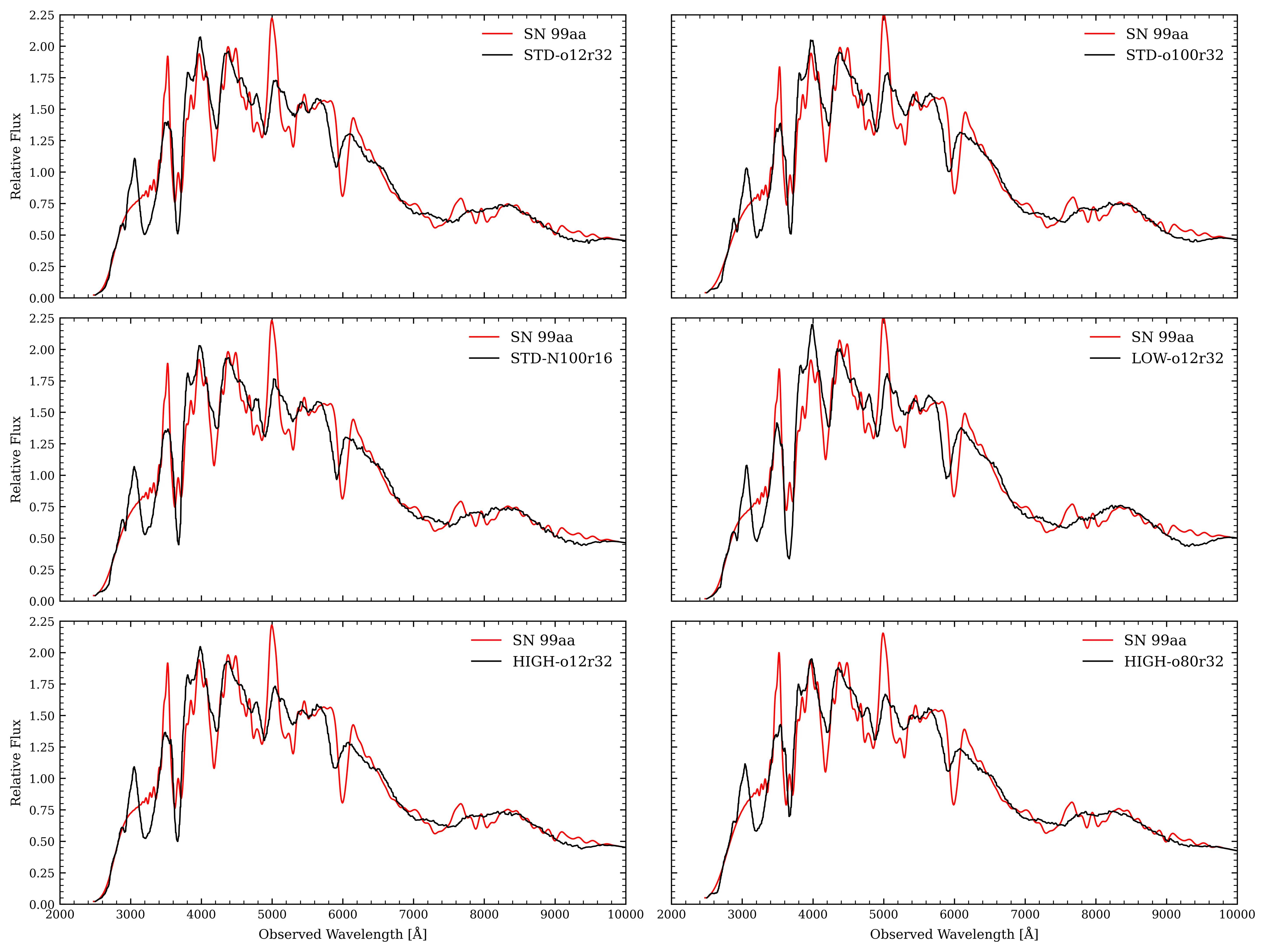
The authors ran several scenarios, varying the density at the white dwarf's center and the shape of the initial burning region. The outcome surprised them: although the conditions differed by a factor of six, all models produced nearly identical spectra at peak brightness — the 'fingerprint' of the explosion. Moreover, this spectrum matched exactly that of the real observed supernova SN 1999aa. This result provides the first physical explanation for why Type Ia supernovas are so predictable: turbulence itself 'chooses' the same configuration for the explosion, just as a river always finds the shortest path to the sea.
Original abstract
as written by the authors arXiv:2605.21575
Type Ia supernovae (SNe Ia) play an important role throughout astrophysics, most notably as standardizable cosmological candles. Yet, their stellar progenitors and explosion mechanism remain areas of active investigation. For decades, the canonical model for normal brightness SNe Ia used in cosmology was a carbon-oxygen white dwarf (WD) accreting from a non-degenerate stellar companion, approaching the Chandrasekhar mass (M_Ch). Previously, all models of near-M_Ch SNe Ia invoked an ad hoc assumption on the critical process of detonation initiation, and could therefore be tuned to a variety of outcomes. Here, we present global 3D hydrodynamical simulations of near-M_Ch progenitors, which incorporate, for the first time, a laboratory-validated ab initio mechanism for the turbulence-driven deflagration-to-detonation transition (tDDT). The tDDT detonation mechanism is highly efficient, leading to detonation initiation which is prompt in comparison to most prior work. Despite spanning a factor of six in central ignition density and qualitatively distinct ignition topologies, all models converge on nearly identical synthetic spectra at peak luminosity, spectroscopically matched to the overluminous SN 1999aa. The turbulence-driven Chapman-Jouguet criterion drives each progenitor to a common detonation configuration from diverse initial conditions, providing a physical foundation for the ignition-insensitive detonation outcomes implicit in the empirical standardizability of SNe Ia. This provides the first physically motivated, self-consistent pathway for delayed detonation in SNe Ia simulations. Further work is necessary to understand how this mechanism might produce more delayed detonation initiation and potentially fail, thereby yielding SNe Iax.
The supernova SN 1999aa, against which the models were compared, was 20% brighter than typical Type Ia supernovas, yet its spectrum still matched the model, confirming the universality of the mechanism.
In Arthur C. Clarke's novel 'Rendezvous with Rama', astronomers spot an anomalously bright supernova that later turns out to be an alien spacecraft, but in reality, even overluminous Type Ia supernovas now find their explanation in turbulence.