Quantum Trick Accelerates the Universe Without Dark Energy express
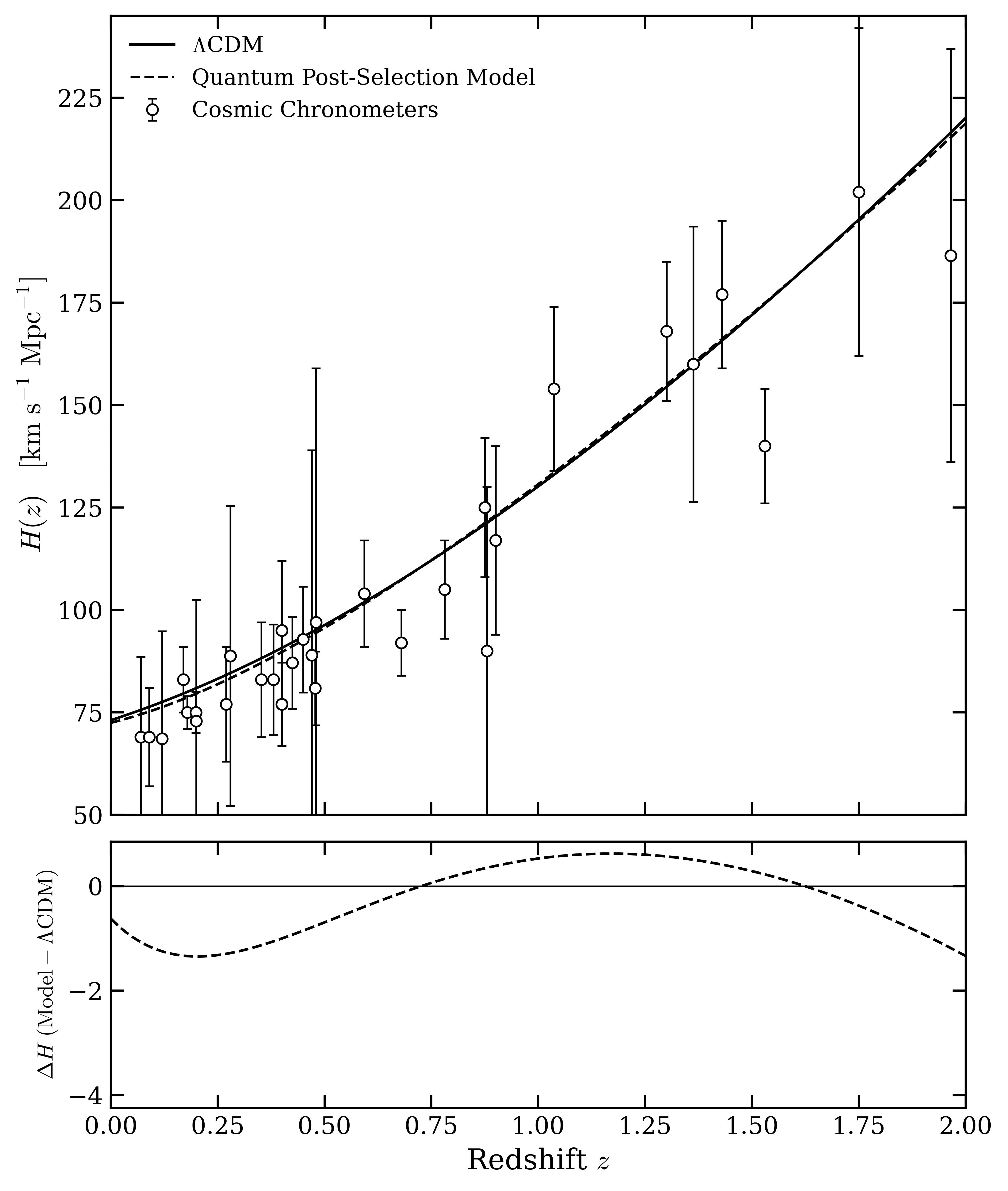
Since the end of the 20th century, we've known: the expansion of the Universe is accelerating — galaxies are flying apart faster and faster. The discovery brought a Nobel Prize to Adam Riess, Saul Perlmutter, and Brian Schmidt. The standard explanation relies on dark energy — an invisible force pushing space apart. New work proposes a different mechanism: it's all about post-selection — a quantum rule, like a detective story with a known ending where the clues are fitted to match it. The future selects only those event scenarios that lead to the desired outcome. This solves a longstanding mystery: why acceleration started just now, when both we and galaxies exist. The model introduces no mysticism and fits perfectly with data on supernovae and the age of galaxies. It also correctly describes the early epochs after the Big Bang. An unexpected conclusion: without such 'fitting,' acceleration would have started in an era of mere atoms — and stars would never have ignited.
Type Ia supernovae are stellar explosions with nearly identical power: they are used as standard 'rulers' to measure distances over billions of light-years.
Post-selection resembles the plot of Ted Chiang's story 'Story of Your Life,' where knowledge of the future determines actions in the present.