Charging from Nothing express
The void is never truly empty. In curved spacetime (for instance, in an expanding universe or near a black hole) the vacuum heats up. This is reminiscent of how acceleration makes particles appear seemingly out of nowhere: a phenomenon known as thermal vacuum radiation.
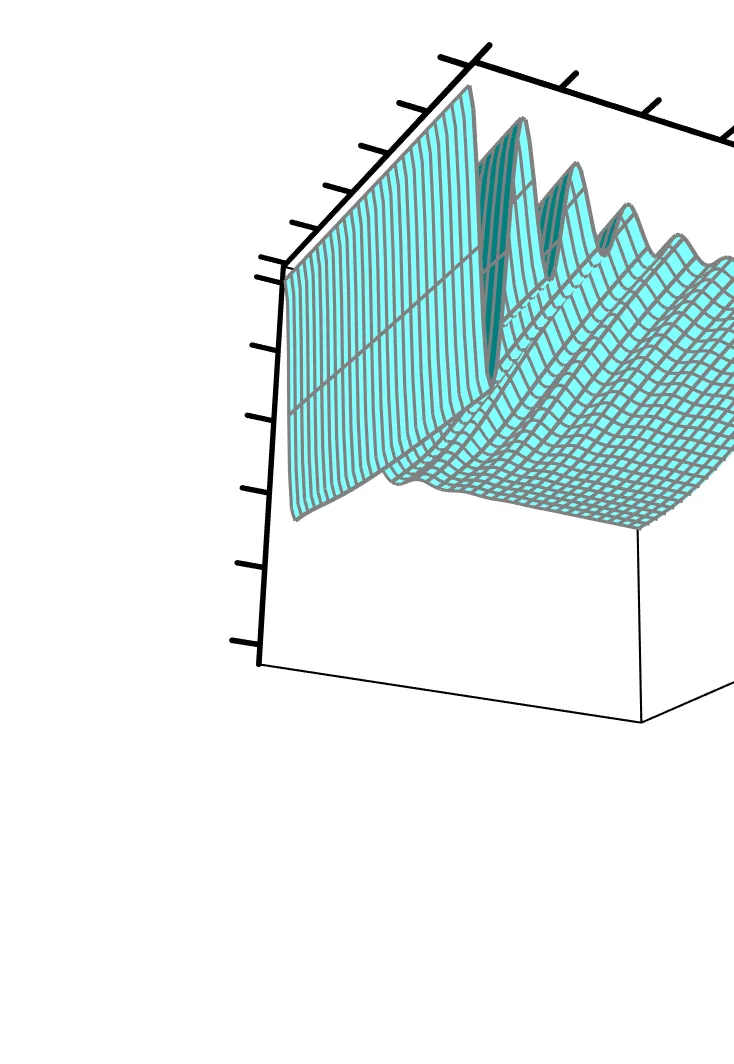
Physicists have built a model of a quantum battery that captures this heat. The battery is a tiny detector moving with acceleration through a quantum field. The work considers two types of curved spacetimes. One expands, like our universe. The other has the shape of a saddle with boundaries. In both cases, the battery gradually charges, extracting energy from the vacuum. The final energy reserve depends only on acceleration and curvature, not on the details of the surroundings.
This approach turns the battery into a tool for probing the thermal properties of the vacuum. It serves as a probe that senses the global temperature of spacetime, independent of local features. This is a step toward understanding how quantum mechanics and gravity work together.
Original abstract
as written by the authors arXiv:2606.25326
We propose a relativistic quantum battery model consisting of an accelerated Unruh-DeWitt detector coupled to a massless scalar field in a de Sitter and anti-de Sitter spacetimes. The maximal amount of quantum extractable work, defined as the ergotropy, is used to probe Unruh-Hawking thermality induced by acceleration and spacetime curvature. Using the open quantum system approach, we study the dynamics of the ergotropy with respect to the Kubo-Martin-Schwinger temperature, spacetime boundary conditions, and dimensionality. It has been found that the asymptotic value of quantum work extraction is determined solely by the acceleration and curvature. The steady behavior in the two spacetimes can be unified to witness the global thermality which is independent of boundary conditions and dimensionality. From a local perspective, we investigate how the ergotropy evolves through different pathways as the battery gradually reaches the same thermal equilibrium state characterized by a certain KMS temperature. In dS spacetime, the evolution at large acceleration exhibits pronounced oscillations and differs from the fast thermal relaxation observed at low acceleration. Varying the boundary condition in AdS spacetime can improve the energy storage of the moving battery. When the dimension of AdS spacetime is increased, vacuum fluctuations can modestly amplify the ergotropy in the initial stage and facilitate the rapid thermalization. From the perspective of energy transfer, the relativistic quantum battery helps explore the thermal vacuum in curved spacetimes.
Even in absolutely empty space, according to quantum theory, pairs of particles constantly pop in and out of existence. Acceleration or gravity can turn these virtual particles into real ones, creating thermal radiation.
In Stanislaw Lem's novel "Solaris," the ocean might draw energy from quantum vacuum fluctuations — an idea echoing quantum batteries powered by the very fabric of space.