A living organ in a Petri dish reveals loops express
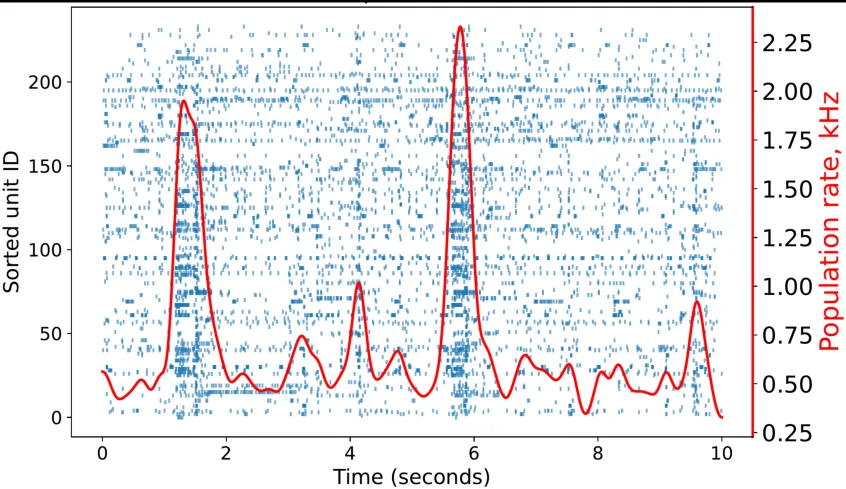
A city at night: lights on in some windows, dark in others. If you connect with lines the windows that light up simultaneously, you get a web of connections. Researchers studied such a web in tiny brain organoids — living clusters of nerve cells grown in the lab.
They recorded electrical signals from dozens of neurons and built a network where the strength of the connection between cells depended on how synchronously they fired. Then, using a mathematical method, topological analysis, they searched this network for loops: closed chains of three or more neurons. A loop is not just a group of friends but a structure capable of transmitting a signal in a circle.
These loops turned out to be surprisingly resilient. Random removal of neurons barely destroyed them. But when they specifically removed the cells that were part of the loops, the structure fell apart. As the organoid grew, more complex forms also appeared — voids in the network, resembling cavities in a sponge.
Thus, in the electrical noise of living neurons, a clear geometric framework emerged. The same loops that flickered in the network are now visible as a basis for future rhythms and waves, like city lights forming a stable pattern.
Brain organoids are grown from stem cells, and they can spontaneously generate electrical impulses reminiscent of the activity of a real brain.