Working memory is the brain's temporary workspace for holding and manipulating information needed for ongoing cognitive tasks, such as reasoning, comprehension, and decision-making. Unlike long-term memory, which stores vast amounts of information for years, working memory has a limited capacity — typically around four to seven items — and lasts only seconds unless actively rehearsed. It is the mental 'scratchpad' that allows you to remember a phone number just long enough to dial it, or to keep track of the steps in a complex calculation.
History
The concept of working memory was popularized by Alan Baddeley and Graham Hitch in 1974, who proposed a multi-component model with a central executive and separate subsystems for visual and verbal information. Earlier ideas about short-term memory date back to William James in the late 19th century.
How it works
Working memory is thought to arise from persistent neural activity in the prefrontal cortex and parietal lobes. When you hold a piece of information in mind, a population of neurons fires continuously, maintaining the representation. This activity is modulated by attention and can be disrupted by distractions. The information can be refreshed through rehearsal loops, which involve subvocal speech or mental imagery. Working memory also interacts with long-term memory: chunks of familiar information can be stored as single units, effectively expanding capacity.
In practice
Working memory research informs educational practices, cognitive training programs, and the design of user interfaces that minimize cognitive load. It is also relevant for diagnosing and treating conditions like ADHD and dementia.
Fun fact
The capacity of working memory is so limited that the average person can hold only about four 'chunks' of information at once — a finding that has been replicated across cultures and age groups.
Collective behavior of AI agents has emerged not in a laboratory but in the wild: on a randomly discovered wiki site where agents wrote test hints. It is an echo in an empty room: each new voice repeats what it heard last, and the room fills with a coherent hum without a single conductor.
A molecular timer that counts out the seconds a thought is held has turned up in the thalamus. Working memory is a mental notepad that keeps information for a few seconds while we read, do arithmetic, or plan. Its capacity is limited, and over time the trace fades. But what exactly sets that time limit long remained a mystery.
Imagine a book with latches on its pages: you can only flip a page if you know how to click its edge. That is roughly how the mechanical metamaterial we are about to discuss works. Each cell is a small mass inside a larger one, connected by an elastic beam. The beam can sit in two stable positions, like a switch.
A jazz trio plays in the dim light of a club. The pianist leads the melody, the bassist holds the rhythm, and the drummer sprinkles out rolls. If you listen only to pairs of musicians, you can catch how the pianist adjusts to the bass or the bass to the drums.
An older person says with confidence that the word "sunflower" was on the list, even though only "almond" was there. Both words are tied to oil, and that semantic thread was enough for the brain to fill in the memory. Memory works like a compass: one needle points to meaning, the other to the order of events. With age, one of the needles starts to outweigh the other.
The classroom goes quiet after the lesson, but the echo still rings in the child's head: faces, objects, places. It is this echo, not the lesson itself, that decides what will stay in memory. For the first time, researchers have caught it in children aged 6 to 17.
Children memorized scenes inside an MRI scanner: they were shown a room, then an object or a face in a particular spot.
A translator at a meeting keeps getting distracted by every rustle in the room, then suddenly dives into a long monologue by the speaker. That's exactly how the fast radio burst source FRB 20240114A behaves: in one hour, its pulses fire randomly, but over months they line up into a predictable drift.
A person flips a coin to make a decision. They stand still — the coin lands heads. They take a few steps, and flip again. It would seem walking shouldn't affect the coin. But what if the walk itself changes how often they decide to simply repeat the previous toss?
That's exactly what researchers tested.
Every time a child with cerebral palsy is about to move their leg, a distinctive electrical blip appears in the brain — a slow voltage shift. Scientists call it a movement-related potential. A brain-computer interface (a system that reads intentions from brain signals) can pick up this blip and turn it into a command for a training device.
A city at night: lights on in some windows, dark in others. If you connect with lines the windows that light up simultaneously, you get a web of connections. Researchers studied such a web in tiny brain organoids — living clusters of nerve cells grown in the lab.
The meditating brain is an orchestra, and attention is the conductor. When you're focused on your breath, all instruments play in harmony. But suddenly, a thought-cello plays a false note: that's mind wandering. An experienced conductor doesn't panic: they instantly catch the dissonance and gently guide the orchestra back to the main melody — the breath.
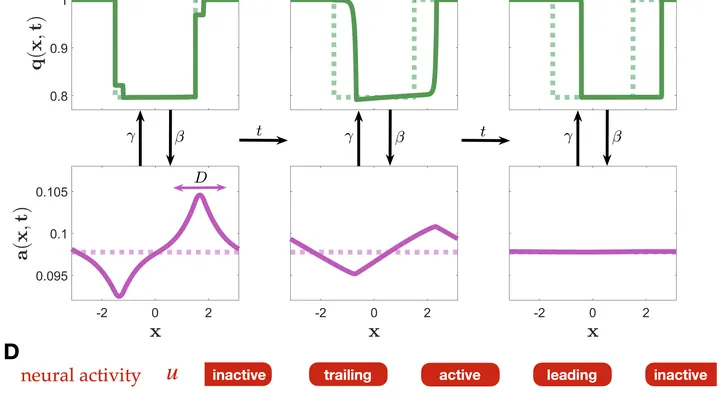
After a stone is thrown, the circles on water vanish, but the liquid retains microscopic oscillations. The slightest gust, and ripples appear again. Neural networks behave similarly. When electrical signals quiet down, the memory of them remains in the contact points — synapses.
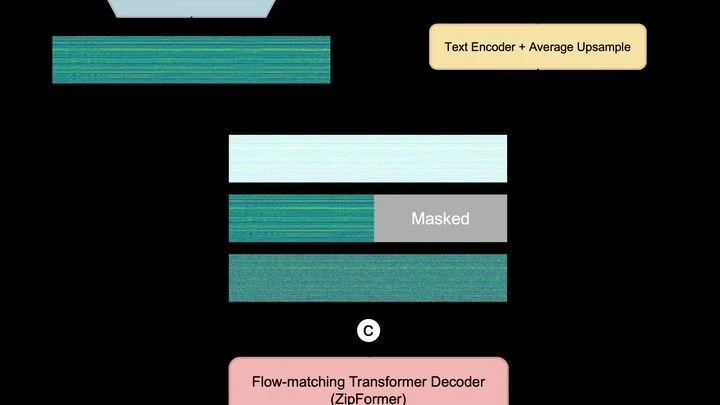
Narrating a long text, like an audiobook, used to require the computer to keep a detailed picture of every split second of sound in mind, as if for an hour-long conversation you had to draw a millimeter-accurate map of the entire route. These 'maps' were enormous, and even powerful machines choked, assembling speech piece by piece.
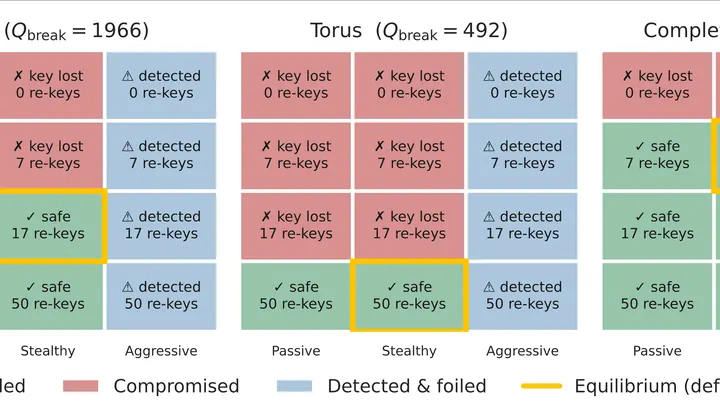
A cloud service dishes out commands to a drone swarm without any knowledge of their movements. The signals are encrypted, but each maneuver leaves a barely visible trace in the cipher, like ink bleeding through paper from the pressure of a pen. Over time, these ink stains coalesce into a pattern, and the hidden data is no longer a secret.
Code-writing assistants often behave like a chef who, to boil a single egg, rereads the whole cookbook. When asked to make a tiny fix, they reopen dozens of files and retrace long-familiar connections. This is unnecessary work — energy going to waste.
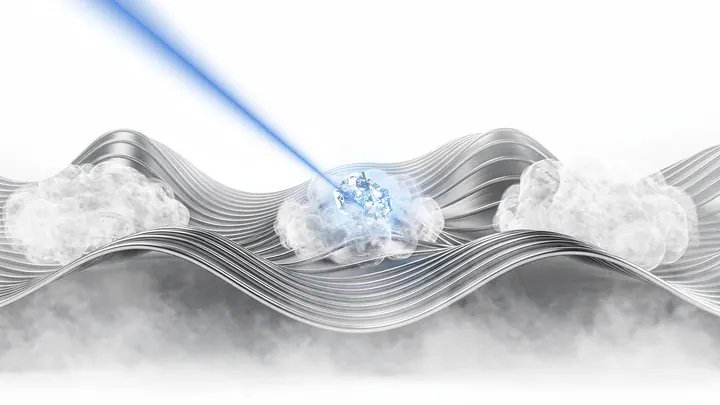
Imagine an old theater in the damp fog. On the stage, a scattering of actors, but only one is caught by the spotlight beam, made to freeze in the bright patch. The rest billow in the dim light, ready to dissolve at any moment.
Why do some systems, from gene networks to air travel, preserve imprints of the past longer than others? For a long time, network science blamed topology: the number of connections, modularity, spectrum. But two networks with the same skeleton can remember and forget in completely different ways.
The brain doesn't learn every task from scratch: it transfers experience from one activity to another. But how do you know which tasks are truly related? Neuroscientists came up with a clever trick: let an artificial network "peek" at brain activity during one task and try to predict activity during another. If it works well, the tasks are close.
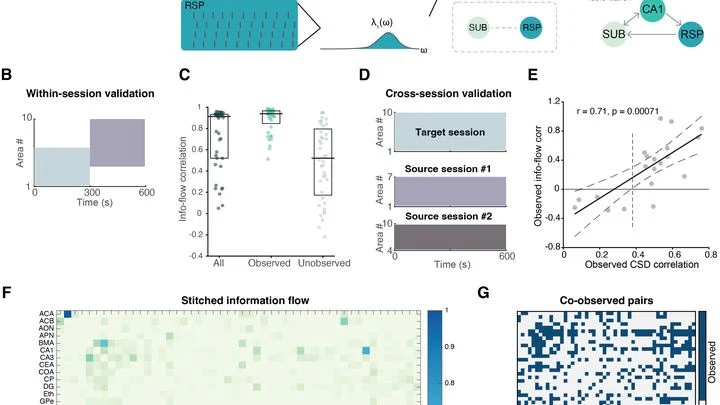
A patchwork quilt where each patch is a recording of activity from a small brain region. One patch was stitched on Monday in London, another on Tuesday in New York, and a third a month ago in Tokyo. This mosaic covers the brain only partially, and there is no common seam to join them.
A supermarket cashier at rush hour doesn't memorize every scanned item: they keep the running total in their head and watch the queue. The brain allocates its resources similarly: the expensive, precise cortex (responsible for deliberation) and the simpler, economical subcortical nuclei (where habits live) work in tandem.
A tightly stretched sheet lies on a table for days. Outwardly it's still, but the fabric fibers retain tension — loosen one edge slightly, and wrinkles will run across it, rearranging the whole pattern. That's roughly how a layer of epithelial cells behaves at rest. It doesn't just freeze; it accumulates mechanical stress — a kind of cellular memory of past movements.
A person hunting for keys mentally runs through places where they might be. A bird that tucked hundreds of seeds into crevices in autumn retrieves them flawlessly in winter. How can a brain hold so many addresses when all birds have roughly the same number of neurons? The answer lies in geometry.
A melody plays, and the brain doesn't just listen note by note. It works like a conductor who already knows the score: each next note is expected because the previous ones still echo in memory. But how do neurons hold on to that echo?
A summer meadow surfaces in memory not just as a picture — along with it come the scent of grass and the warmth of the sun. The brain glues sensations into a single image, and that image holds up better than any one sensation alone. But exactly how neurons stitch the visual to the olfactory has long been a mystery.
The brain is like a multi-story building: lower floors process simple signals, while upper floors assemble them into complex perceptions. Scientists have long suspected that this order is tied to how neurons work together. But exactly how has remained a puzzle.
The fate of a civilization isn't just a matter of luck or disasters. Scientists simulated a thousand years of history under ten different scenarios, accounting for resource consumption, governance, and random shocks. The key metric turned out to be the 'activity coefficient' – the fraction of time when a civilization is technologically alive. At best, this fraction nears 100%; at worst, it drops to 38%.
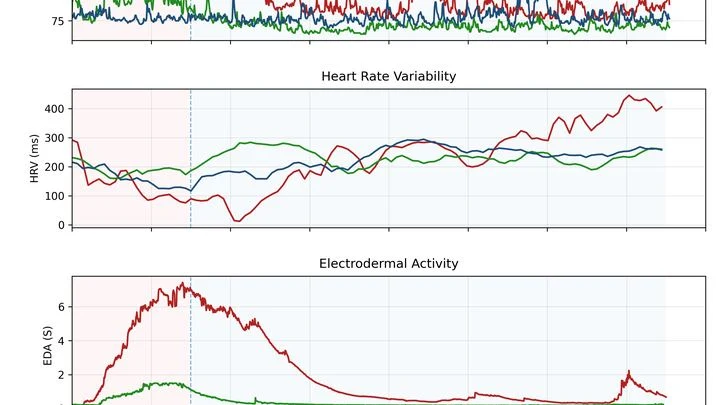
Six adults came to the lab on three consecutive days. On one day they simply rested, on another they pedaled a bike to exhaustion, and on the third they went through an ordeal that makes the heart race without a single movement: they had to give a speech and solve problems in front of a stern committee.
Holding a phone number in your head while you dial it: that's working memory. In the brain, a group of cells is responsible for this, sending signals to each other like people passing a bucket along a chain. But every transfer has a cost: it requires messenger substances that get used up.
Speech is like an orchestra where every note must sound at just the right moment. The brain turns a thought into a chain of sounds in a fraction of a second, and until now it was unclear how it manages this hierarchy — from individual sounds to syllables to whole words.
A chef's knife and a peeler each handle different tasks, but when a cook learns a new recipe, they often grab the same knife for everything. The brain seems to do the same when mastering a new skill of distinguishing patterns.
In the experiment, monkeys trained for weeks to tell apart barely noticeable differences in complex patterns.
The brain is like a sprawling city: districts-regions communicate via streets-neural pathways. If traffic lights at an intersection fail, traffic grinds to a halt. Similarly, in the brain, when bundles of nerve fibers (white matter) malfunction, distant regions stop working in concert, and thought stalls.
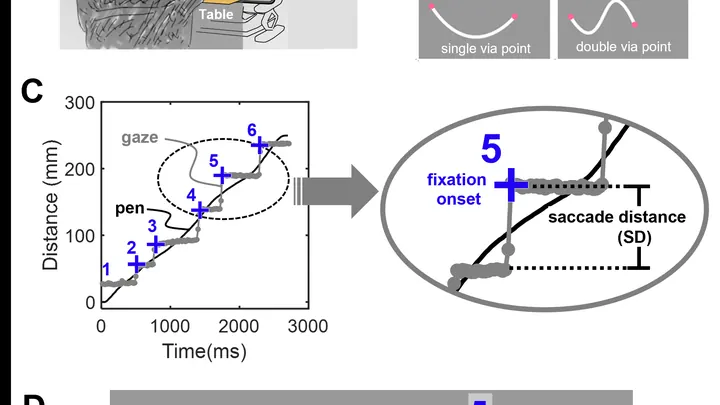
When the hand draws a line, the gaze almost always runs ahead, like a scout peeking around the corner before the column turns. But how far ahead? It turns out that each person has their own distance, and it does not change from attempt to attempt.
In the experiment, professional calligraphers and ordinary people traced a contour on a screen while instruments recorded eye and pen movements.
At night, the brain doesn't switch off. Instead, it sorts through the day's events like a librarian arranging books on shelves. But where do those strange, sometimes nonsensical dream images come from? Many have assumed they're just random noise with no meaning.
A new computer model shows that randomness doesn't hinder: it helps.
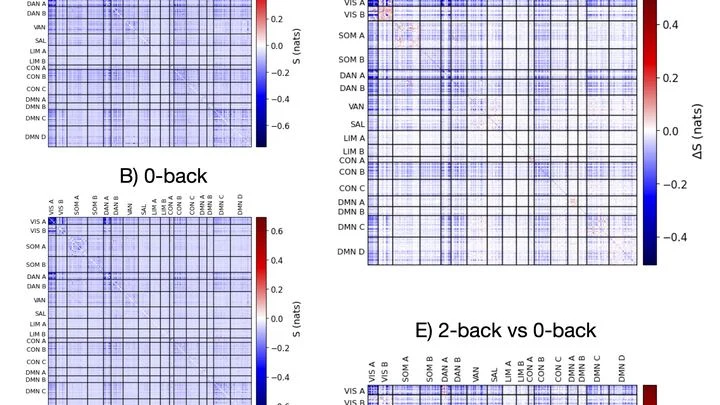
Imagine an office where employees exchange notes. When there are few tasks, everyone works independently. But when an urgent order arrives, some departments start actively messaging others, and the overall work becomes more coordinated. That's roughly how the brain behaves when we try to hold several things in mind at once.
Over the course of a day, the brain accumulates impressions the way a room accumulates stuff. At night, during deep sleep, it doesn't just rest: it tidies up: it sorts through the day's events and decides what to keep and what to toss. Scientists built a computer model of the brain that learns from a few examples during the day and 'replays' them at night, as if dreaming.
You're trying not to think about the argument you had this morning, but vivid images keep popping into your head. At the same time, you're preparing a report and holding numbers in your mind. It doesn't go well: memory interferes with work, and work prevents forgetting. Scientists set out to see how the brain copes with this dual load in people with varying levels of anxiety.