How Movement and Sensation Loop Together express
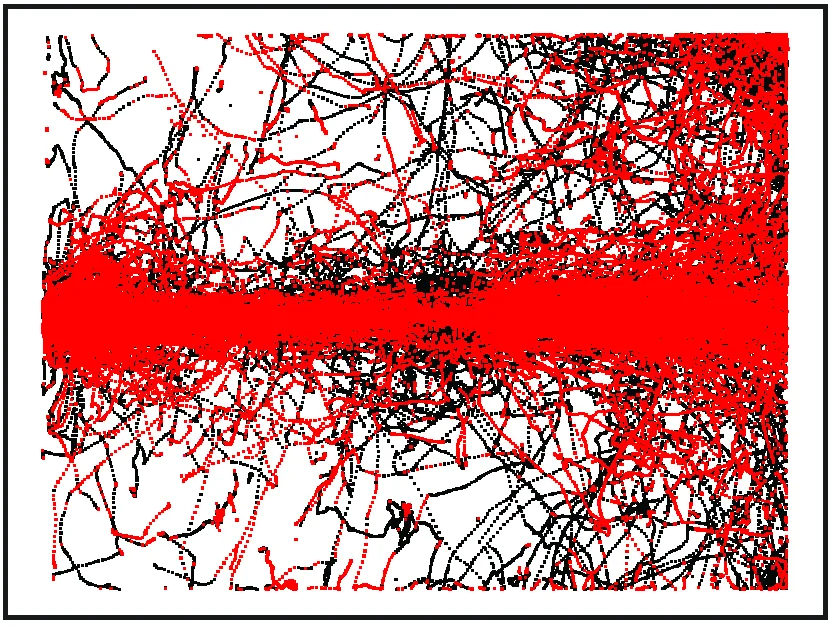
A bacterium swims toward food. A chemical signal guides it forward, but with each movement the signal changes. A loop emerges: sensation, action, new sensation. The authors turned this loop into a measurable quantity.
They applied an idea from information theory: you can calculate how many bits (units of information) flow from the senses to the motor command and back. The first stream they called reactive: this is the classic response to a stimulus. The second is active: here, the movement itself shapes future sensations, like when we turn our head to get a better look at an object.
The researchers built a simple model where these two streams can be tuned. The model showed: if the active stream is too small, the organism becomes a passive sensor and doesn't explore the environment. If it's too large, it ignores important signals. The optimum lies somewhere in between, and it differs for different tasks. In bacteria, for example, the reactive part dominates: they mostly follow the chemical gradient. In flies seeking an odor, the strategy changes depending on how close they are to the source.
The two-way exchange of information between sensation and movement is a common feature of all navigators, from the simplest to artificial ones. By measuring this exchange, you can not only predict search success but also understand what strategy an agent uses without peeking into its "brain." Thus, the loop that started with a swimming bacterium becomes a key to the behavior of any seeker.
E. coli "deliberates" about 10 bits of information per second when deciding where to swim. That's roughly the same amount needed to choose one out of a thousand possible trajectories.