Active learning is a subfield of machine learning where the algorithm itself chooses which data points to label or query from a pool of unlabeled data. Instead of passively learning from a fixed, randomly sampled training set, the model iteratively selects the most informative examples to request labels for, aiming to achieve high accuracy with as few labeled examples as possible. This is particularly valuable when labeling data is expensive or time-consuming, such as in medical imaging, drug discovery, or natural language processing, where expert annotation is costly.
History
Active learning has roots in the 1980s and 1990s, with foundational work by David Cohn, Les Atlas, and Richard Ladner in 1994 on 'Improving generalization with active learning'. The concept of querying informative data points dates back to earlier work in statistics and experimental design.
How it works
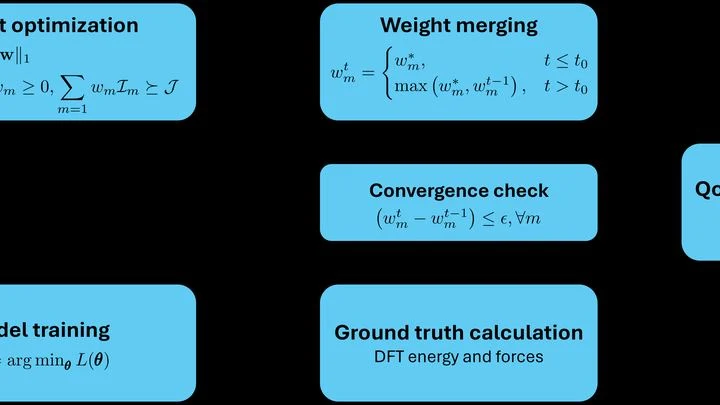
The process typically starts with a small set of labeled data to train an initial model. The model then evaluates the unlabeled pool and selects the most informative points according to a query strategy. Common strategies include uncertainty sampling (choosing points where the model is least confident), query-by-committee (selecting points where multiple models disagree), and expected model change (picking points that would most alter the current model if labeled). The selected points are labeled (by a human or an automated oracle) and added to the training set, and the model is retrained. This loop repeats until a stopping criterion is met, such as a performance threshold or a labeling budget.
In practice
Active learning is used in applications where labeled data is scarce or expensive, such as classifying astronomical objects from telescope surveys, detecting fraud in financial transactions, and trainingspeech recognition systems with limited transcribed audio.
Fun fact
Active learning can reduce the amount of labeled data needed by up to 90% compared to random sampling in some tasks, making it a key tool for efficient AI development.
Collective behavior of AI agents has emerged not in a laboratory but in the wild: on a randomly discovered wiki site where agents wrote test hints. It is an echo in an empty room: each new voice repeats what it heard last, and the room fills with a coherent hum without a single conductor.
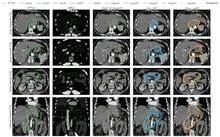
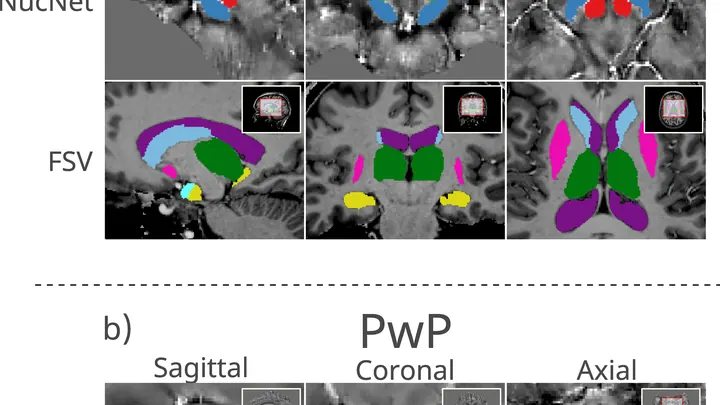
A radiation oncologist looks at an abdominal scan and mentally outlines the area to be irradiated. That area is not visible as a separate organ: its boundaries are set by protocol, not by tissue. So the doctor needs a map of the surroundings to avoid hitting healthy structures.
The nnU-Net model starts with the same task.
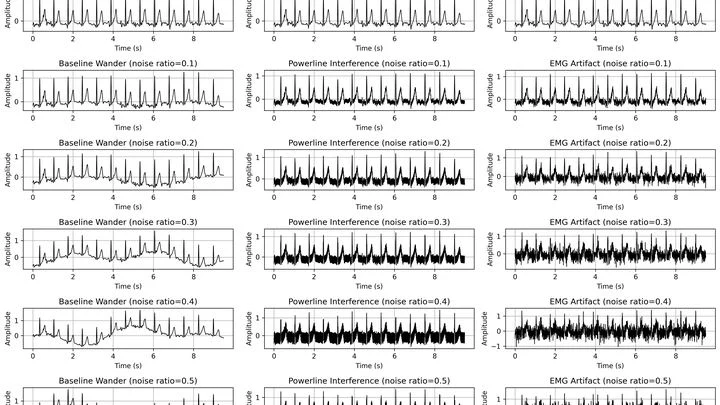
An electrocardiogram is like a recording of a conversation where the heart whispers and a construction site roars in the background. Atrial fibrillation, where the atria quiver instead of contracting, changes that whisper almost imperceptibly.
Two people agree to meet, but each has their own things to do. One hesitates: what if the other doesn't come? And decides not to go. The other thinks the same. The meeting doesn't happen. That's the simple mechanism the authors dissect: a joint endeavor requires everyone to invest time, but the payoff depends on whether the partner participates.
In the model, each person keeps a to-do list ordered by importance.
In a pot of water, microscopic spheres, colloidal particles, are floating. Each sphere is coated with long polymer chains that look like a brush and carries an electric charge. If you get the temperature and solution composition right, the spheres start arranging themselves into ordered patterns — crystals.
Sound enters the ear and hits a thin membrane inside the cochlea, the spiral organ in the inner ear. This membrane doesn't just vibrate like a string; it actively pushes the vibrations when they are weak and stops when they are strong. That's how the ear hears both a whisper and a loud conversation.
Scientists built a model where each piece of the membrane is a tiny pendulum with a spring.
A cookbook without a shopping list: that's what a scientist faces when looking at a scheme of chemical reactions. The arrows and formulas on paper look neat, but once you start hunting in the lab for molecules that will actually behave that way, a real quest begins.
A bacterium swims toward food. A chemical signal guides it forward, but with each movement the signal changes. A loop emerges: sensation, action, new sensation. The authors turned this loop into a measurable quantity.
Each morning, dozens of telescopes swing toward the Sun. Their cameras catch a narrow band of red light — the Hα line, discovered by Johann Balmer. The images reveal dark, whimsically curved threads. They look like stitches in a giant tapestry sewn through the blazing corona.
A neuron receives thousands of signals on its branching processes — the dendrites. Some signals push the cell toward firing (excitation), others hold it back (inhibition). For a long time, it was thought that the neuron simply adds up all the 'fors' and 'againsts.' But in real dendrites, inhibition works differently: it can not subtract but divide the excitatory signal.
Assembling the puzzle of the Universe, astronomers are used to every new detail fitting perfectly into the already completed picture. But sometimes there are pieces that seem cut from another jigsaw. Twenty thousand active galactic nuclei, and eleven percent of them the neural network confidently rejects as alien.
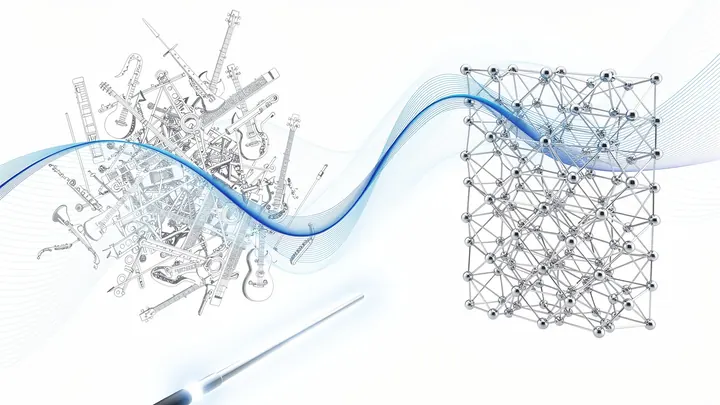
The meditating brain is an orchestra, and attention is the conductor. When you're focused on your breath, all instruments play in harmony. But suddenly, a thought-cello plays a false note: that's mind wandering. An experienced conductor doesn't panic: they instantly catch the dissonance and gently guide the orchestra back to the main melody — the breath.
A typical tracking program resembles a navigator steering a ship by the stars. But as soon as the sky clouds over, coordinates drift, and entropy (a measure of uncertainty) builds up in the data. The new algorithm gets a ‘co‑pilot’ — a module that monitors how confident the main navigator is.
Models that turn text into audio are good at recreating single sounds, but get confused when the script has several in a row. For example, the script might call for a ring, then footsteps, then a door slam. The generator might shuffle events, so the listener hears footsteps before the ring.
The brain communicates in short electrical clicks. Previously, to learn this language, thousands of examples with translations from the experimenter were needed. MOJO takes a different path: like learning a language through immersion, it first listens to the 'stream of consciousness' without any hints and finds recurring patterns on its own.
Medical scans are maps of tissue density. The brightness of each pixel reveals what’s there, much like photometry measures light intensity. But conventional algorithms analyze pixels in isolation, producing jagged organ boundaries.
A new approach compels the program to prioritize smoothness.
Human hearing is wired so that the brain prioritizes familiar patterns — a friend's voice, the patter of rain, a car horn. But a new system works on a different principle: it registers any sound burst, even one never encountered before.
In a kitchen with gas burners, each heats differently. If the cook moves the pots, food may burn. Just so in a wireless network: the antenna-burners and user-pots require precise placement. Ordinary neural networks don’t distinguish positions, treating all burners as identical. So they struggle to estimate signal quality or adjust transmission.
Power systems with solar panels and wind turbines are like a chess game: cloud cover and load changes are the opponent's moves, impossible to foresee. To maintain balance, operators used to run through dozens of scenarios (uncertainty) — that took too much time and computing power.
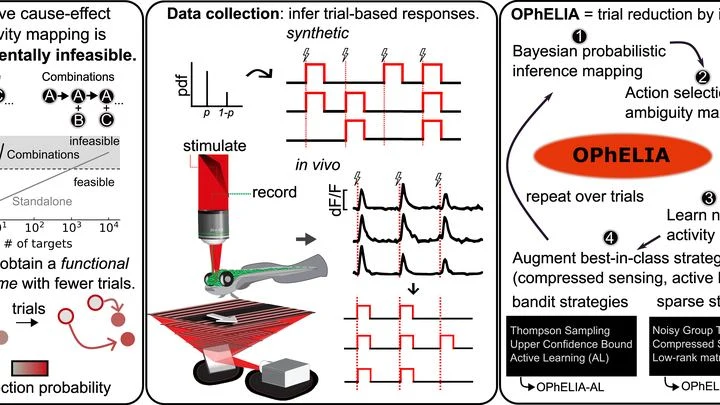
To understand how the brain works, you need a detailed map of neuron connections — the so-called connectome. The traditional approach is like trying to figure out a huge garden irrigation system by opening each tap one by one and watching where the water flows.
Code-writing assistants often behave like a chef who, to boil a single egg, rereads the whole cookbook. When asked to make a tiny fix, they reopen dozens of files and retrace long-familiar connections. This is unnecessary work — energy going to waste.
Researchers took 16 everyday activities — from washing dishes to squatting — and broke the movements down into elementary components, much like a spectroscope splits light into a spectrum. Comparing three approaches, they found an unexpected key to recognition: a single averaged snapshot is enough. Only nine joints out of dozens carried the crucial information — the rest hardly mattered.
A metallurgical workshop piled high with aluminum scrap looks like an orchestra out of tune before a concert: each instrument is off-key in its own way. Offcuts of airplane wings, crushed cans, shavings from milling machines: each 'instrument' has its own metallicity, nonlinearly influencing the final 'melody' of strength and thermal conductivity.
Gold doesn't lie on the surface: it's hidden in tons of barren rock. To extract a gram of precious metal, prospectors sift through cubic meters of dirt.
For centuries, astronomers gazed at the night sky, catching the slightest changes in stellar brightness. These uneven sequences, light curves, are like musical staves: each star performs its own unique melody.
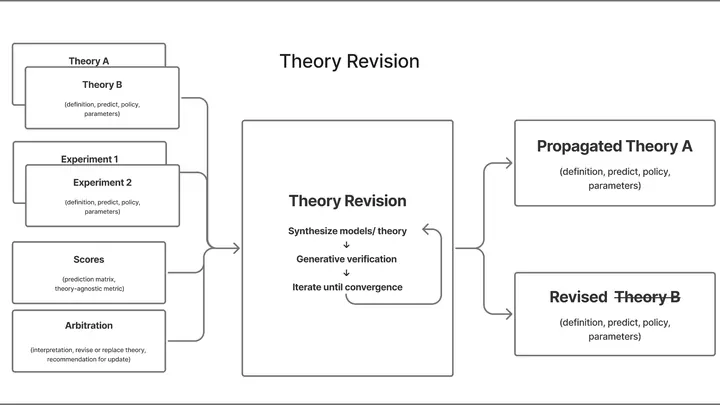
A closed loop: the machine proposes an idea, tests it on people, sees the failures, and spawns a new, more accurate guess. That's how AutoCog works — an automatic cognitive scientist. Previously, in the science of thinking (cognitive science), the hardest part, coming up with a theory, was done only by humans.
A solid electrolyte is not just a crystal lattice: it’s a bustling metropolis for ions. Each act of conduction resembles a trip through the city: there are wide highways with low energy barriers, gridlocks in bottlenecks, and tricky detours where an ion can get stuck.
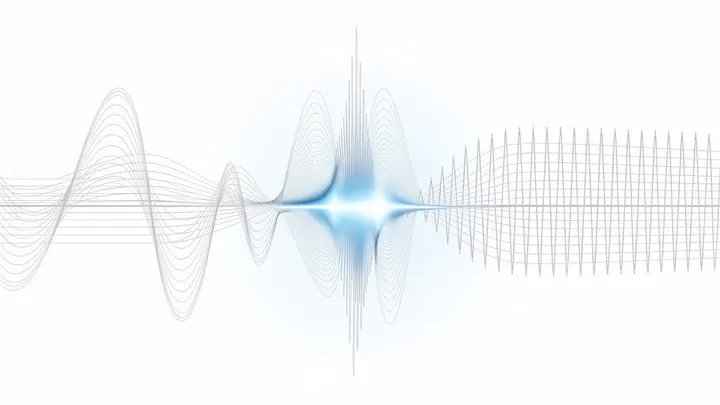
We're used to thinking that noticing only confirmations of our guesses is a mistake. But recent calculations, inspired by wave behavior, flip that view. It turns out that the habit of seeking the familiar is the best way to reduce information noise (scientists call it entropy).
Many cutting-edge physics calculations hit a brick wall — not for lack of ideas, but because of arithmetic. We're talking about integrals that express particle collision probabilities or the shape of gravitational wave bursts.
A chef doesn't waste ingredients cooking the whole dish to check the taste: they just taste a drop of sauce. The same logic underlies the "information matching" method for predicting metal strength. Instead of expensive calculations of every atom's behavior, scientists "taste" only simple indicators linked to plasticity — a metal's ability to bend without breaking.
A person looks at a door lock and sees a keyhole. They know that a key is inserted and turned. But if instead of a keyhole there's a touch panel, the familiar frame breaks. The person doesn't just make a mistake: they realize that the usual approach won't work and can say, "There's no place for a key here; a different approach is needed."
Such an honest stop with an explanation is rare for machines.
A proofreader checks a manuscript before it goes to print. They don't know every possible mistake, but they know exactly what flawless text looks like. Spotting a strange symbol or a blurred word, they immediately circle it in red. That's roughly how the new program for checking medical images works.
For one person, the disease begins with a tremor in the hand — the cup dances on its saucer as they carry it to the table. For another, the legs suddenly refuse to move smoothly: the step becomes short and shuffling, as if the floor were suddenly covered in a sticky layer. These are not two different diseases but two faces of the same one — Parkinson's disease.
Every time you mull over a risky move, whether to invest in stocks or hold off, an inner dialogue runs through your head. Usually, scientists try to reconstruct that dialogue from the final choice alone, as if a detective were reconstructing a conversation between two people from a photo of the meeting spot.
Searching for a new material is like looking for a needle in a haystack, but here the haystack is millions of possible atomic combinations. In the past, scientists spent years trying out options in the lab, relying on intuition and luck. Now, artificial intelligence is stepping in, learning to 'understand' the language of crystals.
A neutron spectrometer is like a blind geologist who taps on rock and guesses what's inside by the sound. It sends a beam of neutrons into a crystal and watches how they scatter. From this pattern, you can deduce how atomic magnets, spins, oscillate. But where exactly to dig and how long to listen used to be decided by a human.
Now, the TAS-AI algorithm has taken the helm.
A tomograph is like a photographer who walks around an object and takes pictures from different sides. Usually, it snaps at regular intervals and uses the same amount of light for each shot. But if you need to shoot quickly and not waste extra film, you have to choose: which angles matter more and where to direct more light.
A lab assistant carefully follows every step of an experiment, but at the end, writes in the report what they wanted to write before they even started. That's how modern language models behave when given scientific research tasks.