How Wind Betrays a Landfill's Stench Before Residents Complain express
At a landfill on the outskirts of town, the wind shifts direction, and a couple of hours later the nearest village smells of rotten eggs. That's hydrogen sulfide — a gas produced when waste decomposes, and in large doses it's hazardous to health. Usually, authorities only learn about the problem after residents have already breathed it in and called to complain. Now there's a way to warn about an emission in advance, using nothing but the weather.
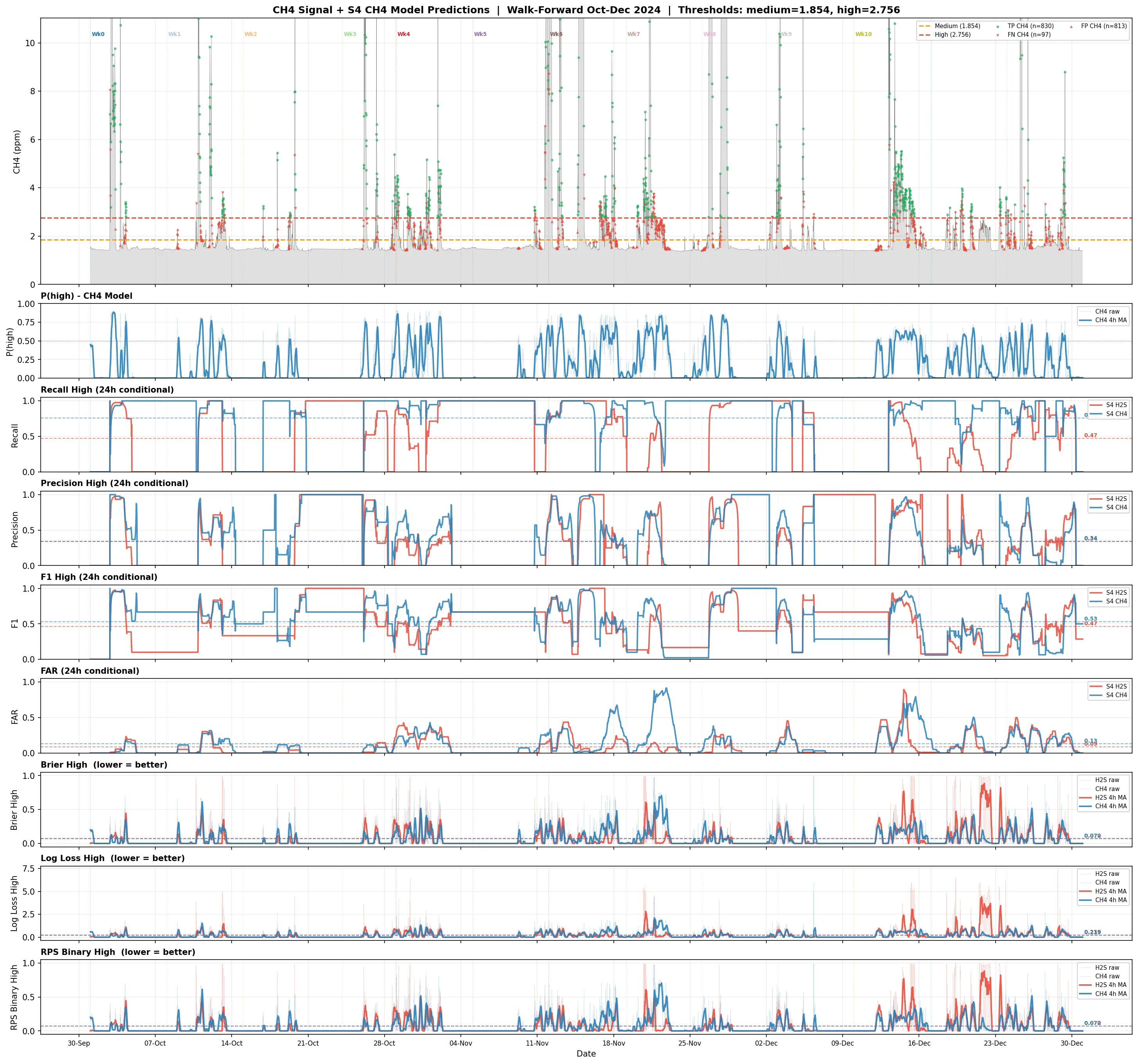
Scientists took years of observational data from a European landfill equipped with gas sensors. They noticed that spikes in hydrogen sulfide are linked to wind carrying the gas from the landfill to the sensor, and to slow weather changes — calm spells, rain, pressure shifts. They built a program called CAIRN around these two time scales. Inside it are two 'counters': a fast one tracks how wind transports the gas over hours, and a slow one tracks how weather changes over several hours. The program doesn't know chemistry; it simply learns to predict sensor readings from weather reports and the calendar.
The result surprised them: CAIRN worked not only at the landfill where it was trained, but also at a second nearby station, and even for methane — another gas released alongside hydrogen sulfide. This means the method can be transferred to other sites without lengthy tuning. If you run four such predictors at different points, together they produce a three-level warning, as in World Health Organization recommendations. This warning closely matches the signal from a direct sensor network and the log of resident complaints.
Now sanitation services can trigger alerts when an emission is just beginning, rather than after people have already smelled the odor. The wind, once just weather, becomes an ally: it tells in advance where and when the invisible cloud will go.
The human nose is one of the most sensitive detectors of hydrogen sulfide: we can smell it at concentrations 1000 times lower than those that begin to harm health.