cs.CY cs.CY

6 articles

articles

q-bio.PE2026-04-121 minarXiv:2604.10571express
Evolution by the Same Rules
Engineers improving neural networks act like breeders: they try a variant, check the result, and keep the best. They collected 935 such trials from 161 papers and measured how often a code tweak turns out beneficial, harmful, or neutral. The picture is familiar to any biologist: 68% of changes degrade performance, 19% do nothing, and only 13% yield a gain.
cs.DL2026-07-023 minarXiv:2607.01833
Research Handwriting: How Countries Sign Their Names in Science
A scientific paper is not just a collection of results: it's an imprint of research handwriting. Some scholars trace strict bibliometric lines, others add experimental flourishes, and still others inscribe content-analytic curlicues. Over 30 years, three top journals of library and information science accumulated 5281 such 'signatures' from 81 countries. In 1990, the average paper was a single-country autograph.
eess.SY2026-07-151 minarXiv:2607.13766express
Digital Twin: How People's Invisible Behavior Changes Plans
In any city project, residents' behavior is a invisible force that determines success. One skeptical neighbor can slow down solar panel installation across an entire block: their caution triggers a rise in disorder.
eess.SY2026-07-151 minarXiv:2607.13914express
Epidemic Under Control: A Recipe for Systemic Approach
When a pipe bursts in the basement, a plumber acts step by step: locates the leak, measures the pressure, determines the cause, patches it up, and checks if it's dry. The same recipe — the standard model DMAIC — is being proposed against epidemics. First, they determine the scope — how many hospital beds are occupied, which industries are sagging.
cs.CY2026-07-151 minarXiv:2607.14353express
Why artificial intelligence repeats old mistakes
Technological disasters like Chernobyl rarely strike without warning. They gestate for years: organizations ignore warnings, their complexity mirroring the rise of entropy — a measure of relentless chaos that builds up unnoticed until it avalanches.
cs.CY2026-08-142 minarXiv:2608.14254express
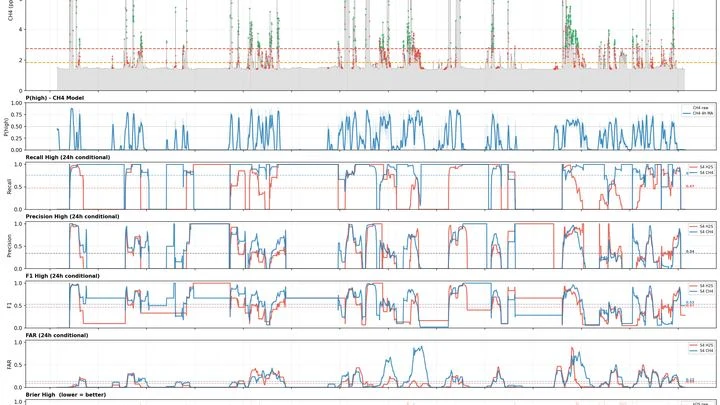
How Wind Betrays a Landfill's Stench Before Residents Complain
At a landfill on the outskirts of town, the wind shifts direction, and a couple of hours later the nearest village smells of rotten eggs. That's hydrogen sulfide — a gas produced when waste decomposes, and in large doses it's hazardous to health. Usually, authorities only learn about the problem after residents have already breathed it in and called to complain.