Carbon footprint is the total amount of greenhouse gases—primarily carbon dioxide—emitted directly or indirectly by an individual, organization, event, or product, usually expressed as carbon dioxide equivalent (CO2e). It encompasses emissions from energy use, transportation, manufacturing, and even the lifecycle of goods. The concept is central to climate change mitigation, as it provides a measurable target for reducing environmental impact.
History
The term 'carbon footprint' gained popularity in the early 2000s, popularized by the oil company BP's advertising campaign in 2004, though the underlying concept of measuring greenhouse gas emissions dates back to earlier climate accounting methods.
How it works
Calculating a carbon footprint involves summing emissions across all relevant activities, often using emission factors that convert energy consumption or material use into CO2e. For example, burning one liter of gasoline produces about 2.3 kg of CO2. The footprint can be offset by reducing emissions or investing in carbon capture and renewable energy projects.
In practice
Carbon footprints are used by companies to report sustainability metrics, by governments to set emission reduction targets, and by individuals to make eco-conscious choices, such as choosing lower-carbon diets or transportation.
Fun fact
The average carbon footprint of a person in the United States is about 16 tons of CO2e per year, which is roughly 10 times the global average.
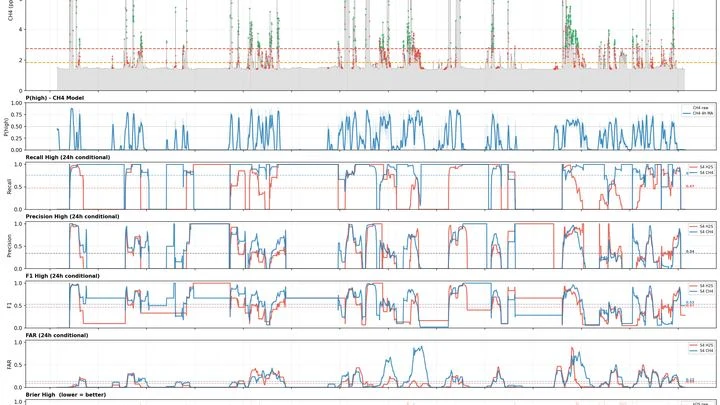
At a landfill on the outskirts of town, the wind shifts direction, and a couple of hours later the nearest village smells of rotten eggs. That's hydrogen sulfide — a gas produced when waste decomposes, and in large doses it's hazardous to health. Usually, authorities only learn about the problem after residents have already breathed it in and called to complain.
In 1960, the Tatel radio telescope spent weeks listening to emptiness around Tau Ceti and Epsilon Eridani. Project Ozma was searching for technosignatures — traces of another mind at work.
A translator in a conference hall tries to convey the speaker's words, but the hall is noisy: someone coughs, chairs creak, and the street outside is loud. If the speaker lowers their voice, the translator still keeps translating, but their voice drowns in the noise.
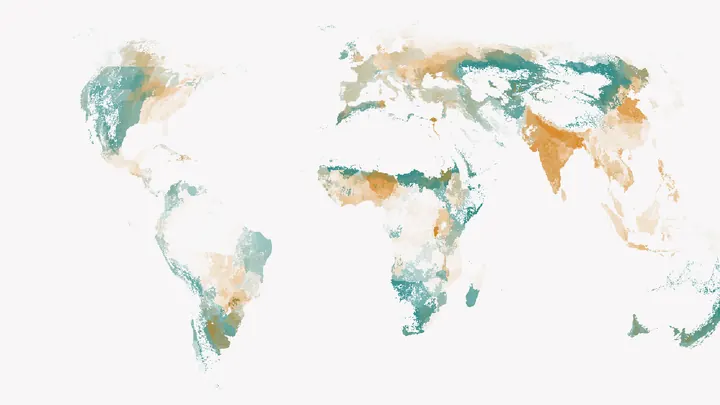
Every year, the food we eat costs humanity tens of millions of years of life due to unhealthy diets. At the same time, a third of all greenhouse gases warming the planet are produced along the journey from farm to plate. It seems obvious: switch to healthier eating, and we'll save the climate and improve our health. But new research shows these two goals don't always go hand in hand.
Drylands are like skin cracking from dehydration. When rainfall decreases, plants don't vanish overnight: they rearrange, leaving bare patches of soil between them. These patterns are visible even from space.
Scientists compared satellite images of eight arid regions, from the Sahel in Africa to Australian deserts.
A piece of aluminum alloy is heated, and it quietly tells you about its strength. You just need to listen to that story in how the metal absorbs heat.
The usual way to find out how strong an alloy is — pull it until it breaks. That takes time and destroys the sample.
An ice core from Antarctica is a time machine that recorded the climate for 130,000 years straight, year after year, with no gaps. Air bubbles trapped in the ice preserve the carbon dioxide of those ancient eras.