Wind is the large-scale movement of air caused by differences in atmospheric pressure, driven by solar heating and the Earth's rotation. Beyond its role in weather and climate, wind significantly affects the propagation of sound waves. When wind blows, it carries sound waves along its direction, speeding them up downwind and slowing them down upwind, which can alter perceived pitch and volume. This is why a siren sounds higher in pitch as it approaches and lower as it recedes—though that specific effect is due to the Doppler shift, wind adds a separate, directional distortion.
History
The influence of wind on sound was recognized in ancient times, but a quantitative understanding emerged in the 19th century with the development of acoustics, notably through the work of Lord Rayleigh, who discussed wind effects in his 1877 book 'The Theory of Sound'.
How it works
Wind creates a moving medium for sound waves. The speed of sound relative to the ground is the sum of the speed of sound in still air and the wind velocity component along the wave's path. This causes sound waves to bend toward regions of lower wind speed, a phenomenon called refraction, which can create 'shadow zones' where sound is unexpectedly quiet or loud. Wind also generates turbulence, which scatters sound and causes fluctuations in amplitude and phase.
In practice
Wind effects on sound are crucial for outdoor concert design, noise pollution assessment near highways, and for interpreting infrasound signals from explosions or volcanic eruptions in atmospheric monitoring.
Fun fact
Wind can carry sound over surprisingly long distances: under favorable conditions, the sound of a large explosion can be heard hundreds of kilometers away, but a slight change in wind direction can make it inaudible just a few kilometers from the source.
A spotlight with an adjustable beam width sweeps along the shore. Its light is the long ocean waves that are born in the surf zone and spread in both directions: toward the beach and out to the open sea. Previously, this spotlight was considered a point source, but the actual breaking zone, where short waves break, has a finite width, and it changes as the wave front advances and retreats.
A laser beam passes through a glass cell filled with cesium vapor. The atoms in the vapor dart around chaotically, like a crowd at a train station: each one enters the beam, spends a moment there, and flies back out. Their internal state, something like the orientation of a tiny magnet, changes under the influence of light. If all atoms were identical and stationary, the signal would be steady.
The Sun has quiet regions where the magnetic field is barely visible. But even there, sound waves find loopholes to rise higher. These loopholes are magnetic tubes that expand upward like funnels. Inside them, sound travels more freely.
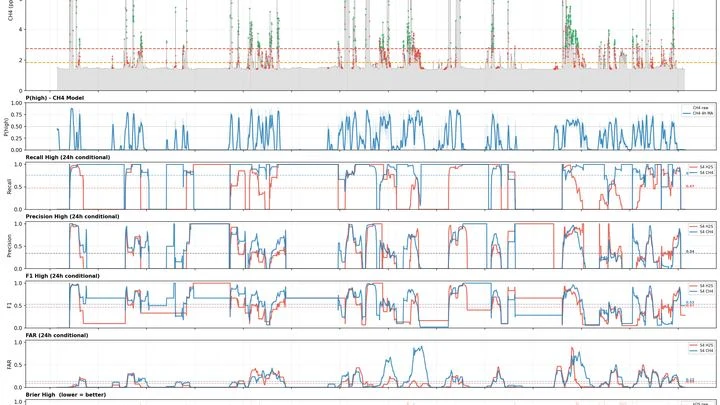
At a landfill on the outskirts of town, the wind shifts direction, and a couple of hours later the nearest village smells of rotten eggs. That's hydrogen sulfide — a gas produced when waste decomposes, and in large doses it's hazardous to health. Usually, authorities only learn about the problem after residents have already breathed it in and called to complain.
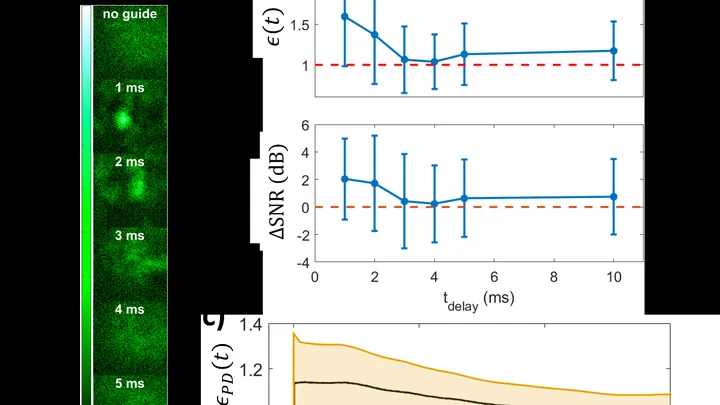
An ordinary flashlight shines in all directions, and after just a couple of dozen meters its beam fades so much it barely lights a wall. The atmosphere scatters light, and wind and heat currents distort it even more. But if you lay an invisible pipe for light right in the air, the beam will travel through it like water through a hose.
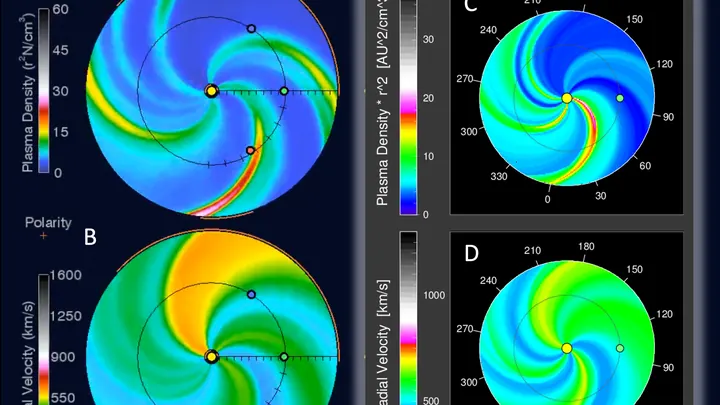
The solar wind is a continuous stream of charged particles flowing from the Sun. It has two main components: protons (hydrogen nuclei) and alpha particles (helium nuclei, four times heavier).
In 2017, detectors picked up a gravitational wave from the collision of two neutron stars. Just 1.7 seconds later, telescopes saw a flash of gamma-ray burst from the same spot. That tiny delay became a treasure for physicists.
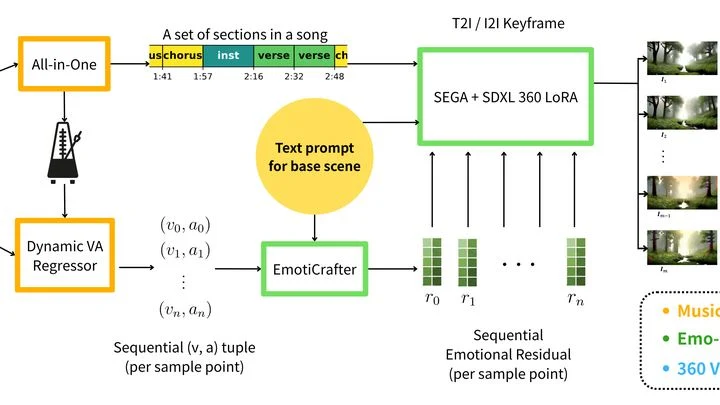
A conductor holds not a baton but a brush, and each stroke gives birth to color and form. New technology works the same way: it transforms a song's mood into a panoramic video that surrounds the listener.
First, the algorithm decomposes the track into emotions, similar to how light is analyzed by spectrum.
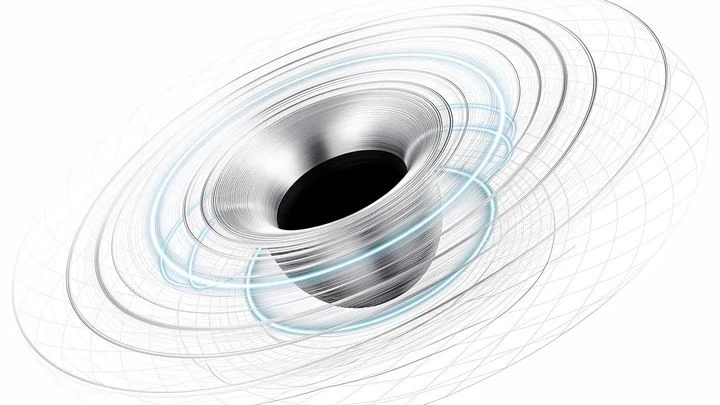
Imagine a river at a rapid: the current accelerates until no wave can go against the flow. So it is with gas near a black hole: reaching the speed of sound, it locks itself in — an acoustic black hole is born, a twin of the gravitational abyss. Here the event horizon is woven from a flow faster than its own sound.
The open ocean is a vast basin where almost no one measures the wind directly. Fixed platforms are rare and expensive, and satellite scatterometers, instruments that probe the surface with radar, need ground truth for calibration. Coastal zones have such data, but far from shore, there's a void.
Perth residents know: when the daytime heat becomes unbearable, relief arrives from the ocean — a fresh breeze affectionately called the Freo Doctor. The same wind, only on a global scale, decides the fate of cosmic visitors plunging into the atmosphere. A meteorite fall is a two-act spectacle.
A crowd is trapped in a narrow corridor between two rows of mirrors. Every now and then, someone shoves the wall hard, and a rumble rolls down the corridor — similarly, in the plasma of galaxy clusters, whistler waves and ion-cyclotron waves appear.
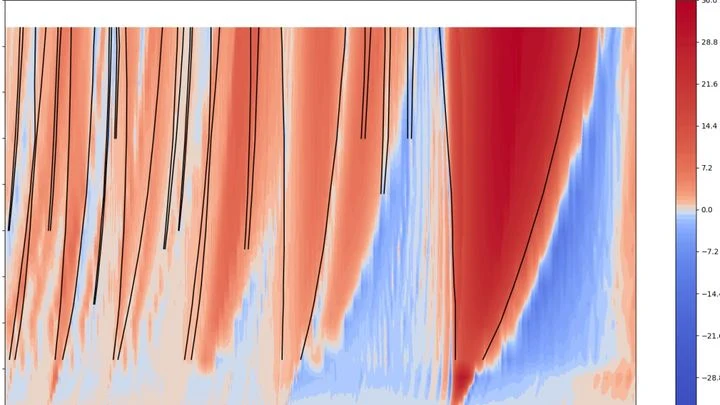
The crown of a huge tree sways in the wind, but the roots and trunk are hidden underground. On the Sun, magnetic fields play the role of such invisible roots. They emerge from the depths, thread through the entire atmosphere, and govern the motion of the hot gas — plasma.
The solar wind, a stream of charged particles from the Sun, slams into the tenuous gas that fills the space between the stars. The collision produces a faint X-ray glow. For astronomers, this is like fog in front of headlights: it obscures distant objects.
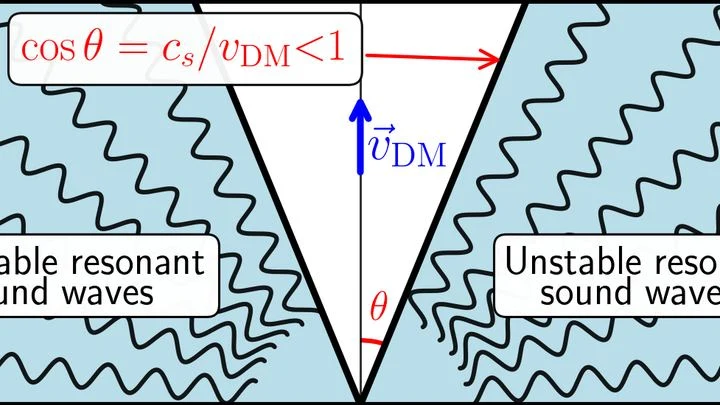
After the Big Bang, dark matter and ordinary matter (mostly hydrogen) went their separate ways in terms of speed. Their gravitational pull acts like a bow gliding across a string: when frequencies match, resonance occurs, and sound waves start to rapidly grow in ordinary matter.
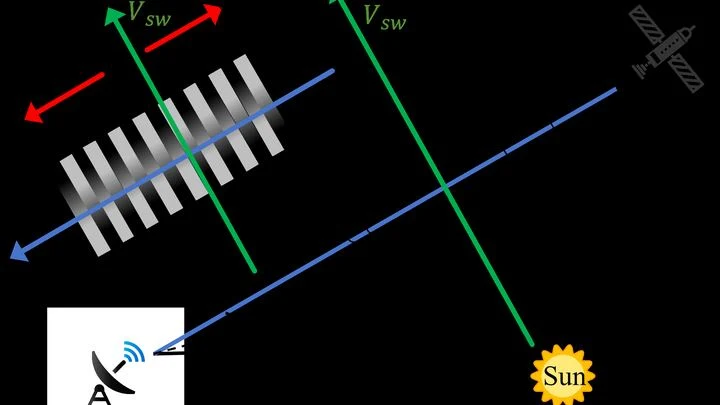
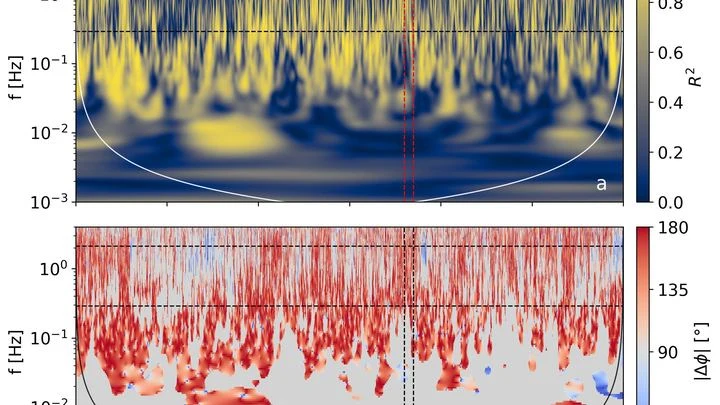
A radio signal travels from Mars to Earth, but on the way it has to push through the invisible "wind" of charged particles blowing from the Sun. This wind, like ripples on water, slightly distorts radio waves.
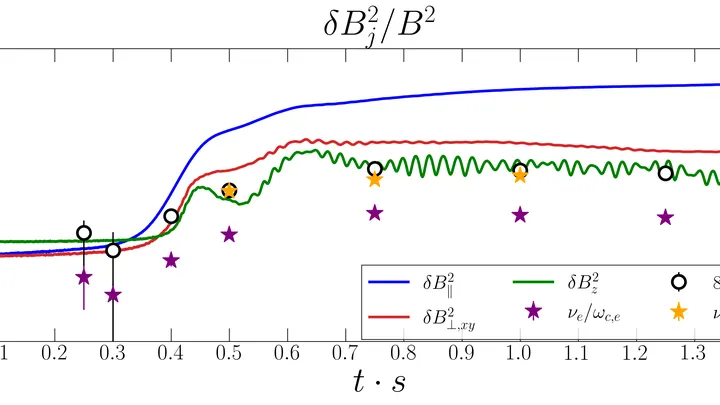
The solar wind isn't a smooth flow: it's gusty. Inside it, protons and helium nuclei don't all travel at the same speed; they spread out like droplets in a hose stream. Usually, this spread is described by a simple bell-shaped curve.
By day in Chile's Atacama Desert, the air shimmers with heat like the haze above a hot skillet. Sunlight passing through this shimmer begins to dance and flicker. Astronomers call this airy trembling "seeing" — and it keeps telescopes from getting a sharp view of the stars.
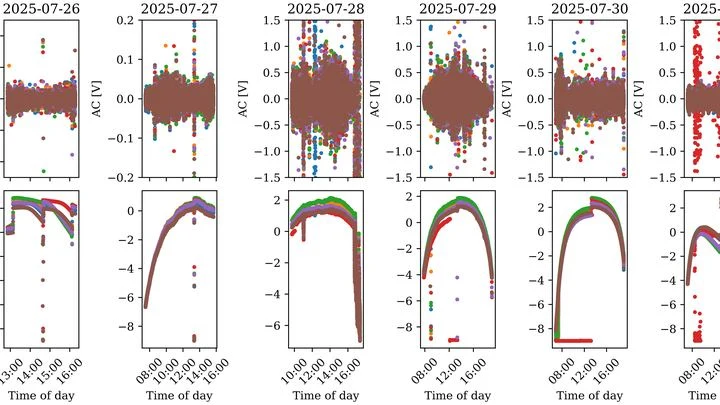
To fight this nuisance, engineers have built a special instrument — a solar seeing monitor.
Each breath slightly speeds up the heart, and each exhale slows it down. This rhythm, visible on an ECG, is called respiratory sinus arrhythmia. For a long time, it was dismissed as a mere side effect of the nervous system. But new research shows that this coordination is not a coincidence: it's a way to save energy.
The weather on the next street can differ from yours: cooler by the river, hotter over asphalt, windier between buildings. A regular forecast misses this: its grid cell is the size of a city, not a backyard.
A pigeon flies home from hundreds of kilometers away. Inside its head, in the inner ear, fluid sloshes around, like water in a bottle you shake. When the bird moves, the fluid moves too, helping it maintain balance. Recently, scientists proposed that this same fluid might act as a tiny generator.
A star like the Sun hums like a bell: sound waves inside make its surface tremble ever so slightly. From this trembling, astronomers, like doctors reading a pulse, infer the star's temperature, density, and age. But the Kepler telescope spotted an oddity: many stars that spin fast and are covered in spots show no trembling at all. It's as if they've lost their voice.
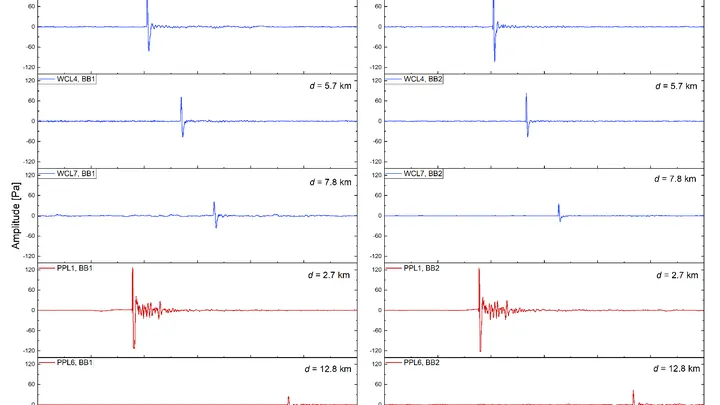
The same explosion can sound different: it all depends on which way the wind is blowing. In 2024, researchers set off charges equivalent to ten tons of TNT twice and recorded the sound with a network of 31 microphones spread over a radius of 23 kilometers. The source was identical, but the acoustic pictures turned out to be quite different.
A spider web is not just a sticky net but a delicate instrument that responds to the weather. When the air becomes humid, spider silk threads shorten and twist, like a wet towel being wrung from both ends. Previously, it was thought that the thread twists because the proteins inside are arranged in a spiral. But no direct evidence for such an arrangement was found.
A sugar solution can twist light — many have seen this in polarization experiments. Surprisingly, a similar trick appears in the fabric of the cosmos itself.
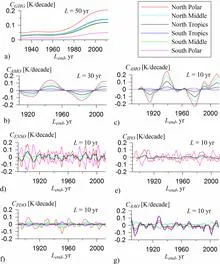
The Pacific Ocean is like a giant swing: warm water piles up in the west, then slides toward the east, and the temperature off the coast of South America jumps. Such warm years are called El Niño, and cold ones La Niña. But the swing doesn't move on its own: it's pushed by the wind.
In 2019, 16,000 villages in the Indian state of Maharashtra ran dry, and authorities began distributing water by ration coupons. In response to such crises, the government plans to transfer water from water-rich river basins to arid ones through a network of canals stretching 15,000 kilometers.
Warm air rises from a radiator, and the room seems to heat evenly. But if you put your hand against the wall by the window, it feels cooler than by the door.
An old aviation instrument sometimes sticks: the needle catches on the scale and doesn't move, even though the plane is already changing altitude. Engineers found a simple solution: add a slight vibration. The shaking doesn't hinder; on the contrary, it helps the needle break free and show the truth.
In a room with a hundred people, you can measure each person's height and compute the average. But if someone infinitely tall walks in, the average height ceases to exist: no matter how many more people you add, the sum grows without bound.
A swing builds up when you push it in time. But sometimes the person on the swing responds not to every push but to every third one, and the amplitude grows slowly yet inexorably.