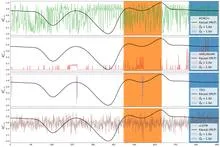
Granger causality is a statistical notion of cause and effect that asks a practical question: does knowing the past of one variable help predict the future of another, beyond what the other variable's own past already tells you? If yes, the first variable is said to 'Granger-cause' the second. It is not about physical causation in the deep sense—rather, it is a tool for detecting predictive influence in time-ordered data, often used in economics, neuroscience, and climate science.
History
Introduced by economist Clive Granger in 1969, who later won the Nobel Memorial Prize in Economic Sciences in 2003 for this work.
How it works
The idea is tested with regression models. You first build a model that predicts Y using only its own past values. Then you build a second model that adds past values of X. If the second model is significantly better at forecasting Y (typically judged by an F-test or similar), then X Granger-causes Y. The key is that X's information must come before Y's outcome in time, ensuring a temporal order.
In practice
Used in econometrics to test whether one economic indicator (like money supply) helps predict another (like inflation), and in neuroscience to infer directed influences between brain regions from fMRI or EEG time series.
Fun fact
Granger causality can be fooled by a third variable that drives both X and Y—if you omit it, you might falsely conclude X causes Y.
An architect reinforces the foundation but leaves a door open for remodeling: that's how living systems balance reliability against renewal. A cell copies hereditary information with a fidelity any scribe would envy, yet it can also allow changes that help it survive under new conditions.
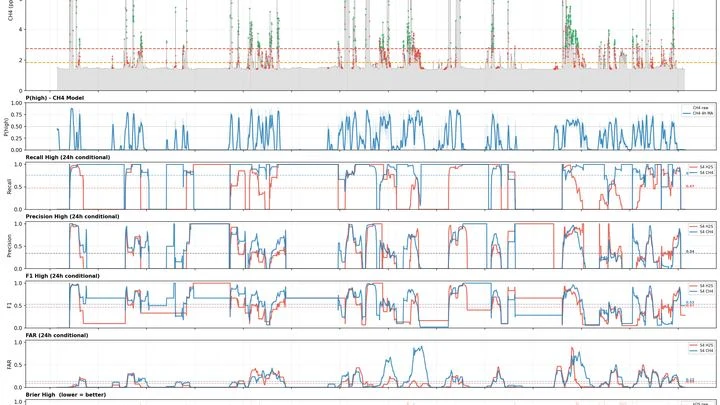
At a landfill on the outskirts of town, the wind shifts direction, and a couple of hours later the nearest village smells of rotten eggs. That's hydrogen sulfide — a gas produced when waste decomposes, and in large doses it's hazardous to health. Usually, authorities only learn about the problem after residents have already breathed it in and called to complain.
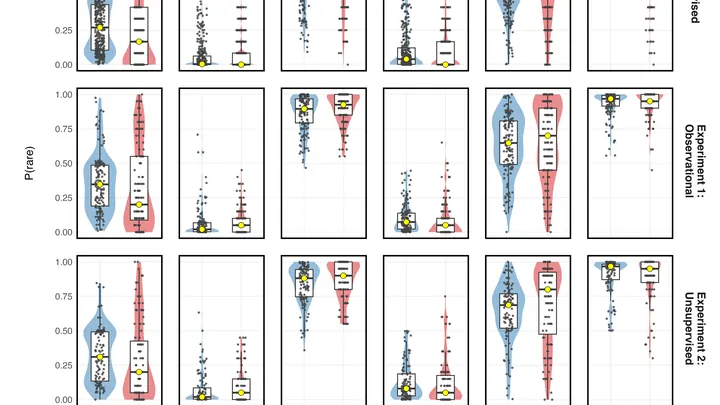
In a warehouse, there are boxes of apples and pears. There are many apples and few pears. But when the stock clerk says "a fruit with smooth skin," we are somehow more likely to recall the rare pear than the common apple. This is the inverse base-rate effect — a persistent glitch in how the brain resolves ambiguity between categories.
The brain doesn't just react to the world: it's constantly guessing what will happen next. This principle is called predictive coding: neurons compare expectations with reality and update their internal picture when an error occurs. But how such a complex system could be wired into the living tissue of the cortex remained unclear.
A jazz ensemble: at first, a cacophony of random notes. Then — a catchy riff that plays over and over. Such is the riddle of the origin of life — only in the language of chemistry.
A person reaches out to a stranger across town. That stranger will never return the favor: they'll never meet. So why help? Biologists call this indirect reciprocity: kindness comes back not from the person you helped, but from someone else, down the line.
In a new study, two variants of this idea were pitted against each other.
In quantum mechanics, everything is fuzzy: a particle is not at a single point but smeared across space, and an event does not happen at a single moment. Yet our everyday world is full of definiteness — the coin landed heads, the light bulb turned on, a note appeared in the notebook.
You buy a new kitchen scale, but instead of exact weight, it only shows deviations from some "norm." To find out how much an apple weighs, you first have to weigh dozens of other apples and calculate the average.
The light cone is a blueprint of causality, laser-cut onto the fabric of the universe. In classical physics, it is as sharp as a scalpel: events inside are linked by invisible threads of influence, while outside lies eternal isolation, sealed by the ultimate speed limit.
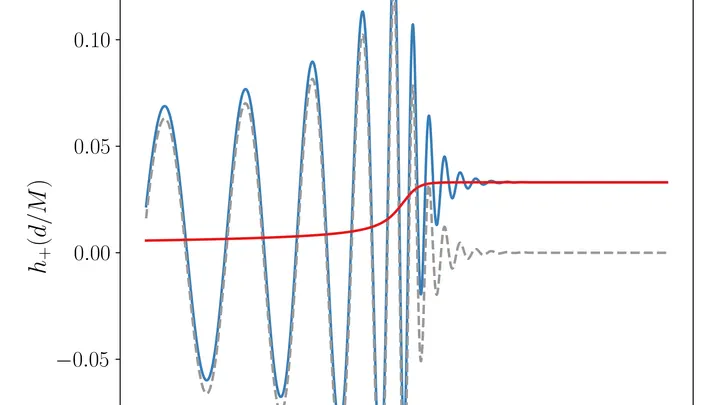
Gravitational waves are the very trembling of space, born when black holes or other massive bodies collide. Their main oddity isn't that they pass through us, but that they permanently alter the curvature of spacetime and the distances between everything they touch.
Spacetime is often pictured as a smooth fabric. But at the very microscopic level, this fabric might not be continuous; instead, it could consist of individual 'atoms'—events linked by causality. This picture of the world is called causal set theory.
Every morning you pick up the same mug, but the coffee tastes either bitter or just right. It's not about the coffee, and not about your character. Inside us, an invisible panel with dozens of sliders is constantly shifting: fatigue, hunger, anxiety, hormone levels.
The quantum world plays a strange game with causality. If in everyday life salt is always added to soup before serving, here the ingredients end up in the bowl at the same time, and the chef doesn't remember the order. Physicists asked: can we measure this 'recipe'? The answer is no.
A mosaic of large colored tiles. Each tile is the average precipitation over an entire month for an area the size of a small country. For a general understanding, the picture is fine, but if you need to know whether a downpour hit a specific city yesterday, it's useless.
When black holes collide, the very fabric of spacetime trembles. That rumble, gravitational waves, gets picked up by detectors, but decoding the signal used to take hours of computer simulation.
A black hole collision isn't just a burst of gravitational waves; it also leaves a lasting trace: an eternal curvature of spacetime — gravitational memory. Like a boat on water leaves a lingering wake, the cosmos 'remembers' the catastrophe.
The trembling of space sounds like an orchestra. Gravitational waves caught by the LIGO and Virgo detectors tell of black hole collisions. Sometimes the music carries off-key notes — tiny deviations from Einstein's score. They might whisper of new physics or simply of dust on the bows.
If you drop an ice cube into a glass of water, it will float until it melts. But if you cool the water slowly, at some point it all freezes at once: that's a first-order phase transition: abrupt, with a clear boundary.
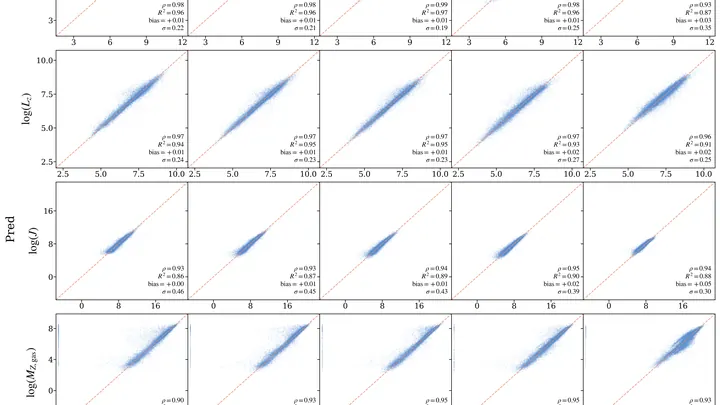
Studying the birth of galaxies requires simulating billions of years of dark matter growth and star formation — even supercomputers handle this slowly.
If two people look at a city from different hills, their maps don't match. One sees the tower to the left of the river, the other sees it to the right. But both know: it's the same city. That's roughly how our Universe works in this new approach to quantum gravity.
The authors suggest distinguishing between two "flavors" of spacetime.
An album with hundreds of family photos holds countless stories. If you look at each picture on its own, you might easily decide that Uncle is a real giant: that day he happened to stand a step higher than everyone else. But flip through the whole album, and it becomes clear — his height is perfectly ordinary; it's just that a step showed up in a couple of frames.
Seismologists listen to the Earth the way a doctor listens to a heart. Surface waves from earthquakes travel across the planet, and their speed reveals what lies beneath our feet — solid rock, melt, or water. Usually, this requires building complex physical models.
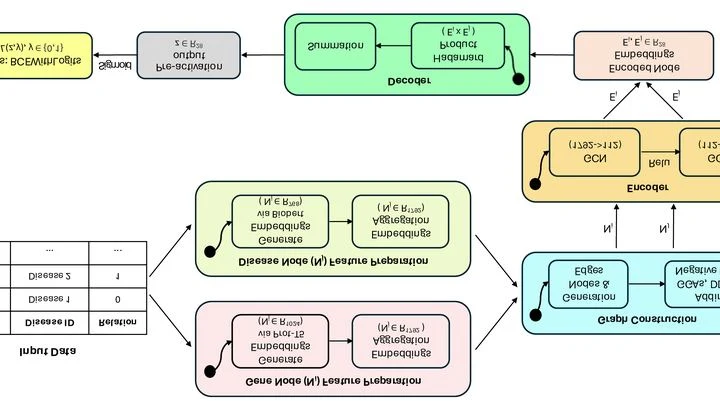
Inside every cell, work is constantly underway: proteins communicate, genes turn on and off, and glitches in this system lead to disease. To find the culprit behind an ailment, scientists used to manually comb through research papers and databases, like a detective interviewing witnesses one by one. But there are so many connections that no one can handle it alone.
When a person receives radiation for a tumor in the head or neck, the rays pass through healthy tissue as well. Sometimes the jawbone starts to die afterward — a severe complication called osteoradionecrosis. The question isn't whether it happens, but how much the radiation dose itself increases the risk.
Two particles can become linked so that a nudge on one instantly reverberates in the other, even if they are separated by galaxies. Einstein called it "spooky action at a distance." Physicists wondered: can gravity itself, a simple mutual attraction, create such a connection?
In 2022, physicists observed gravity shifting the phase of a single atom's wave, the gravitational analog of the Aharonov–Bohm effect. This experiment became part of a long-standing debate: whether gravity must be quantized or remains a classical background in the quantum world.
Picture a translator at a meeting where everyone speaks an unfamiliar language. They don't know the words, but they notice: when one person raises their voice, another starts nodding a minute later. At first it seems like coincidence, but over time the translator learns to understand who influences whom.
Ocean currents intertwine like sticky spider silk: every disturbance leaves a trace that does not vanish instantly. Climatologists have been used to treating random jolts in this web as invisible and memoryless, but new research shows that noise has memory, and that memory strengthens connections between distant nodes.
A long conversation between two people can be condensed into a few key phrases that preserve the essence. That is exactly how a macrovariable works: temperature stands in for billions of moving molecules, and sea level for thousands of waves.
A translator in a meeting room hears not only individual voices but also how they bounce off each other: one speaker trails off, another picks up the thought, a third clarifies. Remove that interplay, and you are left with a set of monologues, and the meaning of the conversation slips away.
Two people are talking at once, and by the loudness of their voices you can't tell who is answering whom. That's how climatologists have for decades searched for a link between warm water off the coast of Peru and droughts in Australia: they compared how synchronously ocean temperature and rainfall change in different parts of the planet.
An orchestra without a conductor plays in harmony, and you want to understand who influences whom. The violinist hears the cello, the cellist catches the rhythm of the percussion, and the flute adapts to everyone at once.
In a tropical forest, the dry season gives way to the rainy season, and with the weather, the rules of life change: some animals go into hibernation, while others come out of hiding. Likewise, in complex systems, from climate to economics, the links between processes are not set in stone. They depend on a hidden "regime" that itself switches from time to time.
Winning the lottery changes the winner's life, but for the statistics of all players it means almost nothing: the probability of winning is negligible, and the average winnings per ticket remain tiny.
A translator who hears only the meaning, not the noise in the hall, can convey a conversation accurately. Climatologists have long sought such a translator for the ocean–atmosphere pair: their interaction resembles a dialogue where voices drown in the roar of extraneous sounds.
In a climate trial, the judge doesn't listen to who shouts loudest. He watches who whispers to whom. Nine witnesses, from carbon dioxide to cosmic rays, testified from 1984 to 2005. Their statements were recorded every month. The judge doesn't trust mere coincidences, because two witnesses might echo each other without knowing who started first.
The puppet master pulls the strings, and the marionette dances. In forecasting the future from time series, the puppet masters are the few variables that truly control the system. The rest merely echo their movements, creating an illusion of complexity. The challenge is to find these puppet masters and watch only their fingers, not the whole stage.