Oxygen Impurities in Superconductors: Seeing the Unseen express
A superconductor is a material that conducts electricity without loss, like water flowing through a perfectly smooth pipe. In copper-based superconductors, tiny oxygen additions act like a volume knob: a bit more and the material starts superconducting; a bit less and it stops. But the oxygen atoms themselves are so small that seeing them directly was impossible.
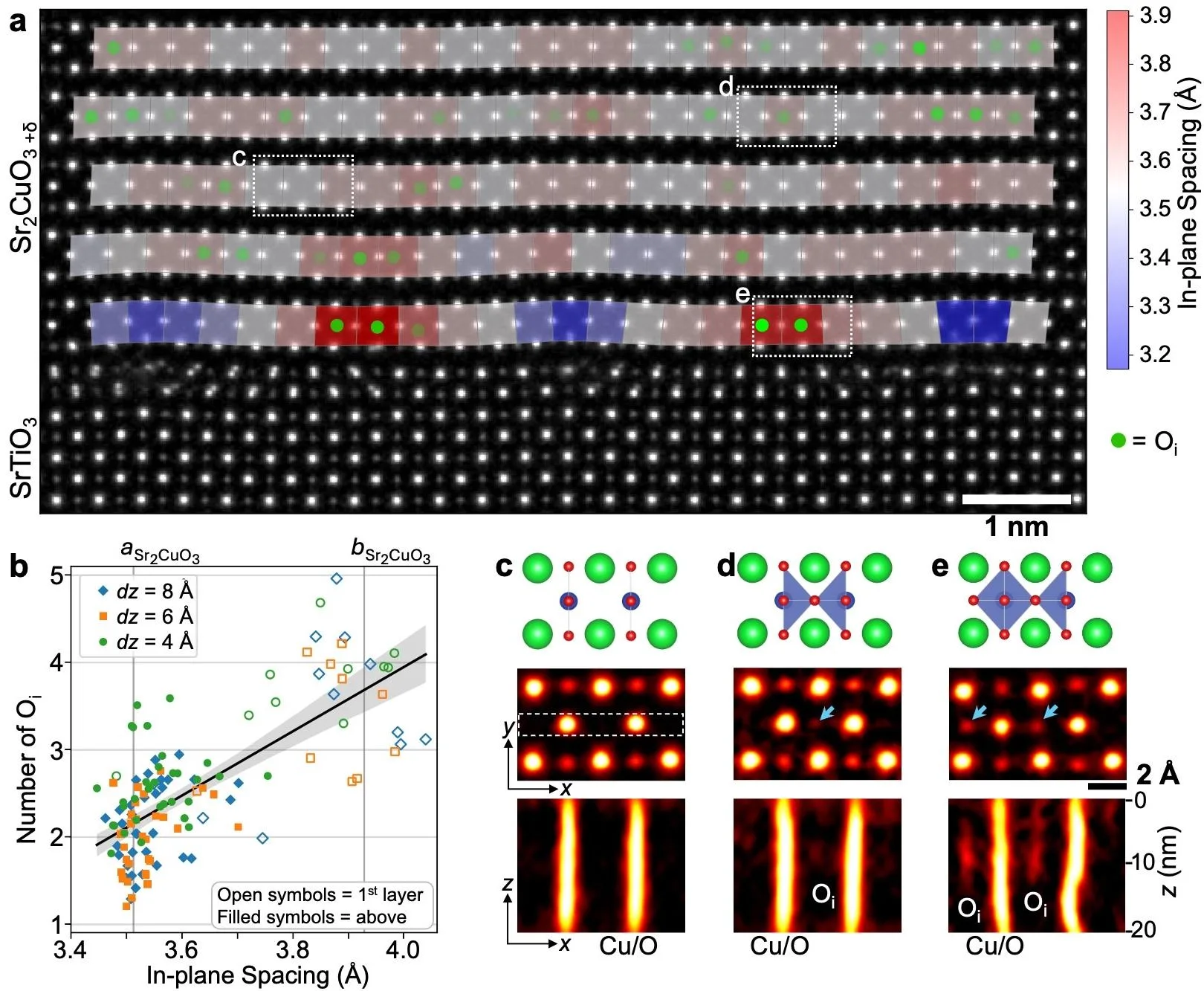
Now researchers have used a method akin to a flashlight that shines an electron beam through the material and collects the scattered light into a sharp image. This allowed them to photograph individual oxygen atoms in a film of a strontium-copper-oxygen compound. They found that oxygen is not spread evenly like sand on a beach but clumps together. Moreover, the clumps appear where the crystal lattice is stretched — for example, near defects and surface steps.
This discovery changes the approach to making superconductors. Previously, it was thought that oxygen additions were randomly distributed and their amount was controlled only chemically. Now it's clear: just stretch the film in the right places, and oxygen will gather where needed. Mechanical strain becomes another tuning knob, like how string tension changes the sound.
Electron ptychography is a method where the sample is scanned with an electron beam, and a computer assembles a super-sharp image from many overlapping snapshots. It can reveal atoms that are 100,000 times thinner than a human hair.