How to Bend a Ruler So It Matches a Globe ✛
A globe sits on a table, and a ruler lies beside it: one is curved, the other straight. X-ray telescopes have lived with this mismatch for years. Their mirrors gather light onto a curved surface, like the globe, while the detectors that catch that light have been flat, like the ruler. Engineers have tiled the curved surface with mosaics of many small flat sensors, putting up with the gaps between them and the complex construction.
Now the ruler has been bent. At the Massachusetts Institute of Technology, researchers took a back-illuminated silicon CCD detector (a light-sensitive chip illuminated from the back) and carefully shaped it into a sphere with a radius of 2.5 meters. To do this, they placed the array on a porous Teflon pad, pressed it with vacuum against a convex glass mandrel, and then glued it to a concave silicon mandrel. The epoxy resin took several days to cure.
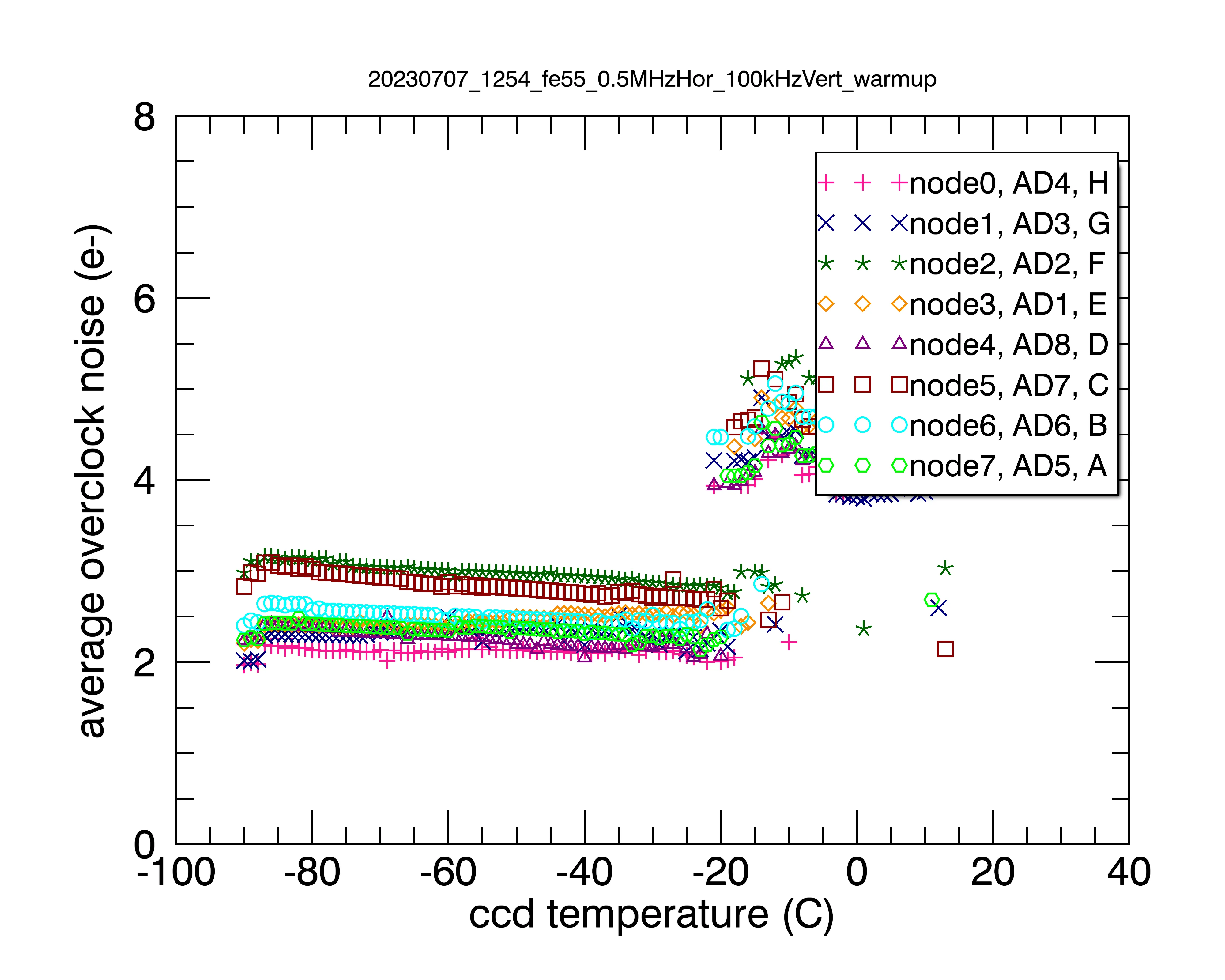
The curved detector was tested with X-rays at a temperature of about minus 90 degrees Celsius. Readout noise, dark current (the parasitic signal without illumination), and spectral resolution (the ability to distinguish close photon energies) turned out to be the same as for a flat control sample. The activation energy of the dark current was about 0.6 electronvolts, as expected for silicon. The spectral resolution at the carbon line (0.27 keV) was 68 eV, at oxygen (0.53 keV) it was 89 eV, and at manganese (5.9 keV) it was 179 eV. This is sufficient for scientific purposes.
Previously, it was unclear whether a functional silicon X-ray detector could be bent without degrading its performance. Now it has been shown that it can: curved CCDs retain noise, dark current, and spectral resolution at the level of flat ones, and the surface deviation does not exceed a micrometer. This was achieved through a procedure of vacuum bending a thin silicon membrane and then fixing it on a mandrel.
Such a detector matches the focal surface of grazing-incidence mirrors (mirrors that reflect X-rays at small angles) as a whole, without mosaics or gaps. For future X-ray telescopes such as Lynx, this means sub-arcsecond angular resolution across the entire wide field of view. The bent ruler has finally lain on the globe, and the picture is now seamless.
Curved detectors are already used in the ground-based SST telescope for tracking space debris, where they have a radius of curvature of 5.44 m and operate in the visible range.
In Arthur C. Clarke's novel 'Rendezvous with Rama', giant curved mirrors are described that focus light onto detectors matching their shape; a similar idea is now being realized for X-ray telescopes.