Curved X-ray Detectors for Astrophysics ✛
Context
Modern X-ray telescopes use grazing-incidence mirrors that focus light onto a curved surface. Until now, engineers have tiled this surface with mosaics of many small flat detectors, complicating the design and leaving gaps in the field of view. This work stands alongside efforts to improve optical microscopy, vortex waves, and gamma-ray detectors, but solves the problem differently: instead of adapting flat sensors to the curvature, it changes the shape of the sensor itself.
Methods
The researchers took back-illuminated silicon CCDs, model CCID94, developed at MIT Lincoln Laboratory. Each chip has a diagonal of 65 mm and a depleted layer thickness of 100 microns. For bending, they used a vacuum chuck: the chip was placed on a porous Teflon pad, pulled by vacuum against a convex glass mandrel with the desired radius, and then glued to a concave silicon mandrel. The process took several days for the epoxy to cure. Three chips were bent, two of them to flight quality.
Results
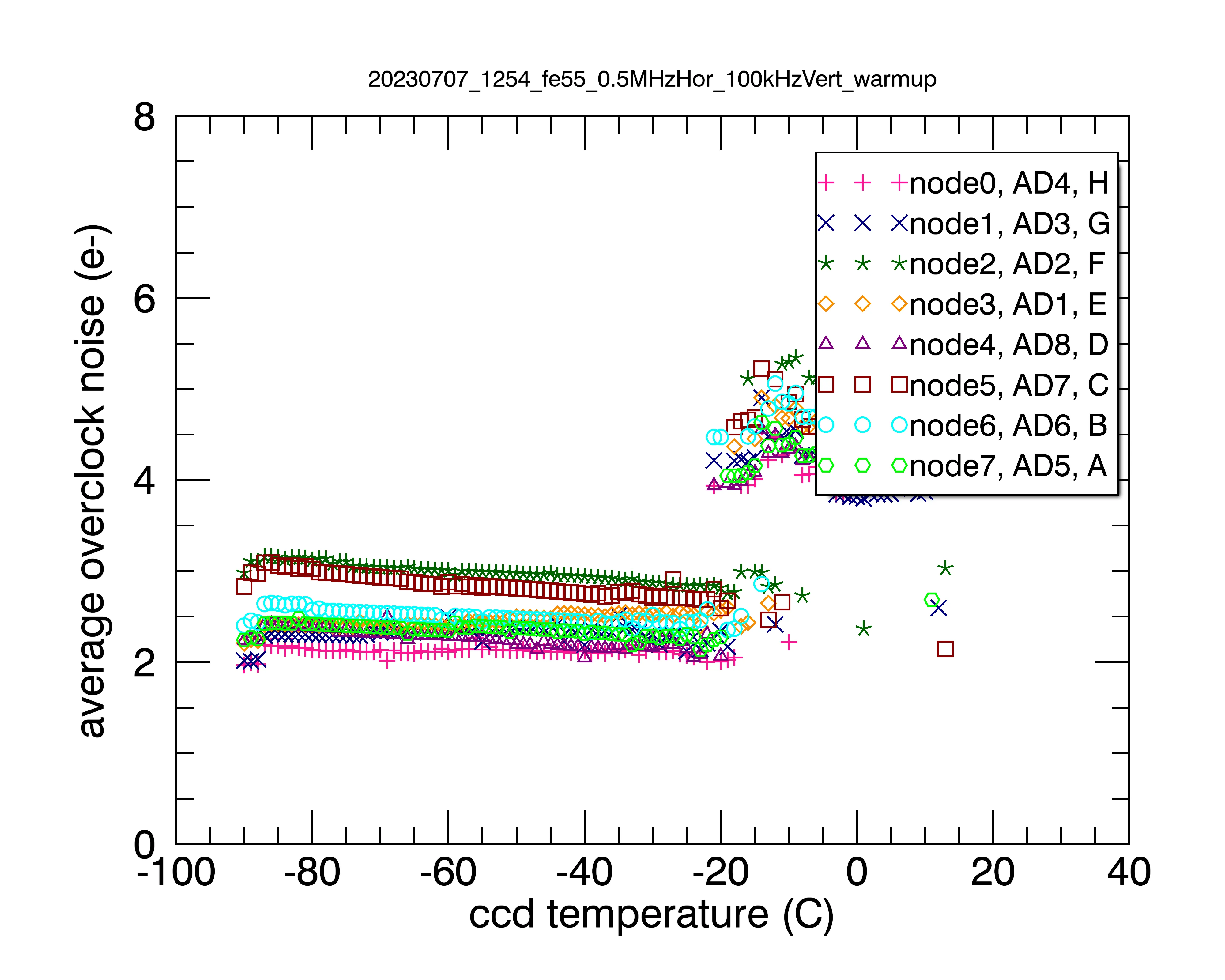
Profilometry showed that two chips had root-mean-square deviations from a sphere of radius 2.5 m of only 0.75 and 0.72 microns, well below the required 5 microns. The third chip had a deviation of 5.8 microns due to a small region near the edge. X-ray tests at temperatures around -90°C revealed that readout noise, dark current, and spectral resolution of the curved detectors are comparable to a flat control sample. The activation energy of the dark current was about 0.6 eV, as expected for silicon. Spectral resolution at the carbon line (0.27 keV) was 68 eV, at oxygen (0.53 keV) it was 89 eV, and at manganese (5.9 keV) it was 179 eV, which is acceptable for scientific purposes.
Implications
Unlike neighboring works that improve individual components of the optical path, this work demonstrates a holistic solution: a curved detector that matches the focal surface. This eliminates the need for a mosaic of many flat sensors, simplifies the camera design, and removes gaps in the field of view. For future missions such as Lynx, this means the possibility of achieving sub-arcsecond angular resolution across the entire wide field of view without compromises.
Future development
The next step will be to test the curved detectors under vibration and thermal loads that simulate launch and space conditions. They also plan to model mechanical stresses to understand the limits of bending and possibly achieve even smaller radii of curvature for more compact optical designs.
Impact
The technology could be applied in X-ray astronomy, medical imaging, and industrial flaw detection, where wide-field, high-resolution detectors are required.
Next steps
Conduct environmental tests (vibration, thermal cycling) and refine the deformation model to optimize the bending process.
Key open problems
In high-energy astrophysics, the problem remains of matching detectors to the curved focal surfaces of new mirrors. This work offers a practical solution, but the question of the long-term stability of curved structures in space conditions remains open.
The knowledge machine's view
This section is addressed to the author of the paper and their colleagues. Neighbouring works were found by meaning-based search across our archive, not by word overlap. We do not review: we show the field around the work.
What the work does
The study demonstrates bending of back-illuminated CCDs to a radius of 2.5 m with surface deviation below 1 μm. X-ray tests at -90°C showed that noise, dark current, and spectral resolution of the curved detectors are comparable to those of flat counterparts. This eliminates the need for a mosaic of flat sensors to cover a curved focal surface.
Where its strength is
The main strength lies in the holistic approach: bending the sensor itself instead of adapting flat detectors, which simplifies camera design and eliminates gaps in the field of view. The achieved surface accuracy (0.75 μm RMS) significantly exceeds requirements, providing margin for future improvements.
Where it could go next
- It might be interesting to see how noise suppression and resolution enhancement techniques developed for gamma detectors with funnel-shaped pixels could be adapted for curved CCDs, especially when dealing with high-energy photons.based on: Funnel-Shaped Pixels: How Gamma Rays Are Caught More Precisely arXiv:2602.12298
- Related work on a spectrometer-on-a-chip addresses miniaturization and preserving spectral resolution; some technological approaches might be useful in integrating curved detectors into compact cameras.based on: Spectrometer on a Chip: How to Catch an Elusive Signal arXiv:2603.19142
Worth trying
- Test whether detector performance is maintained after repeated cooling and warming cycles simulating spaceflight conditions.
- Assess how bending affects charge collection efficiency at the chip edges, where mechanical stress is highest.
- Compare the spectral resolution of curved detectors with flat ones at higher X-ray energies (up to 10 keV).
Why this may matter
If curved detectors are brought to flight quality, they could substantially simplify the design of wide-field X-ray telescopes and enhance their scientific return through a continuous field of view.
Nearby works in our archive
- Freezing the Ripple to See the Bottomsimilarity 0.54
- Black Phosphorus Trapped in Lightsimilarity 0.53
- Spectrometer on a Chip: How to Catch an Elusive Signalsimilarity 0.53
- Liquid Xenon Instead of Crystals: A Tomograph That Sees Three Times Sharpersimilarity 0.53
- Squeezed Light Catches Gravitational Wavessimilarity 0.52
- Funnel-Shaped Pixels: How Gamma Rays Are Caught More Preciselysimilarity 0.52
The archive is sparse around this work: the closest review is only 0.54, against a usual 0.64. It looks like few have drilled nearby.
Curved detectors are already used in the ground-based SST telescope for tracking space debris, where they have a radius of curvature of 5.44 m and operate in the visible range.
In Arthur C. Clarke's novel 'Rendezvous with Rama', giant curved mirrors are described that focus light onto detectors matching their shape; a similar idea is now being realized for X-ray telescopes.
Key numbers
- radius of curvature: 2.5 m
- surface deviation (RMS): 0.75 microns
- depleted layer thickness: 100 microns
- spectral resolution at 5.9 keV: 179 eV
- activation energy of dark current: 0.6 eV