Tamed Phantom: The Axion Spring of the Universe
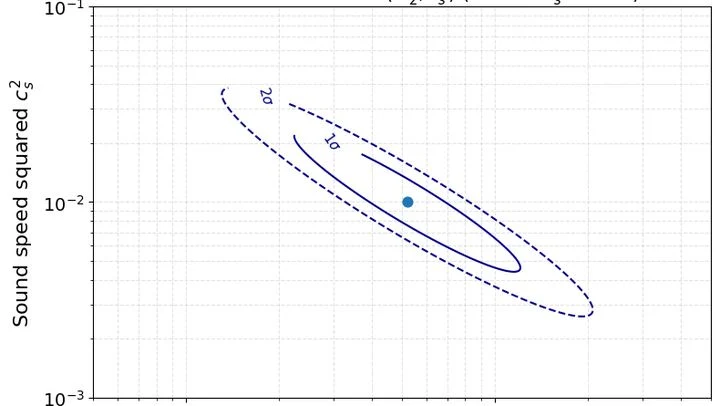
Since Saul Perlmutter and his colleagues discovered the accelerated expansion of the universe, physicists have been scratching their heads over the nature of dark energy.
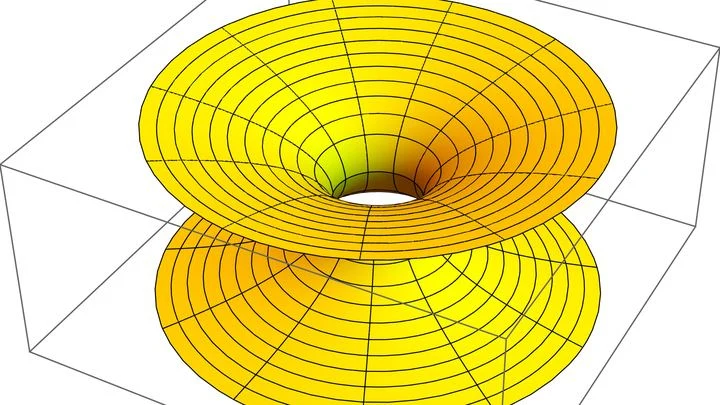
Hypothetical matter with negative energy density, required for certain warp drive designs.Exotic matter is a hypothetical form of matter that possesses negative energy density, meaning it has less energy than a vacuum in the same region of space. This property is not observed in ordinary matter, which always has positive energy density. In theoretical physics, exotic matter is a key ingredient for certain solutions of Einstein's field equations that allow for faster-than-light travel, such as the Alcubierre warp drive, or for stabilizing traversable wormholes.
The concept of negative energy density emerged from early 20th-century physics, but the term 'exotic matter' became common in the 1980s and 1990s when physicists like Miguel Alcubierre and Kip Thorne explored warp drives and wormholes as serious theoretical possibilities.
In general relativity, the curvature of spacetime is determined by the distribution of energy and momentum. Negative energy density would create a repulsive gravitational effect, 'pushing' spacetime apart rather than pulling it together. For a warp drive, exotic matter would be placed around a spacecraft to contract spacetime in front and expand it behind, allowing the ship to ride a wave of spacetime without exceeding the speed of light locally. However, no known particle or field naturally has negative energy density in bulk; quantum effects like the Casimir effect produce tiny negative energy densities, but only in microscopic amounts and for fleeting moments.
Exotic matter remains purely theoretical; no practical application exists, but it is a central topic in research on advanced propulsion concepts and the fundamental limits of spacetime.
The Casimir effect, a real quantum phenomenon where two uncharged metal plates attract each other in a vacuum, is often cited as evidence that negative energy density can exist, but the effect is far too weak to power any macroscopic device.