property

negative pressure

A property of a substance that causes it to expand rather than contract, associated with dark energy or exotic matter.
27 related articles

Description

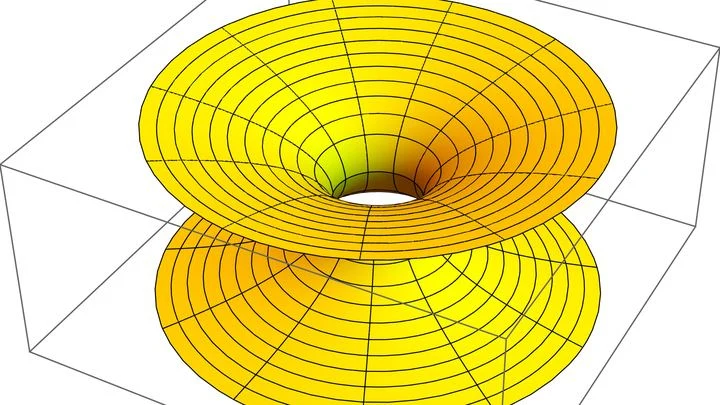
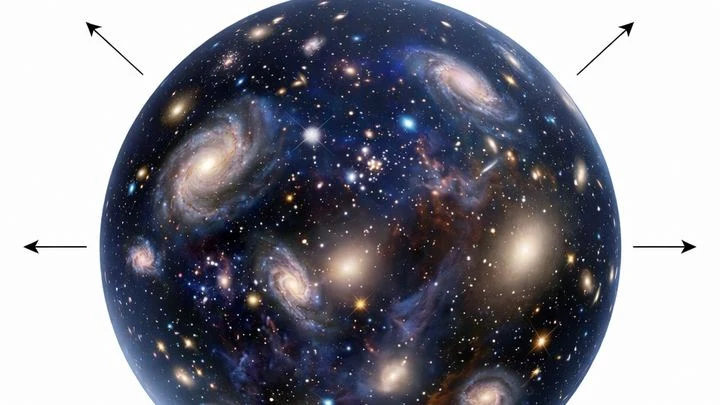
Negative pressure is a property of a substance that causes it to expand rather than contract, acting as a kind of 'anti-gravity' on large scales. It is central to the concept of dark energy, which is thought to permeate space and drive the accelerated expansion of the universe. Negative pressure also appears in exotic matter, which could theoretically enable wormholes or warp drives.

History

The concept of negative pressure was introduced in the context of the cosmological constant by Einstein in 1917, though it was later abandoned and revived with dark energy discoveries in the 1990s.

How it works

In physics, pressure normally pushes outward, but negative pressure pulls inward on a volume, yet it has the opposite effect on gravity: it creates repulsive gravitational effects. This arises from the stress-energy tensor in general relativity, where a negative pressure contributes to a negative energy density, causing spacetime to expand rather than contract. In quantum field theory, negative pressure can emerge from vacuum fluctuations or scalar fields like the inflaton.

In practice

Negative pressure is used in cosmology to model dark energy and cosmic inflation, and in laboratory experiments with metamaterials that exhibit negative effective pressure for acoustic or optical effects.

Fun fact

The Casimir effect, where two uncharged plates attract due to vacuum fluctuations, is a real-world manifestation of negative pressure.

Concept graph →

Related articles · 27

HEP Theory2026-07-262 minarXiv:2607.23747express
Frozen Complexity of a Black Hole
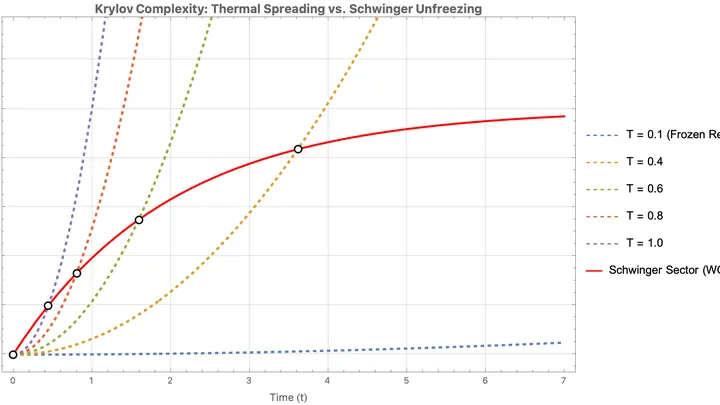
Hot tea cools down, a pendulum comes to rest — nature loves equilibrium. But a charged black hole can reach a special, extreme state: the mass becomes minimal, and the temperature drops to zero.
Dark Energy Gains Time: The Backreaction of Cosmic Ripples
Cosmic ripples begin with tiny clumps. 380,000 years after the Big Bang, the universe was nearly homogeneous — density fluctuations were only one part in 100,000. But gravity turned these weak ripples into galaxies, clusters, and giant voids.
Tamed Phantom: The Axion Spring of the Universe
Since Saul Perlmutter and his colleagues discovered the accelerated expansion of the universe, physicists have been scratching their heads over the nature of dark energy.
General Relativity2026-07-031 minarXiv:2607.03272express
How Friction Gives Birth to Dark Energy
In the first moments of the universe's life, there was not even a hint of dark energy — the very force that today pushes galaxies apart ever faster. But if you look deeper, down to the Planck scale (billions upon billions of times smaller than an atomic nucleus), spacetime ceases to be smooth.
General Relativity2026-06-212 minarXiv:2606.22531express
Warp drive without exotic matter: a maneuver that costs half the ship
At the heart of a warp drive lies Einstein's idea that massive bodies curve spacetime — the very stage on which all cosmic events unfold. Picture a bubble of such curved spacetime. Inside it, the ship floats without any G-forces, like a passenger in an airplane cabin who doesn't feel the headwind.
HEP Theory2026-06-181 minarXiv:2606.20942express
Dark bubble and microcosm: gravity at millionths of a meter
The Universe behaves like a soap bubble swelling in a multidimensional foam. The dark bubble model explains why it's expanding ever faster: the spacetime bubble grows, and its membrane gains a tiny thickness — about a micron, like a bacterium. At such distances, gravity 'blurs' across this thickness and weakens.
General Relativity2026-06-051 minarXiv:2606.07781express
How to Weigh a Black Hole from the Inside
A black hole is like a bottomless well. You can measure how much water has flowed into it by watching the level from outside. But how do you find the mass of the water itself if you're standing inside the well? That's roughly the problem the authors of a new paper tackle.
Cosmology2026-06-031 minarXiv:2606.04886express
Dark energy may be losing energy: explaining strange behavior
In the late 1990s, astronomers including Saul Perlmutter discovered that the universe is expanding at an accelerating rate. The cause was dubbed dark energy — an invisible force stretching the cosmos.
General Relativity2026-05-312 minarXiv:2606.01141express
A Rotating Wormhole Without Exotic Matter
A wormhole is a hypothetical tunnel in curved spacetime connecting two distant regions of the universe and potentially shortening the journey between them.
Cosmology2026-05-312 minarXiv:2606.01360express
Dark Energy That Changes Sign
Our universe isn't just expanding: it's doing so faster and faster. It's like raisin bread dough in the oven: the raisins move apart, and the farther they've already separated, the faster they continue to recede. The strange force pushing the cosmos apart is called dark energy. Most scientists think it's constant, like a permanent spring built into the very fabric of space.
General Relativity2026-05-291 minarXiv:2606.00178express
Tunnels from Entropy: A New Key to Wormholes
Spacetime is like a giant sheet of paper. Fold it, and distant corners come together. Poke a pencil through, and you get a wormhole, a short tunnel through the folds. But the paper wants to spring back flat, snapping the passage shut. To keep it open, you need a rare “gasket”—matter with negative energy.
HEP Theory2026-05-251 minarXiv:2605.25315express
How a Black Hole Digests Information
A black hole is like a perfect safe: anything that goes in seems lost forever. But at the microscopic level, it doesn't destroy information: it shuffles it with its internal degrees of freedom, much like a deck of cards after a thorough shuffle.
General Relativity2026-05-211 minarXiv:2605.26134express
Ghosts of the Universe: Neutrinos as Dark Matter
For nearly a century, astronomers have watched galaxies spin as if held together by invisible mass. Fritz Zwicky first noticed it, and Vera Rubin precisely measured the speeds of stars at the edges.
General Relativity2026-05-181 minarXiv:2605.18376express
Wormholes Without Exotic Matter
A wormhole is a tunnel through the fabric of spacetime, an idea expanded by John Wheeler and Kip Thorne. Just as a mountain passage tends to cave in, the throat of a wormhole wants to snap shut.
General Relativity2026-05-141 minarXiv:2605.14729express
Inflation and Dark Energy: One Cosmic Spring?
Right after the Big Bang, space swelled at an unimaginable speed — that's inflation. Now expansion has slowed, but galaxies are moving apart faster and faster. The culprit behind the acceleration has been named dark energy.
General Relativity2026-05-141 minarXiv:2605.14798express
Black Holes: Quanta Won't Break Cosmic Censorship
In the mid-20th century, Roger Penrose described a black hole using the concept of a “trapped surface” – a region where even a light ray directed outward inevitably falls inward. A situation familiar to everyone: water in a sink’s vortex is irretrievably sucked down the drain.
The Angular Momentum Symphony: When Weak Gravity Is Strong
Back in the 1930s, Fritz Zwicky noticed that the speeds of galaxies in clusters were too high for the visible mass. Later, Vera Rubin confirmed this for individual galaxies.
The Funeral March of Negative Mass: Why LIGO Doesn't Hear Anti-Chirps
Imagine an orchestra tuning up: the violins rise in pitch: that's the familiar 'chirp' of black hole mergers in LIGO detectors. Now picture a funeral march: a sound that descends, like a fading siren. That's exactly the gravitational-wave signature a system with one negative mass should leave.
Breath of the Abyss: How a Black Hole's Horizon Pulsates to the Rhythm of Accretion
At the heart of an active galaxy, where interstellar gas spirals into a dazzling accretion disk around a supermassive black hole, a boundary is born through which even sound cannot break. This acoustic horizon was long considered frozen ripples on water.
General Relativity2026-04-232 minarXiv:2604.21770express
A Universe Without Dark Energy: Particle Creation Instead of a Mysterious Force
A balloon inflates on its own, even though no one is blowing it up. That's roughly how the accelerated expansion of the universe looks, and to explain it, scientists usually invoke dark energy, an invisible and poorly understood force. But what if the balloon expands because new air molecules are continuously appearing inside it?
Negative ions flow at ordinary pressure
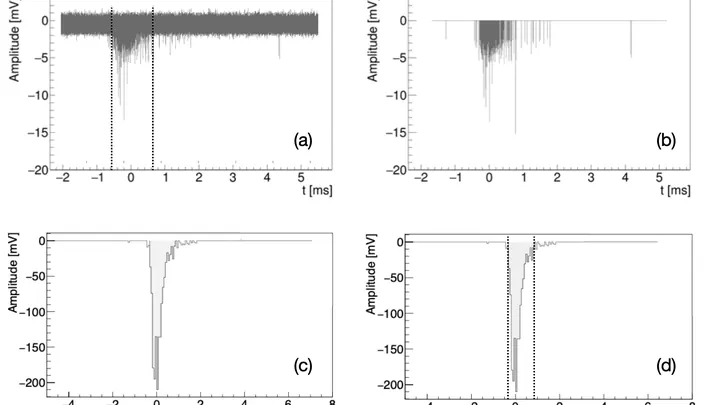
Deep in a cave beneath the Italian Apennines, a tank of gas sits in the dark. Inside, charged particles fly through, leaving faint flashes of light in their wake. These flashes are like the wake of a boat on dark water: they reveal where the particle went and how fast.
Quantum Physics2026-03-021 minarXiv:2603.01811express
Why can't large objects be in two places at once?
Schrödinger's cat, according to quantum rules, can be both alive and dead at once. But a table can't pull that off. When a massive object tries to be in two places, its mass curves spacetime so drastically that instead of two points, a single deep depression forms, and the object rolls into it.
Quantum Physics2026-02-261 minarXiv:2602.22715express
Can Gravity Repel? Quantum Superposition and Negative Weak Values
The familiar picture: gravity always attracts. But if a mass is in quantum superposition (that is, in two places at once, like an object in a double-exposure photograph) everything flips. Quantum theory allows a particle to be both here and there in a literal sense: its position is described by a wave function smeared across space.
Cosmology2026-01-271 minarXiv:2601.19662express
Dark Dancers: When Dark Matter and Dark Energy Dance Together
Galaxies are flying apart, but the expansion rate measured from the afterglow of the Big Bang and from supernova explosions doesn't match: this problem has been called the Hubble tension. It's like two dancers losing their rhythm because they can't feel each other.
Red Dots as Gravastars: A Birth Mechanism
The James Webb Space Telescope has spotted a scattering of compact objects in the early universe, nicknamed 'little red dots.' They are too red and too dim to be ordinary quasars, and astrophysicists are scratching their heads over what powers them.
Dark Energy: The Actor Changes Its Mask
The universe is putting on a show, and the lead role goes to dark energy. For a long time, the actor seemed unchanging: the cosmological constant (the vacuum energy that accelerates cosmic expansion) set the same tone throughout.
A Dark Dimension in the Tritium Spectrum: How KATRIN Searches for a Fifth Dimension
An electron flies out of a tritium nucleus with an energy of 18.57 keV, leaving behind an invisible partner: a neutrino. If that neutrino has access to a fifth dimension, its mass splits into a whole tower of states, and each one takes its own bite out of the spectrum.