Гравитация запутывает свет и вращающийся объект экспресс
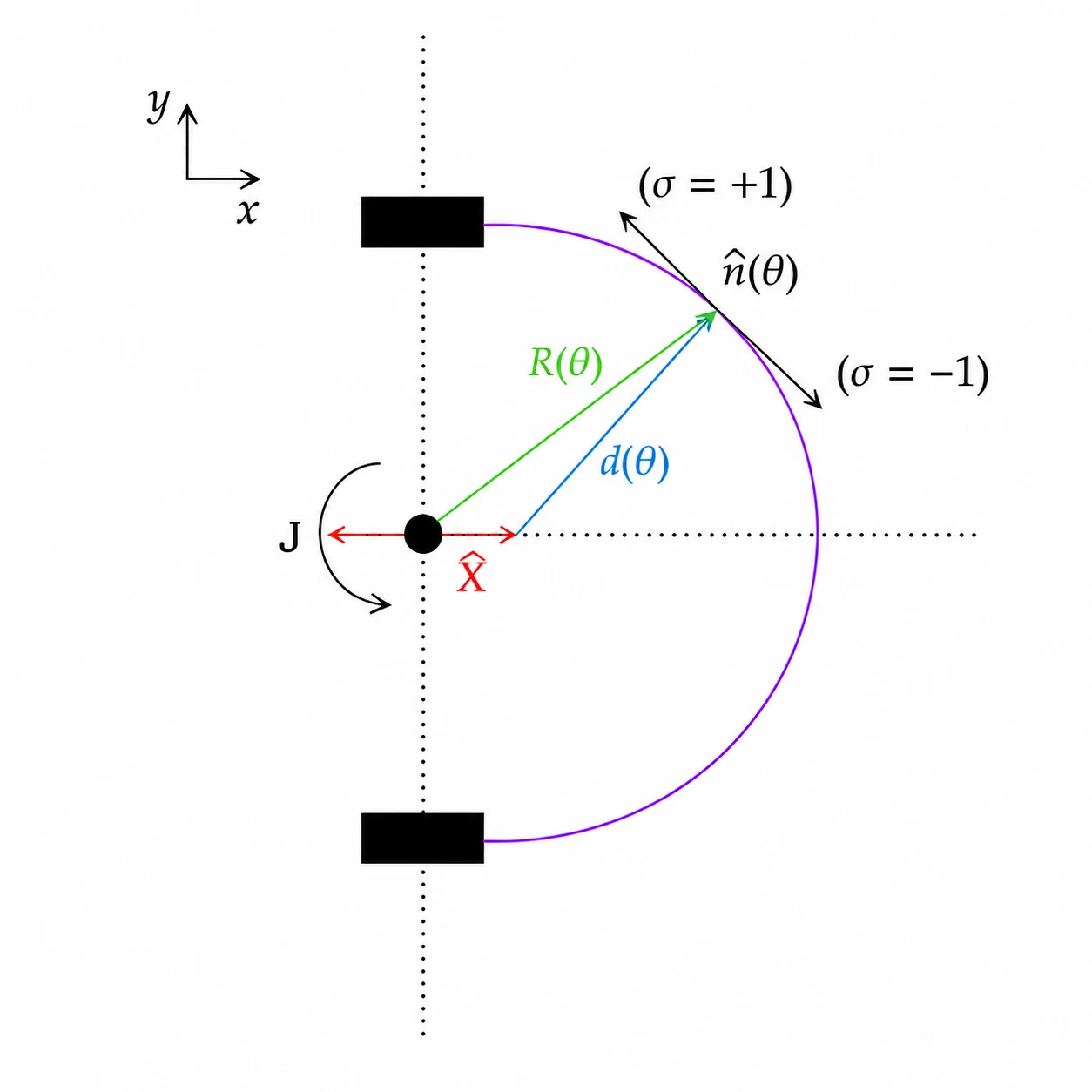
Пространство-время можно представить как туго натянутую ткань. Массивное тело продавливает её, направляя свет. Вращение же закручивает ткань спиралью. Такая гравитационная воронка способна запутать пролетающий фотон с самим источником вращения — например, крошечным зеркальцем. Возникает квантовая запутанность: невидимая нить, связывающая их судьбы. Даже слабейшая из сил гравитации надёжно сплетает частицу света с осязаемым предметом. Сила этой связи прямо зависит от направления вращения — по часовой стрелке или против.
Измерив энтропию — меру переплетённости — для обоих случаев, учёные смогут проверить догадки Эйнштейна и Уилера о квантовой природе искривлённого пространства-времени. Такие опыты покажут, действительно ли гравитация соткана из неуловимых квантов — гравитонов, порождающих гравитационные волны.
Оригинальная аннотация
как её написали авторы, на английском arXiv:2606.09991
One of the key tests of the quantum nature of gravity is to test whether the virtual mediator of gravity between matter and photon gives rise to the quantum light-bending phenomenon. The off-shell degrees of freedom, involving the spin-2 and spin-0 components of graviton, reproduce the classical deviation of light rays, as well as have been predicted to generate entanglement between matter and photon. This paper explores the generation of entanglement due to the quantum gravitational interaction in an optomechanical setup with a quantum rotor and photon. The virtual exchange of a graviton provides entanglement between the photon degrees of freedom and the spatial position of the quantum rotor, with the rotational state affecting its magnitude. We analyze the case of a high spinning rotor, in an approximately classical state of angular momentum, and quantify its effect on the gravitationally induced entanglement between the photon and the position of the quantum rotor. We show that the difference in the linear entanglement entropies, of prograde-and-retrograde motion of the photon with respect to the quantum rotor, provide tangible observable consequences.
Одиночный гравитон настолько слаб, что для его регистрации пришлось бы построить детектор размером с Юпитер.