How to See into the Monsoon 18 Months Ahead
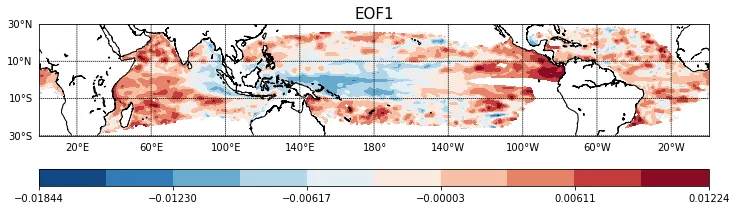
Every year from June to September, rains drench India. Farmers wait for them to plant rice, and if the monsoon is late or too strong, crops fail. Scientists have been trying to predict these rains for nearly a century and a half, but they still err more often than they would like. Over 1989–2012, official forecasts performed worse than simple guessing. It is as if a weather forecaster answered the question "Will it rain tomorrow?" at random.
New research shows that to predict rains, you should look not at the ocean surface but at depth. There, water slowly accumulates heat and memory of past events. Scientists took data on the depth of the 20-degree water in the tropics over many years and compared it with monsoon rainfall. It turned out that the state of this layer in December two years before the monsoon correlates with future rains at 0.86. That is a very strong correlation: 1 would mean a perfect match, and 0 would mean no connection at all.
But there is a catch. When scientists tested their method on data not used in tuning, the correlation dropped to 0.07. This means the signal exists but is nonlinear: it changes from year to year, and simple linear calculations cannot see it. Before this work, it was unclear whether the monsoon could be predicted 18 months in advance at all. Now it is clear that it can, but it requires more sophisticated methods that have yet to be developed. There is no practical benefit yet, but the study points the way forward.
A correlation of 0.86 at 18 months ahead is higher than most one-season forecasts. For comparison, the best dynamical systems achieve about 0.6 at 1–2 months.
The idea of peering years into the climate via slow ocean waves recalls Kim Stanley Robinson's Mars trilogy, where colonists use long-term climate cycles to plan terraforming.