The Mystery of Fragile Satellites: Dark Matter Under Tidal Assault
Dwarf galaxies orbiting the Milky Way look as if they’ve survived a gravitational storm. Their stellar bodies are stretched, scattered by tidal tails, and heated from within.
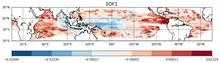
A coupled ocean-atmosphere mode in the tropical Indian Ocean with opposing sea surface temperature anomalies in east and west.The Indian Ocean Dipole (IOD) is a natural climate pattern in the tropical Indian Ocean, characterized by a difference in sea surface temperatures between its eastern and western basins. When the dipole is positive, the western Indian Ocean is warmer than usual while the eastern part is cooler; when negative, the pattern reverses. This temperature contrast drives changes in winds, clouds, and rainfall across the region, influencing weather far beyond the ocean itself.
The IOD was formally identified and named by Japanese meteorologist Saji N. Hameed and colleagues in 1999, who analyzed sea surface temperature data and recognized a distinct east-west oscillation independent of the El Niño-Southern Oscillation.
The IOD operates through a coupled interaction between the ocean and atmosphere. Normally, warm water pools in the eastern Indian Ocean, driving rising air and rainfall there. During a positive IOD event, weakened winds allow the warm water to shift westward, cooling the east and warming the west. This alters atmospheric circulation, suppressing rainfall over Indonesia and Australia while enhancing it over East Africa. The pattern typically emerges in late spring, peaks in autumn, and decays by winter, often lasting several months.
The IOD is used to forecast seasonal rainfall in countries bordering the Indian Ocean, such as Australia, India, and East African nations, helping agriculture, water management, and disaster preparedness.
The positive IOD event of 2019 was a major driver of the severe bushfires in Australia and droughts in Indonesia, while simultaneously causing floods in parts of East Africa.