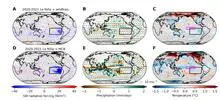
This mechanism matters because it explains why the climate impacts of El Niño are not confined to the Pacific but extend to the Indian Ocean and East Asia, with a time lag. It also helps scientists understand the persistence of certain climate anomalies, such as why some summers after El Niño are unusually dry in parts of China, even though the Pacific sea surface temperatures have returned to normal. The capacitor effect provides a physical pathway for that memory.
History
The term was coined by Shang-Ping Xie and colleagues in a 2009 paper that synthesized earlier observations and modeling studies, though the underlying idea of Indian Ocean warming following El Niño had been noted since the 1990s.
How it works
The process begins with El Niño's atmosphericteleconnection. The warming in the Pacific shifts the rising branch of the Walker circulation eastward, causing air to sink over the eastern Indian Ocean, which suppresses rainfall there. Reduced cloud cover leads to increased solar radiation at the ocean surface, warming the sea surface temperature. This warming is not instantaneous but builds up over several months, acting as the 'charging' of the capacitor. After El Niño decays, the Indian Ocean remains warm for a season or more because it takes time to cool. This persistent warm anomaly then drives an anomalous anticyclone over the western North Pacific, through a combination of local air–sea interactions and remote forcing via atmospheric Kelvin waves. That anticyclone steers moisture away from East Asia, reducing summer rainfall there.
In practice
The Indian Ocean Capacitor effect is used in seasonal climateforecasting for East Asia, helping meteorologists predict summer rainfall anomalies in China and neighboring countries based on observed Indian Ocean temperatures in the preceding spring.
Fun fact
The capacitor effect also influences the timing of the Indian monsoon, sometimes delaying its onset by a week or more after a strong El Niño, which can have significant agricultural impacts.
Enceladus is a tiny moon of Saturn, covered in a thick crust of ice. Beneath it sloshes a salty ocean, and deep down, a hot, porous core may be at work, like a sponge soaked with water and heat. But how do you see through tens of kilometers of ice? No need to drill: you can use an electromagnetic "echo."
A person with a metal detector walks along a beach.
Two observers watch the Pacific Ocean. One studies surface heat maps, the other listens to the rhythm of temperature and heat stored in the water column. On their own, each notices only part of the picture, but together they can sense the approach of El Niño months before the warm current alters weather across the planet.
Two pendulums hang on the same wall, swinging out of sync, but suddenly they move as one, only with an 18-month delay. One pendulum is the Indian monsoon, the seasonal wind that brings rain to South Asian farmland. The other is the deep water of the tropical oceans, which slowly accumulates heat and remembers it for years.
Imagine a radiator in a room: it heats up, but if its surface is clogged with dust, heat escapes less efficiently. Something similar is happening to our planet. Earth receives energy from the Sun and must radiate the excess back into space, otherwise temperatures rise. Scientists call this ability to shed excess heat radiative feedback.
The Sun constantly emits a stream of charged particles — the solar wind. Among them are many electrons, some of which fly back toward the Sun. But observations show that fewer electrons return than expected.
Old Chinese chronicles are full of weather entries: "no rain in the third month," "the river overflowed its banks." But these are words, not numbers. Until now, turning them into precise precipitation data was nearly impossible.
The new approach works like a translator from the language of chronicles to the language of climatology.
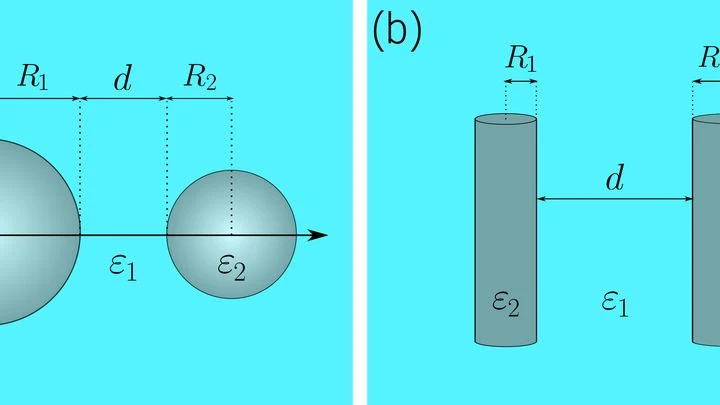
In a glass of salty water, even if it sits perfectly still, something is always happening. Tiny salt particles, ions, float and collide, sending ripples through the water. These ripples are invisible, but they create a force that attracts or repels nearby objects.
Previously, it was thought that this force only acts over very short distances, as if it quickly fades out.
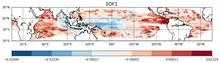
The tropical Pacific Ocean heats and cools like a giant battery, and its rhythm affects weather from India to Canada. This rhythm is called El Niño–Southern Oscillation, or ENSO for short. Forecasting it months ahead is like predicting when a pot will boil without knowing the strength of the flame.
The Pacific Ocean is like a giant swing: warm water piles up in the west, then slides toward the east, and the temperature off the coast of South America jumps. Such warm years are called El Niño, and cold ones La Niña. But the swing doesn't move on its own: it's pushed by the wind.
Imagine an interpreter in a negotiation room who hears the tropics whisper and repeats it too loudly. That is how the neural-network climate model DLESyM behaves when forced with real Pacific sea surface temperatures. The ocean whispers "El Niño," and the atmosphere shouts back as if being shaken by the shoulders.
Picture a pendulum hanging in a room with drafts. Sometimes a gust pushes it harder, sometimes softer. If the pendulum barely loses energy, it will swing long and steady. But if friction is strong, each push quickly fades, and the motion becomes jerky: a sharp swing, then a long sway. That's exactly how the tropical Pacific behaves when the heat of El Niño gives way to the cold of La Niña.
From July 2023 to July 2024, Earth's atmosphere gained carbon dioxide at a rate of 3.66 parts per million per year. That is the fastest pace since 1979. The reason is not that factories and cars suddenly started emitting more CO₂. The planet's lungs—forests and soils—took a shallower breath.
The planet breathes through its green cover.
An interpreter in a conference room hears not just words but intonations, pauses, and gestures. From these cues, they anticipate where the conversation will turn. The Pacific climate speaks the language of wind, heat, and currents, and PTSTnet listens like an experienced simultaneous interpreter, grasping the grammar of ocean and atmosphere.
Imagine a translator sitting in on a conversation between two parties: the ocean and the atmosphere. Usually, the translator conveys the meaning with a six-month delay, and in spring it loses the thread entirely. The new model, called CTEFNet, translates up to two years ahead and, on top of that, explains which remark turned the tide.
The Pacific Ocean behaves like a conductor setting the tempo for outages in the American power grid. When the ocean shifts into its cold phase, known as La Niña, lights start going out more often across the US. Researchers traced this connection over 24 years and confirmed that the ocean really does drive the weather, and the weather batters wires and transformers.
When the Pacific off the coast of Peru heats up, the planet's familiar weather map goes haywire: droughts in some places, floods in others. That's El Niño, and it costs the global economy trillions of dollars. Scientists have long been able to predict it, but now, for the first time, they are testing whether it can be weakened while it's still developing.
In the summer of 2022, the sky over western India seemed to have forgotten about drought: rains fell more often than usual, while eastern states languished in dryness. Such an imbalance puzzled forecasters, because ocean currents in the Pacific had promised a steady, abundant monsoon across the country.
Seventy-five years of weather observations in India, when plotted on a graph, resemble the cardiogram of a vast organism. Instead of a single steady pulse, there are fifteen different lines, each with its own rhythm. Somewhere the heartbeat is as steady as a sleeping person's, while elsewhere it falters, as if after a quick run.
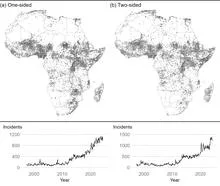
On an African field, maize has just been harvested. The grain sits in sacks, and for armed groups it's a lure: something to take from farmers. But if the harvest fails, the lure disappears, and attacks become fewer. That's exactly what happens when El Niño (the warm current in the Pacific Ocean that alters weather worldwide) brings drought to Africa's farming regions.
The Atacama Desert in northern Chile is the driest non-polar place on Earth. The sky is almost always clear, and the air is so devoid of moisture that even distant galaxies are visible without interference.
Picture an orchestra where each instrument plays at its own tempo: violins speed up, woodwinds slow down, and percussion keeps losing the beat. That's roughly what Earth's climate looks like, with the ocean, the Sun, volcanoes, and human activity pulling temperature in different directions.
A fisherman in Queensland notices that in some years snapper are harder to catch, even though the nets and boat are the same. The reason hides not in the catch itself but in the water temperature several months earlier, when the fry were just hatching. A warm current arrived not for the whole year but only for a few weeks, and that short episode decided the fate of an entire fish generation.
Every few years, warm Pacific waters rise to the surface off the coast of Peru, and the planet's weather goes off its usual schedule. This is El Niño, an irregular phenomenon that recurs every 3–7 years but still eludes precise forecasting.
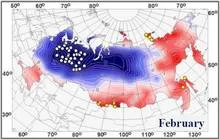
A conductor in a concert hall waves a single baton, yet violins and timpani respond differently. Likewise, the warm patch in the Pacific Ocean known as El Niño makes different corners of Russia experience completely different winters under the same phase. Somewhere snow melts in January, while elsewhere frosts intensify to the limit.
In the Pacific Ocean, every few years the water off the coast of Peru warms up, and fishermen call it El Niño. Sometimes the warming is mild, sometimes so strong that it changes weather across the entire planet. Forecasting a strong El Niño six months to a year ahead is a task at the edge of possibility: weather is forgotten within two weeks, while climate remembers for decades.
In 1884, British meteorologist Henry Blanford built the first model for forecasting the Indian monsoon. Nearly a century and a half later, seasonal forecast skill has barely improved.
Lake Toba is a giant scale pan pressed down by three weights: the whims of the Pacific Ocean, a warming atmosphere, and human needs. The pan is slowly sinking: from 1957 to 2016, the water level dropped by an average of 2.4 centimeters per year. That is little for a single season, but over six decades it adds up to nearly one and a half meters.
Every summer, the same scene unfolds over India: clouds driven from the ocean by the wind release their rain, and how that rain falls on the fields determines the harvest for more than a billion people. Meteorologists have long tried to reduce this mosaic to a single number, the all-India rainfall index, which averages millimeters across the country.
A gunner adjusts the eyepiece of a telescope: one more click, and the blurry blob becomes a crisp image. Climate scientists at the Institute of Atmospheric Physics, Chinese Academy of Sciences, made a similar adjustment to their model ICM.
In spring 2020, Earth's atmosphere seemed to hold its breath. Transport ground to a halt, factories fell silent, and carbon dioxide emissions from burning fuel dropped by nearly eight percent. But spotting this "carbon echo" on a global scale proved tricky: the atmosphere is constantly mixing, forests and oceans breathe, and weather adds its own noise.
In February 2017, Lima, a city of over ten million people, was hit by El Niño: the warm current off Peru's coast brought torrential rains, floods, and landslides. More than a hundred people died, thousands of homes were destroyed, and roads turned into rivers. The city's economy, like a living organism, fell out of rhythm: shoppers visited stores less often, and their spending patterns shifted almost overnight.
Over the Pacific Ocean, giant seesaws swing back and forth. Warm water pushes against the coasts of South America, and El Niño begins; a few years later, the ocean surface cools, and the seesaw tips the other way, into La Niña. These oscillations last for years and reshape cloud cover, rainfall, and wind across an entire continent.
Every June, the sky over India fills with moisture, and how much falls determines rice harvests, water reserves, and food prices for a billion people. But predicting the monsoon's strength in advance was like guessing someone's mood from a single photo: too many hidden springs.
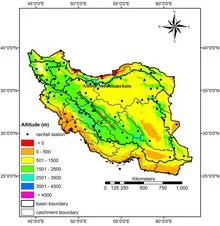
In 2019, northern and southwestern Iran received 50% more rainfall than usual, and rivers overflowed their banks. A year earlier, in 2018, rainfall was 53% below normal, and fields cracked under drought. Such swings are not random; they are responses to three distant oceanic pulses that set the rhythm for Iran's rains.
Winning the lottery changes the winner's life, but for the statistics of all players it means almost nothing: the probability of winning is negligible, and the average winnings per ticket remain tiny.
In the tropical Pacific, the ocean sometimes warms more than usual, sometimes cools. Fishermen off the coast of Peru noticed this centuries ago and named the warm phase El Niño, which means 'little boy,' because it arrived around Christmas. Today, these temperature swings affect weather across the planet: from droughts in Australia to downpours in California.
Imagine a map where each patch of ocean is colored with its own shade: in some places the color is saturated, meaning the future of the system is predetermined; in others it is pale, meaning the outcome depends on a random gust of wind.
Every morning in six American cities, from Chicago to Minneapolis, faucets open at the same time coffee makers switch on. Water and electricity flow through pipes and wires like two connected vessels in the city's body. In the past, utilities monitored these flows separately, as if the organism had no common circulatory system.
A wave travels westward, reflects off the coast, and returns six months later to alter temperatures along the eastern Pacific. This journey of Rossby and Kelvin waves Mori-Zwanzig formalism turns into an equation with memory. Previously, climatologists added delays to El Niño models by intuition, relying on physical insight.
The thermometer at a weather station in Delhi doesn't know it's part of a giant ear. Every day it records the temperature, and after forty years of such records, you can hear the breathing of an entire subcontinent. The India Meteorological Department divided the country's land into one-degree squares and took readings from 1970 to 2009.