Why a Warm Ocean Doesn't Always Mean More Hurricanes ✛
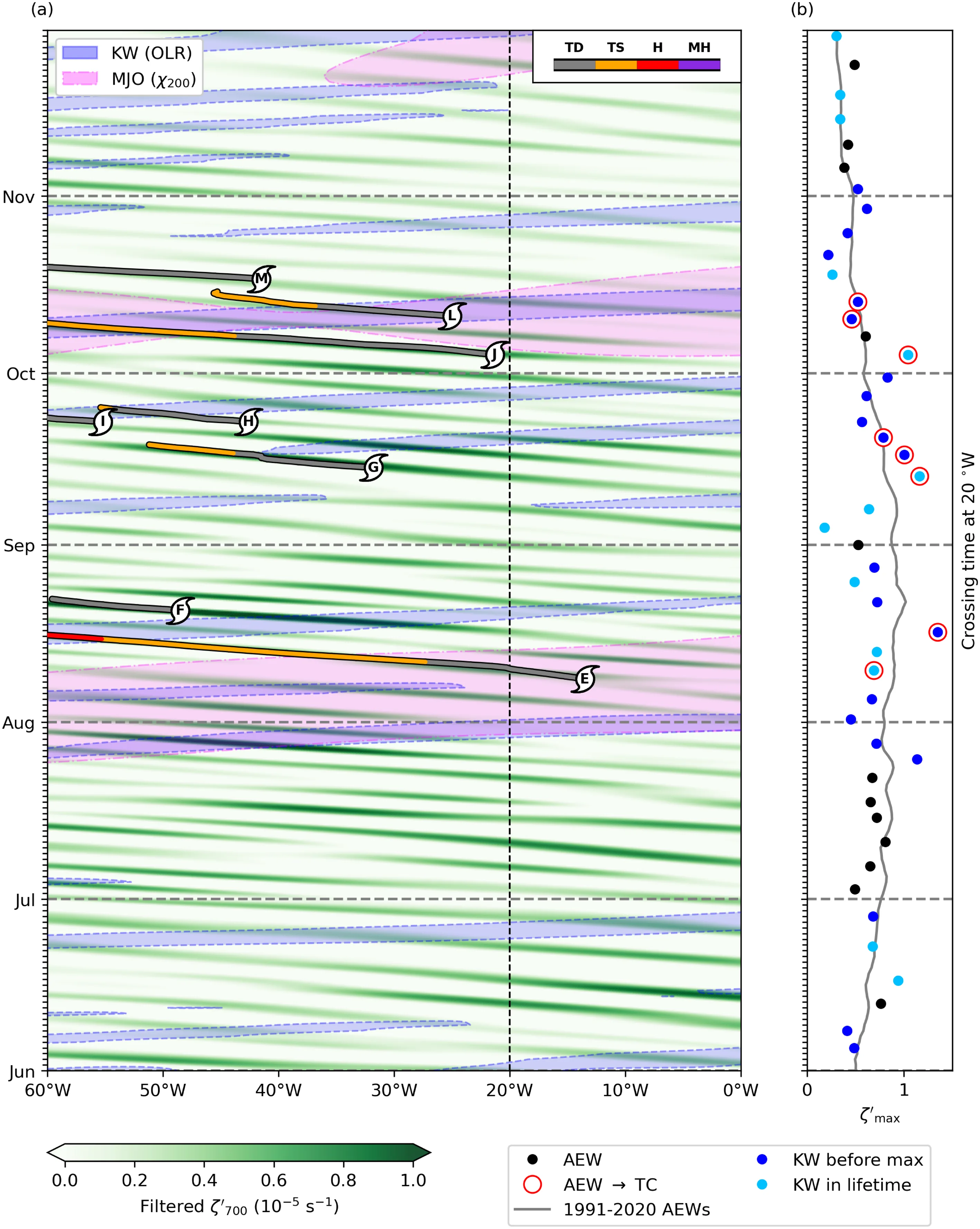
The orchestra was assembled, but the music barely played: that's one way to describe the 2025 Atlantic hurricane season. The ocean was very warm, ranking as the fifth warmest on record. Normally, that implies a busy hurricane season. Instead, we got rare but powerful bursts: three hurricanes reached Category 5, the strongest level, with eerie calm in between.
Why did this happen? Hurricanes need not only a warm ocean but also a 'conductor', special atmospheric waves that nudge developing vortices along. In 2025, these waves rarely arrived at the right time. Winds over Africa, which usually create the raw ingredients for hurricanes, were weak. And high in the sky, a cold vortex acted like scissors snipping off the tops of storms.
Previously, it was thought that a warm ocean almost guaranteed many hurricanes. Now it's clear that other, subtler factors matter too. The 2025 season showed that hurricanes may become fewer, but those that do form will be stronger. In Hurricane Melissa, a wind gust reached 405 kilometers per hour, a world record. Sometimes, an orchestra without a conductor produces the loudest notes.
In Hurricane Melissa, a dropsonde recorded a wind gust of 252 miles per hour (405 km/h), a new world record for a gust measured inside a tropical cyclone.