Ghost Mode in a Sphere: Mathematics Without Physics express
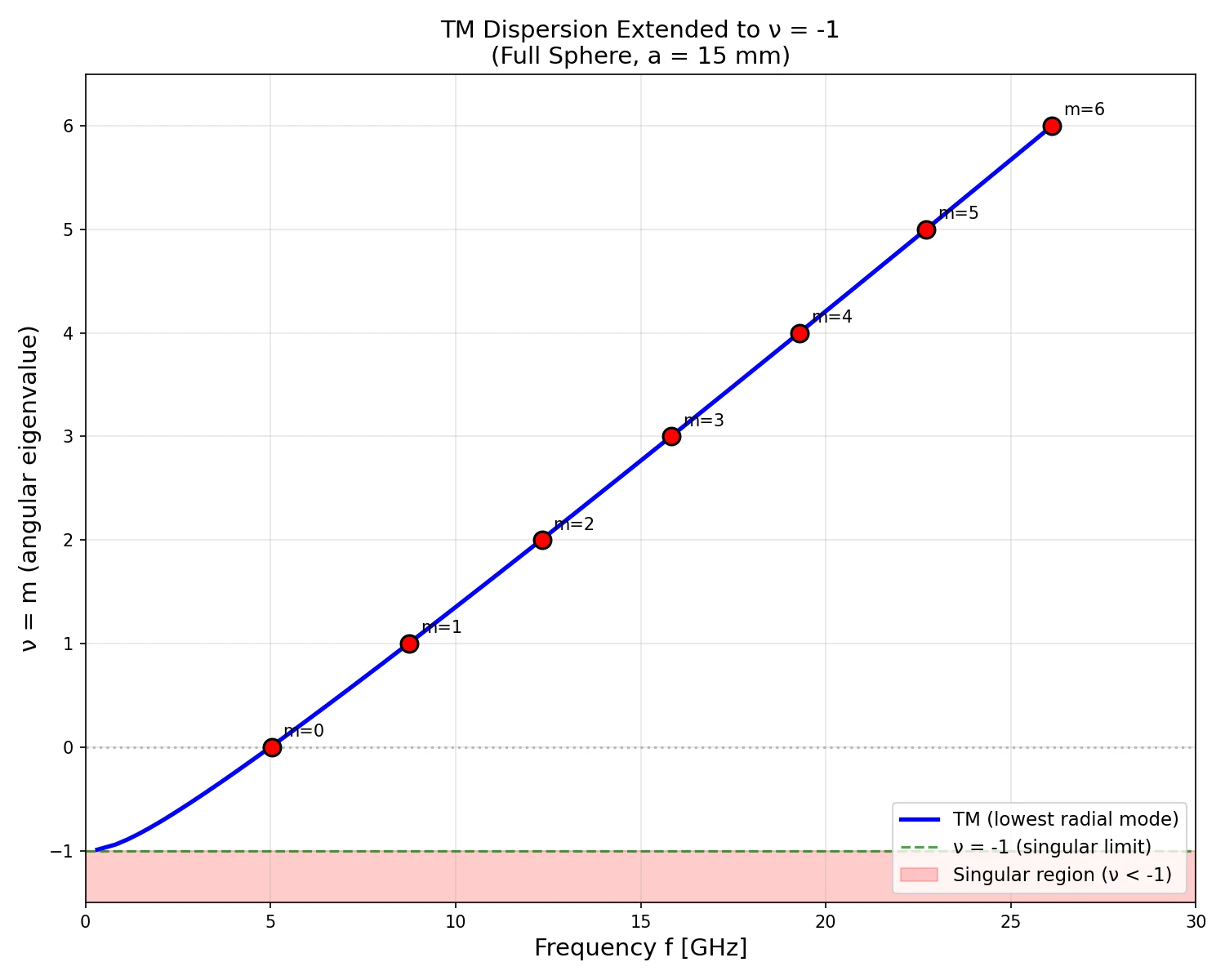
A metal sphere is a trap for light waves. Bouncing off the walls, they combine into frozen oscillations — like crests on a pond, frozen in time. For each such pattern (mode), Maxwell's equations prescribe a strict frequency. But if you extend the calculations to zero frequency, a glitch occurs: the fields disappear, yet the potential — something like a blueprint of the wave — remains. Physicists call this a ghost mode: it gives birth to neither light nor radio waves.
You can't ignore the phantom — it participates in the count of all possible waves inside the sphere. If you miss it, when heated, a miscount of entropy (a measure of thermal chaos) will yield a noticeable error in the radiation. It was precisely such discrepancies in the early 20th century that prevented classical physics from explaining the spectrum of a heated body — and forced Max Planck to introduce quanta, giving birth to quantum theory. Today, accurate accounting of all "almost-modes" saves us from errors when building resonators for quantum computers and spectroscopy instruments (analyzing light by its colors).
Counting electromagnetic modes in a cavity is the very problem that led to the birth of quantum physics, when classical theory failed to explain blackbody radiation.
A ghost potential without a field is like 'null-space' from science fiction: a void holding hidden energy.