Classical Physics physics.class-ph

20 articles

Newtonian and relativistic dynamics, electromagnetic forces, vibrating systems, classical waves including acoustics, classical thermodynamics.

articles

Optics2025-12-231 minarXiv:2512.20123express
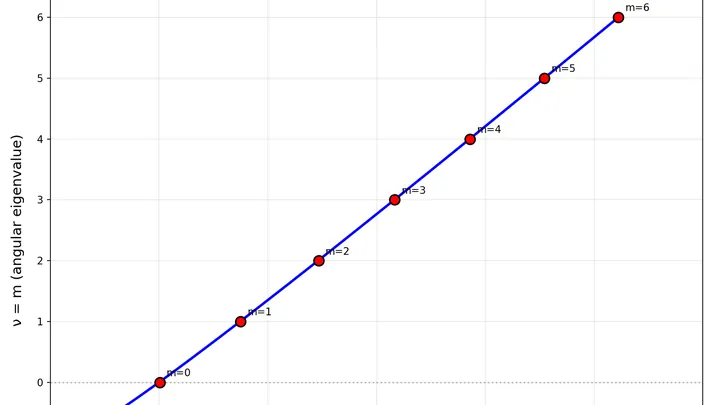
Ghost Mode in a Sphere: Mathematics Without Physics
A metal sphere is a trap for light waves. Bouncing off the walls, they combine into frozen oscillations — like crests on a pond, frozen in time. For each such pattern (mode), Maxwell's equations prescribe a strict frequency.
Threads in the Flow: How Noise Creates Order and Chaos
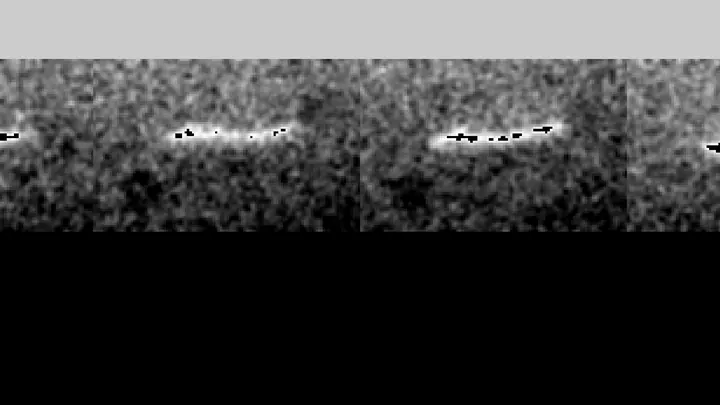
A thin thread in a water flow is like a hair in a shower stream. If you jerk the water back and forth, the hair either stretches out with the flow or crumples up. The researchers took real protein threads (actin, which makes up muscles) and placed them in a microscopic channel where the fluid oscillated at different frequencies.
Chemical Physics2026-01-031 minarXiv:2601.01135express
Ion Transistor in a Nanopore
In a narrow slit between two plates, ions don't behave like free particles but like a crowd in a packed bus: pressed tightly together, they form dense clusters. This very property, the ability of ions to bunch up in extremely confined spaces, underpins a new mechanism for controlling ion transport. Researchers studied ion behavior in two-dimensional nanochannels just a few atoms wide.
The Snapping Arch: How to Control the Click
Snap the bottom of a soda can: it will dent inward and stay that way. Press again: it pops outward. That's bistability: a system with two stable states, like a light switch. An elastic arch is the simplest example. It can curve upward or downward, and to flip it, you need to apply force.
Classical Physics2026-01-111 minarXiv:2601.06855express
Sound Passes Through a Wall
Sound in a thin plate behaves like ripples on water: it travels, reflects off edges, and changes shape. But sound has a peculiar trait: it can pass through places where waves are forbidden to exist. It's as if ripples on a pond suddenly vanished before a stone barrier and reappeared on the other side, without going around it.
Optics2026-01-171 minarXiv:2601.11857express
A Neuron Made of Light and Motion
A light pulse in an optical fiber is like a starter's pistol shot: short, sharp, and unmistakable against the silence. It is exactly such pulses that the new artificial neuron, built on a silicon chip, produces.
General Relativity2026-01-221 minarXiv:2601.16325express
Gravity and Charge: Physics' Blind Spot
Since the days of Galileo, it was believed that in a vacuum all bodies fall identically. Einstein elevated this to a principle: gravity travels at the speed of light and is the curvature of spacetime.
Classical Physics2026-01-231 minarXiv:2601.17098express
How Waves Tell Us About the World
A stone drops into a pond — ripples spread across the water. Do short waves outrun long ones? No, in deep water it's the opposite: long waves overtake short ones. In metal, sound of one pitch travels at one speed, another pitch at another.
Statistical Mech2026-03-071 minarXiv:2603.07128express
Water Works on a One-Degree Difference
An ordinary heat engine is like a mill between the hot and cold banks of a river: the greater the drop, the stronger the current. Here, the drop is tiny, just one or two degrees, but water can still turn the wheel. The secret is that water is made to boil not by heating but by a sudden drop in pressure, so steam bursts out even from barely warm liquid.
Classical Physics2026-03-131 minarXiv:2603.13448express
The Invisible Ocean That Holds the Atom
According to ordinary mechanics, an electron in an atom should spiral into the nucleus and crash into it, like a surfer losing speed and falling off the board. But atoms live for billions of years. Because space isn’t empty. Even in absolute vacuum, an invisible electromagnetic sea ripples — the zero-point field. Its waves continuously nudge the electron.
The Coin That Refuses to Stop
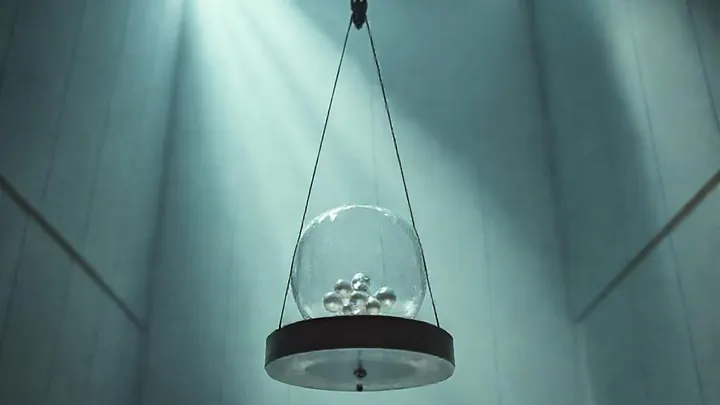
A coin spinning on a table is a familiar sight. At first it rotates quickly, then it tilts, and its rattling becomes faster and faster. In the last seconds it seems to hover: the rotation slows, but the coin just won't finally lie flat. This final moment is a real puzzle for physicists.
General Relativity2026-05-091 minarXiv:2605.08582express
Weighing the invisible: how light reveals the secrets of black holes
A black hole is invisible, but it's betrayed by light from superheated matter swirling nearby. That light is like a double agent: on one side of its orbit, it blueshifts as it races toward us; on the other, it redshifts as it recedes.
General Relativity2026-05-302 minarXiv:2606.00521express
A Thermometer on a Spaceship
Tea in a cup cools quietly on the table. But if you zoom past at near-light speed, the thermometer will read higher — even though no one heated the tea. Calculations confirm: the needle will creep up. A century ago, physicists split into three camps.
Applied Physics2026-06-072 minarXiv:2606.08524express
Acoustic Masking: Sound Substitutes Reality
If you clap your hands in an empty room, the echo will tell you about its size and shape. Every object (a chair, a book, a person) adds its own signature to this echo: sound reflects off it in a particular way. The authors of the paper have figured out how to completely rewrite this acoustic signature. They surrounded a region of space with a closed surface of microphones and loudspeakers.
How Planets Switch Stars: The Discovery of Stable Cyclers
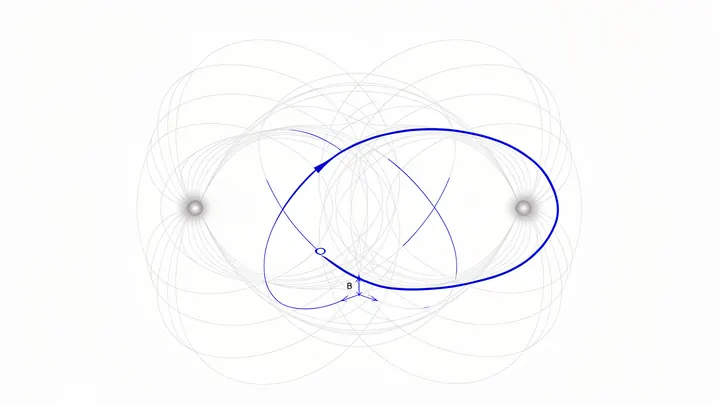
The three-body problem is the eternal stumbling block of celestial mechanics. Even Poincaré realized in the late 19th century that its chaos defies general analytical solutions. In this gravitational madness, islands of regularity appear only rarely — periodic orbits.
General Relativity2026-06-282 minarXiv:2607.00036express
Tubes Instead of Points: How Matter Sidesteps Einstein's Ban
An object cannot be a point. At least, not in Einstein's gravity. The equations of general relativity require that the source of the field, matter, be smeared out in space, not concentrated in an infinitesimal volume. Otherwise, infinities appear in the formulas, and a smooth spacetime cannot be constructed.
Classical Physics2026-07-232 minarXiv:2607.21322express
Vortices from Nothing
A stone falls into still water, and smooth rings spread across the surface. If the stone doesn't just fall but also spins, tiny whirlpools, vortices, appear on the surface. Light can do the same, only instead of water, it's space and time themselves.
Statistical Mech2026-08-042 minarXiv:2608.03180express
Why Heat Gets Stuck in a Crystal
In a crystal, heat travels on waves. Atoms vibrate, and these vibrations, called phonons, carry energy from the hot edge to the cold one. For a long time, it was believed that if phonons hit resonance (their frequencies exactly match) and can exchange energy, heat would flow like an avalanche. It turns out that's not the case.
Biological Physics2026-08-092 minarXiv:2608.08816express
The Boundary Sees All Better
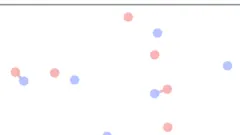
If a smell seeps into a room through a slightly open door, you could stand in the middle and sniff. But the most accurate way to catch the moment the smell arrives is to stand right at the threshold. A cell behaves much the same way when it needs to measure the concentration of a substance around it.
A Rod as a Probe: Where a Varying Field Produces the Strongest Signal
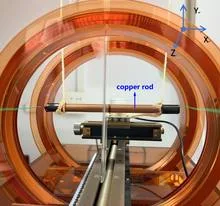
A thin copper rod, fifteen centimeters long, slides slowly across the invisible magnetic bubble created by a pair of coils. At the bubble's center, where the field is uniform and strong, the voltmeter needle sits at zero. Shift the rod toward the edge, and the needle comes to life, rises, peaks, and then falls smoothly.