A spin current is a flow of spin angular momentum that does not involve a net movement of electric charge. In ordinary electric currents, electrons move and carry both charge and spin, but in a pure spin current, electrons with opposite spins move in opposite directions, so the charge cancels out while the spin accumulates. This concept is central to spintronics, a field that aims to use the electron's spin for information processing and storage.
History
The concept of spin current emerged in the late 20th century with the development of spintronics, particularly after the discovery of the giant magnetoresistance effect in 1988. The spin Hall effect was predicted by Dyakonov and Perel in 1971 and later observed experimentally.
How it works
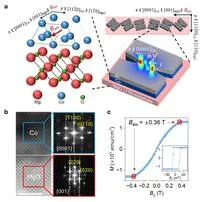
Spin currents can be generated by various means, such as the spin Hall effect, where an electric current in a material with strong spin-orbit coupling produces a transverse spin accumulation. They can also be created by heating a magnetic junction (spin Seebeck effect) or by optically injecting spin-polarized carriers. The spin current then propagates through a material, carrying information about the spin state without dissipating much energy as heat.
In practice
Spin currents are used in spintronic devices like magnetic tunnel junctions for non-volatile memory (MRAM) and in spin-logic circuits, potentially leading to faster and more energy-efficient electronics.
Fun fact
In a spin current, the electrons themselves do not travel far; instead, the spin information is transferred via a chain of spin flips, much like a wave passing through a stadium crowd.
A room of funhouse mirrors: you stand in the center, and the echo of your voice comes back from an unexpected direction, amplified and distorted. That is how spin waves in a thin magnetic film, excited by an antenna, reflect off defects and irregularities, creating a tangled pattern of fields.
Every oscillator carries its own compass, built into the crystal lattice. Until now, spin Hall nano-oscillators, tiny microwave sources driven by spin current, could not do without an external magnet: it was the magnet that set the common axis around which the magnetization oscillated.
A crowd at the entrance to a narrow corridor behaves differently than in a spacious hall: some people get pressed against the walls, others are pushed forward. Roughly the same happens when an elongated particle finds itself in a fluid teeming with self-propelled dumbbells. Until now, it was unclear why such a particle moves faster along its long axis than across it, and how the crowd density affects its speed.
In some crystals, electrons are not spread uniformly but arrange themselves into a strict checkerboard: one cell has more electrons, the neighboring cell has fewer. Such a pattern is called charge order, and for a long time it was considered something frozen, like a pattern on frosty glass.
Two caravans travel toward each other along a narrow road. One is wide and slow, carrying a load of density. The other, a string of light carts carrying current, slips between the first. Thus, in a magnetron discharge, two structures rotating in opposite directions coexist: the density spoke and the current filaments.
The crystal is like a city with different streets: on some, cars drive fast and far, on others, they crawl and get stuck. In the layered material CrPS₄, magnetic waves that carry spin (a particle's intrinsic angular momentum) behave the same way.
In an ultracold cloud of atoms cooled to near absolute zero, regions with different spin orientations emerge, like patches with different magnetization. The boundaries between them are called domain walls. Usually they are stationary, but in this experiment the walls started moving on their own.
Ordinary electric current heats up wires — anyone who has touched a phone charger knows that. But there's another kind of current: instead of electrons rushing in a crowd in one direction, they spin in sync, like figure skaters in a pairs routine. This coordinated rotation is called a spin current, and it produces almost no heat.
A thin sandwich made of two different materials. You run an electric current through it, and the top slice magnetizes in one direction, the bottom in the opposite. This isn't a magic trick; it's the layer Edelstein effect, just described by physicists.
When physicists drive electrons through an ultrapure gallium arsenide channel at helium temperatures, they expect to see a well-behaved, almost ideal fluid.
In some crystals, the magnetic moments of atoms oscillate in sync, like a wave in a stadium. It carries spin without charge current, without heating the material. This flow resembles an invisible river — silent and cold. Two-dimensional altermagnets are special materials: spin waves in them run differently along different axes.
Picture a pot of boiling soup, but every grain in it is not just a point but a tiny top spinning around its own axis. That's the world of spin-1 particles. For example, some short-lived mesons born in accelerator collisions.
A rubber band stretches and snaps back. A steel spring compresses and expands. Elasticity seems like a property of simple things — a piece of metal or a drop of gel. But the authors of this work looked deeper.
They showed that the electron's spin, its own tiny rotation, can also be elastic.
An electron flying through a gas is like a swimmer trying to cross a crowded pool. Each collision with an atom changes its course and speed. In dense argon gas, there are so many collisions that a simple description no longer works.
Physicists measured electron mobility — how easily electrons drift under an electric field.
In a thin layer of liquid crystal (a substance that flows like a liquid but has molecules arranged in order, as in a solid) vortices smaller than the thickness of a human hair are born. These vortices resemble tiny spinning tops: they can move without breaking apart and behave almost like real particles.
An electron in an ordinary wire is like a courier carrying both a package and the recipient's signature at once: its charge and spin are always together. But if the wire is made just one atom thick, the courier gets cramped. In such a one-dimensional tube, electrons cannot overtake each other, and their collective behavior changes beyond recognition.
In most magnetic materials, a domain wall, the boundary between regions with different magnetization, moves in one direction under current, set by the current's direction. But in ferrimagnets near a special point where the angular momenta of two sublattices cancel each other, the behavior changes.
Above the Sun's surface hang long ribbons of glowing gas — streamers. They look like giant harps stretched across the corona. When a wave runs along such a ribbon, it trembles and bends like a string after being plucked.
For a long time, it was thought that only a very fast ejection of material, one traveling at more than 500 kilometers per second, could launch such a wave.
Water in a stream doesn't flow in a uniform sheet; it carves winding paths where the current runs faster. Electrons in a Hall thruster, a device that pushes a spacecraft with a jet of plasma, behave much the same way.
Inside the thruster, a magnetic field confines electrons, which ionize the gas and produce thrust.
Neutrinos are tiny particles that zip through Earth, barely noticing it. In the MicroBooNE experiment, they are caught in a tank of liquid argon. When a neutrino strikes an argon nucleus, it produces an electron and protons, like splashes from a stone thrown into water.
The nucleus of deuterium, or the deuteron, can be pictured as a microscopic spinning top. If its charge distribution is not perfectly symmetric, then in an external electric field this top experiences a minuscule tilt of its spin axis.
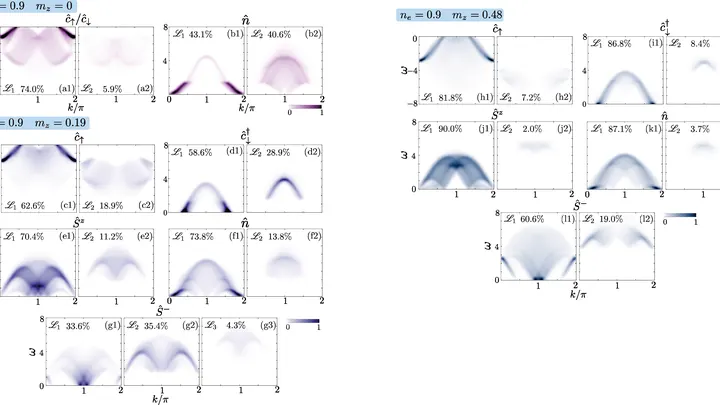
In an ordinary wire, heat drives electrons: that's the Seebeck effect, familiar from thermocouples. But in magnets, things are trickier: charge carriers also carry spin, their own little 'top.' In some materials, called altermagnets, electrons with different spins interact differently with the crystal lattice, so a…
Every electron is like a spinning top: it twirls around its own axis. This rotation is called spin. In conventional electronics, we don't use spin — only charge. But that's a missed opportunity: if we learn to control spin, chips could become faster and more efficient.
An ordinary wave in a magnet is like ripples on water: the shorter the wavelength, the higher the energy. Physicists call such waves magnons. But in a thin film of bismuth yttrium iron garnet, they managed to create waves with the opposite behavior: their energy decreases as the wavelength gets shorter. These are antimagnons.
A metal sphere is a trap for light waves. Bouncing off the walls, they combine into frozen oscillations — like crests on a pond, frozen in time. For each such pattern (mode), Maxwell's equations prescribe a strict frequency.
Quantum computers demand reliable memory. In a diamond crystal — carbon — information is stored as the orientation of microscopic magnetic needles (spins) at special defects. Reading these arrows with light was inconvenient: optics are bulky for chips. The new method works like developing photographic film.
At 78 K, a crystal of Mn₃Si₂Te₆ turns into an inductor that needs neither copper wire nor a superconductor. The electrons inside it spontaneously organize into closed vortices with a definite sense of rotation: chiral orbital currents.