Light Computes in Four Dimensions express
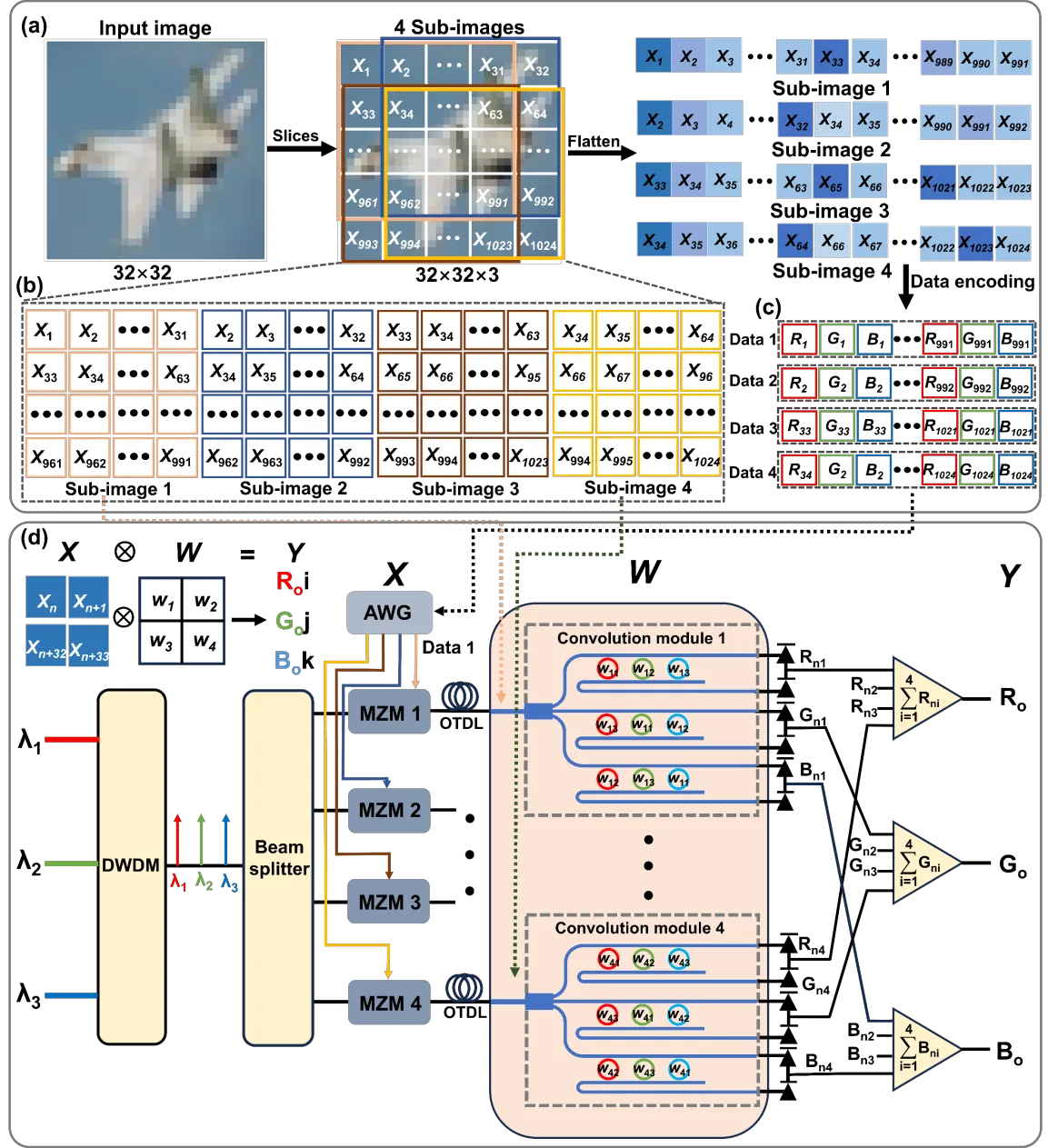
A conventional computer sees the world flat: numbers are just points on a line. But a color image or a 3D scene demands more — four numbers that describe both position and rotation. Such quadruples are called quaternions, and until now electronics handled them clumsily, breaking them apart and reassembling them.
The new chip changes the approach. Instead of electrical signals, it sends beams of different colors through waveguides. Each color is a separate channel, and all four quaternion components travel in parallel, like four lanes on a highway. Light doesn't interfere with itself, so the chip processes a volumetric image or an object's rotation in a single pass.
Tests on real tasks showed the difference. A 3D point cloud, a set of coordinates from a lidar or 3D scanner, was processed with an error of less than three and a half hundredths. A color photo was recognized more accurately than by a conventional computer, while using two-thirds less computational effort. Light turned out to be not only faster but also more precise.
This isn't just a lab trick. Cameras, drones, and augmented reality glasses translate the 3D world into digital data every day. A chip that does this in light without extra steps brings technology closer to natural vision — fast, volumetric, and colorful.
Quaternions are used in spacecraft control systems to avoid 'gimbal lock'—the loss of one rotational axis at certain angles.