A magnet's surface as a switch express
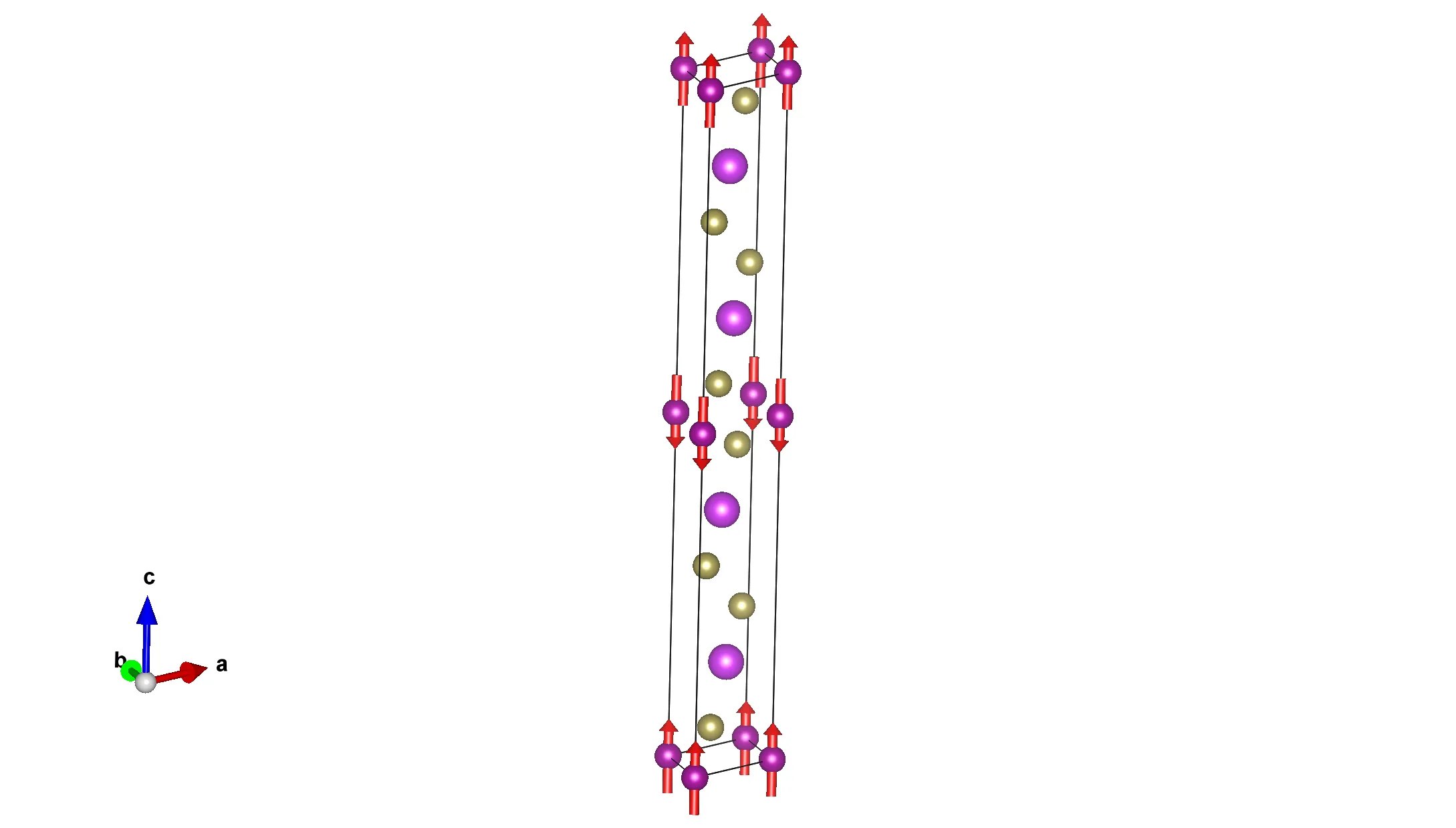
A compass needle always points north because inside the material, all the atomic magnets are aligned in one direction. But there are materials where neighboring atoms face opposite ways, like rows of soldiers turned to face each other. Such materials are called antiferromagnets. They are hard to switch: an ordinary magnetic field can't flip all the 'soldiers' at once, since half of them are already facing the right way and the other half are facing the wrong way.
Researchers studied what happens on the surface of an antiferromagnet. It turns out that at the very edge, atoms behave differently: their bonds with neighbors are weaker, and they respond more easily to an external field. If the top and bottom surfaces of the material are structured differently, then as the field is slowly changed, you can make the 'soldiers' on the surface turn the right way, and then that change propagates into the bulk. In this way, domains, regions with the same magnetization direction, switch without any extra devices.
This mechanism explains the puzzling behavior of the van der Waals antiferromagnet MnBi2Te4, where hysteresis was observed — the response depends on which way the field was changed. Now it's clear that surface atoms play the key role. This means antiferromagnets can be controlled much more simply than previously thought, just with a magnetic field, without complex electrical circuits. This opens the door to new devices for storing and processing information.
Antiferromagnets don't produce an external magnetic field, so their domains don't interfere with each other: you can pack them very densely, like books on a shelf, and make memory of ultra-high capacity.