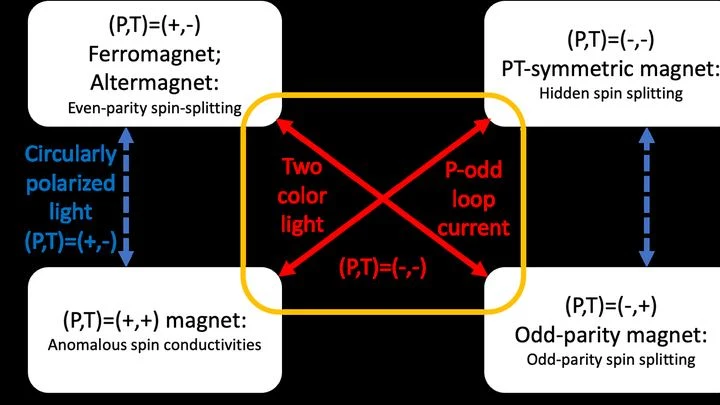
A d-wave altermagnet is a type of altermagnet, a recently identified class of magnetic materials that combine properties of ferromagnets and antiferromagnets. In an altermagnet, the spin-splitting of electronic energy bands—where electrons with opposite spins have different energies—follows a specific symmetry in momentum space. For a d-wave altermagnet, this splitting has a d-wave pattern, meaning it changes sign with a fourfold rotational symmetry, similar to the d-wave pairing in high-temperature superconductors. This is distinct from conventional antiferromagnets, where spin-up and spin-down bands are degenerate (no splitting), and from ferromagnets, where the splitting is uniform in all directions.
History
Altermagnetism was theoretically proposed in 2022 by Libor Šmejkal and collaborators, who identified it as a distinct magnetic phase, with the d-wave variant being one of the first examples studied.
How it works
In a d-wave altermagnet, the crystal lattice has a specific arrangement of magnetic moments that breaks time-reversal symmetry but preserves a combined symmetry of rotation and time reversal. This leads to a spin-dependent electronic structure where the energy shift for spin-up electrons is opposite for spin-down electrons, but the magnitude and sign vary with the direction of the electron's momentum. The d-wave pattern means that along certain crystallographic directions, the splitting is zero, while along others it is maximal, creating a unique anisotropic spin texture. This arises from the interplay between the magnetic order and the crystal field, which is not possible in simple antiferromagnets.
In practice
D-wave altermagnets are promising for spintronics, where their spin-splitting could enable efficient spin-current generation and manipulation without the stray fields of ferromagnets, potentially leading to faster and more energy-efficient memory devices.
Fun fact
The d-wave altermagnet's spin-splitting pattern is mathematically analogous to the d-wave order parameter in high-temperature superconductors, but here it applies to magnetic rather than superconducting properties.
In a large hall, two tuning forks stand on rotating stands. Each is tuned to its own note, but if the stands are turned to the right angle, the forks begin to sound in unison, exchanging vibrations through the air.
Two caravans travel toward each other along a narrow road. One is wide and slow, carrying a load of density. The other, a string of light carts carrying current, slips between the first. Thus, in a magnetron discharge, two structures rotating in opposite directions coexist: the density spoke and the current filaments.
A magnetic field usually acts like a strict traffic cop: for heat to turn into electricity, it must stand across the road. If the field lies along the heat flow, the effect disappears, or so it was believed for decades.
Scientists took an ultra-thin film of a magnetic oxide — a material where electron spins are aligned in a plane, like compass needles on a table.
A highway where opposing flows are separated not just onto different sides, but onto two independent roads: each with its own entrance and exit. Something similar happens to electrons in a new type of topological insulator described by the authors of the study.
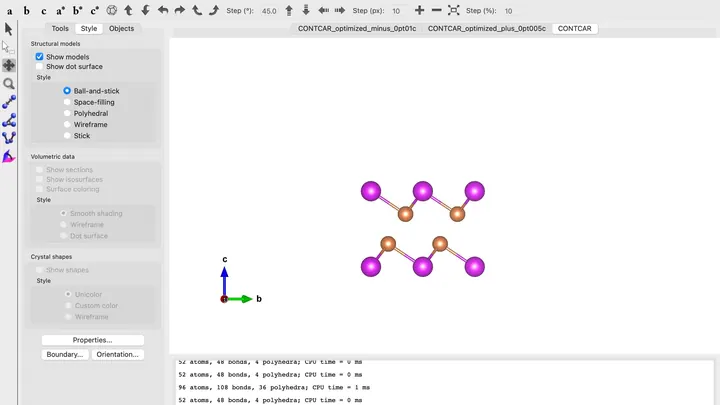
A sheet of paper with magnetic properties: that's roughly what the new material 1T-CrS₂ is like. Its layers are held together by weak forces, like the pages of a notebook, but each layer is a true magnet.
In superconductors, electrons pair up and flow without resistance. Usually, these pairs are distributed uniformly, like water in a calm lake. But sometimes ripples appear in the material — pairs bunch up and thin out with a certain period. This state is called superconductivity with pair-density waves.
In 2022, physicists described a new type of magnetism — alternagnetism. In it, electrons with different spin directions are split in energy depending on their direction of motion, like runners who speed up on one track and slow down on another. But spin is not the only degree of freedom particles have.
A parquet floor where every other plank is turned the opposite way looks symmetric. But if you run your hand over it, in one direction your fingers glide along the grain, and in the other they catch. That's roughly how the new type of magnetism studied in the crystal AgCrP2S6 works.
The book is open to the middle. Current runs along the spine, while the pages remain cool. That's roughly how a two-dimensional topological insulator works — a material where electricity flows only along the edges, while the interior stays still.
An inflatable balloon with magnetic field lines drawn on it with a marker is a simple model of how a weak magnetic field behaves in an expanding universe. While the balloon is small, the lines lie obediently on the rubber and don't hinder its stretching. That's roughly how a field fills ready-made space without arguing with its geometry.
A guitar string keeps vibrating even after the musician lets it go, and that vibration changes the sound the listener hears. Magnetic moments in a crystal behave much the same way: they align into a strict antiferromagnetic order (neighbors point in opposite directions), but they never completely freeze.
In the grand symphony of magnetism, a duo long reigned: boisterous ferromagnetism and silent antiferromagnetism, where spin-soloists cancel each other out. But recently, a third voice joined the ensemble — altermagnetism.
In a crystal that for centuries was called 'fool's gold,' physicists have spotted genuine treasure. The compound MnTe2 with a pyrite structure has become the stage for a quantum ballet: spin waves here twist into left- and right-handed vortices, with the twist direction firmly tied to momentum.
In the world of magnetism, a simple dichotomy long reigned: ferromagnets, where spins point in one direction, and antiferromagnets, where they line up in a checkerboard pattern, canceling each other out. But a recent 'third player' — altermagnets — forced a rewrite of the rules.
Imagine a skyscraper assembled not from individual bricks but from entire studio apartments. That's exactly how the Au₆Te₁₂Se₈ crystal is built: its nodes are not atoms but superatomic clusters of gold and chalcogens that behave as single quantum objects.
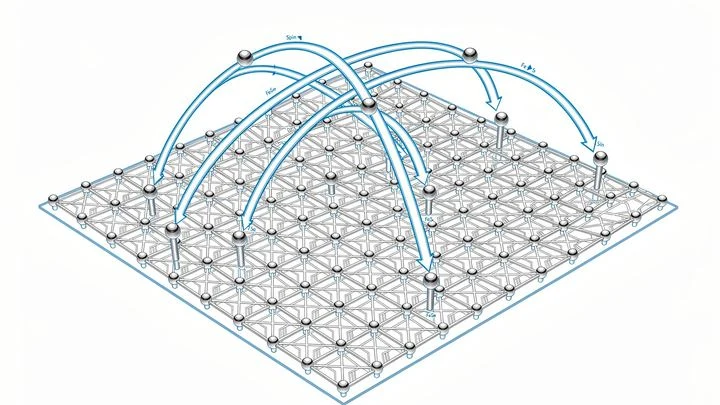
In some crystals, the magnetic moments of atoms oscillate in sync, like a wave in a stadium. It carries spin without charge current, without heating the material. This flow resembles an invisible river — silent and cold. Two-dimensional altermagnets are special materials: spin waves in them run differently along different axes.
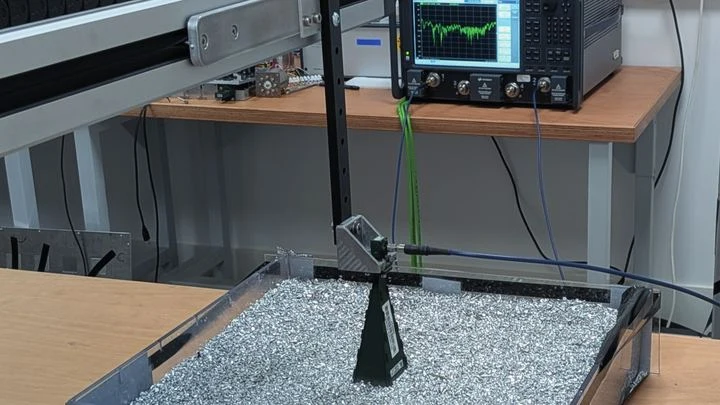
Physicists have achieved three-dimensional Anderson localization of electromagnetic waves — a phenomenon where waves become permanently entangled in a random labyrinth of metal particles and cease to propagate.
A long, narrow pan, and a thin pancake sets in uneven stripes. For decades, scientists saw a similar picture when modeling the behavior of electrons in superconductors — materials that conduct electricity without loss. They used elongated "cylinders," and the result was always the same: rigid magnetic "stripes" that were thought to hinder superconductivity.
Two teams pull a rope with equal force in opposite directions — the rope doesn't move, and the net force is zero. That's how many antiferromagnets behave: the magnetic moments of atoms are aligned oppositely and cancel each other out.
Two magnets on a table either attract or repel — depending on how their poles are oriented. Inside each piece hide tiny regions where all the magnetic arrows point in the same direction. These regions are called domains, and their arrangement determines how the material behaves in an electrical circuit.
In altermagnets, a new class of materials, domains are trickier.
A translator works in two worlds at once: to an outside observer, they are silent and unobtrusive, but inside their mind, a flurry of activity unfolds along clear lines of meaning. Altermagnets, a recently discovered class of magnetic materials, are much the same.
In a piece of ordinary magnet, all electron spins, tiny magnetic arrows, point in the same direction. It's a formation of soldiers facing their commander. This order is called a collinear altermagnet.
Imagine a line of people holding hands but facing in opposite directions: some look north, others south. That's how a p-wave magnet is arranged. Electrons in it align their magnetic moments (spins) not randomly but in a strict wave-like pattern.
In an ordinary crystal, atoms stand in neat rows like soldiers on a parade ground. Any deviation from this formation is usually considered harmful: disorder scatters waves and quickly dampens collective motions of particles.
A stack of magnetic plates, each magnetized opposite to its neighbor, is like a layered sandwich where electrons move as a single organism. The whole material starts mimicking an axion — a ghost particle that physicists suspect might be dark matter.
In the crystal Rb1-xV2Te2O, the spins of vanadium atoms arrange in a checkerboard pattern: each spin is surrounded by opposite spins. This pattern is called G-type antiferromagnetism. Neutrons passing through the sample scatter off this pattern and reveal its geometry, like light from a flashlight shining through blinds casting stripes on a wall.
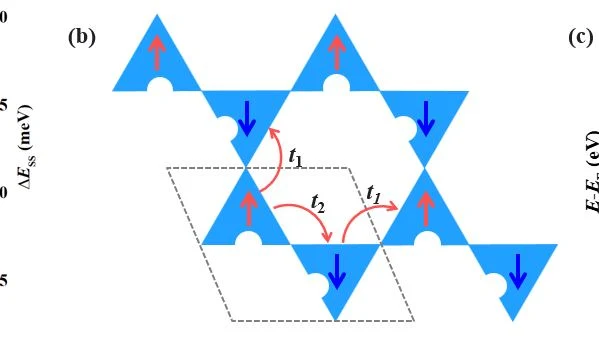
Honeycombs are built from identical cells, but tweak the shape of just one, and the whole structure gains new properties. Researchers did something similar to create a magnet without a single metal atom. They took flat carbon molecules shaped like triangles, triangulenes, and arranged them in a hexagonal lattice, just as bees build honeycombs.
Among magnets, there are quiet masters of disguise. An ordinary magnet attracts paperclips and has two poles — north and south. But there are materials that are internally arranged like a magnetic chessboard: their atoms are aligned in a strict order, yet externally the material behaves neutrally, as if no magnet exists at all. Such substances are called altermagnets.
The dance floor is packed with people, each moving on their own. Suddenly, some of them break into pairs (spinning around, barely noticing their neighbors) while the rest line up in chains. That's roughly how atoms behave in the metal CsCr₃Sb₅, a member of the kagome metals, whose crystal lattice resembles a woven basket.
A regular fridge magnet attracts iron because all its tiny magnetic arrows point in the same direction. But there are materials where the arrows arrange themselves more cunningly: neighboring rows point in opposite directions, so from the outside it looks like there's no magnetism at all. Such materials are called altermagnets.
A crystal without inversion symmetry is like a room where one wall is mirrored and the other is frosted: the reflection doesn't match the original. Such materials often behave unusually because electrons feel the lattice distortion.
Ruthenium oxide has long been regarded as a textbook altermagnet — a material where magnetic moments of neighboring atoms point in opposite directions but do not fully cancel due to the crystal's special symmetry. New measurements show that inside the crystal, there is no magnetism at all. All the magnetic action is confined to the surface.
In a thin magnetic film, like in an overcrowded hall, each 'person' is a spin arrow that wants to align with its neighbors. But in the corners of the hall, jams occur — vortices where the arrows twist and cannot straighten out. These vortices live in pairs: one spins left, the other right, and together they prevent the hall from fully settling down.
A compass needle turns slowly, but inside some materials, tiny magnetic moments can flip over timescales that are hard to imagine. A team of physicists has calculated how to make them change direction in a quadrillionth of a second — faster than a lightbulb blinks.
A thin film of soap on your hand conforms to the shape of your palm, but clench your fingers and the tension changes unevenly. A monolayer of molybdenum disulfide on a graphite substrate behaves in a similar way.
Two sets of swings, rocking in opposite directions, don’t tilt the platform. Yet their motion creates invisible vortices that push a ball sideways. Alternagnets behave just like that: the atomic magnetic arrows are perfectly balanced, but a hidden symmetry bends the heat flow.
A rug lies flat, but if you push it from the edge, wrinkles run across it. In a thin film of tantalum sulfide (1T-TaS2), wrinkles made of electrons, charge waves, freeze as if the rug were stuck to the floor. To move them, you need to apply force. Scientists have found a way to control this force using an electric field and a magnet.
A crystal is like a city where houses stand in neat rows. But if you slightly stretch the ground beneath the city, the houses may tilt, and the tilt can ripple as a wave from block to block. In SrTiO3 and SrMnO3 crystals, scientists have found exactly such a hidden mode: a soft wave of tilting oxygen octahedra that had gone unnoticed before.
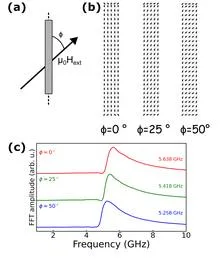
Magnetic moments in a crystal are like compass needles fixed at lattice sites. In the normal state, they line up in neat order, but if an electromagnetic wave strikes the crystal, the needles start to sway, like wheat stalks in the wind. These oscillations are called magnons, and they carry energy without the atoms themselves moving.