Quantum Computing with Sound Waves express
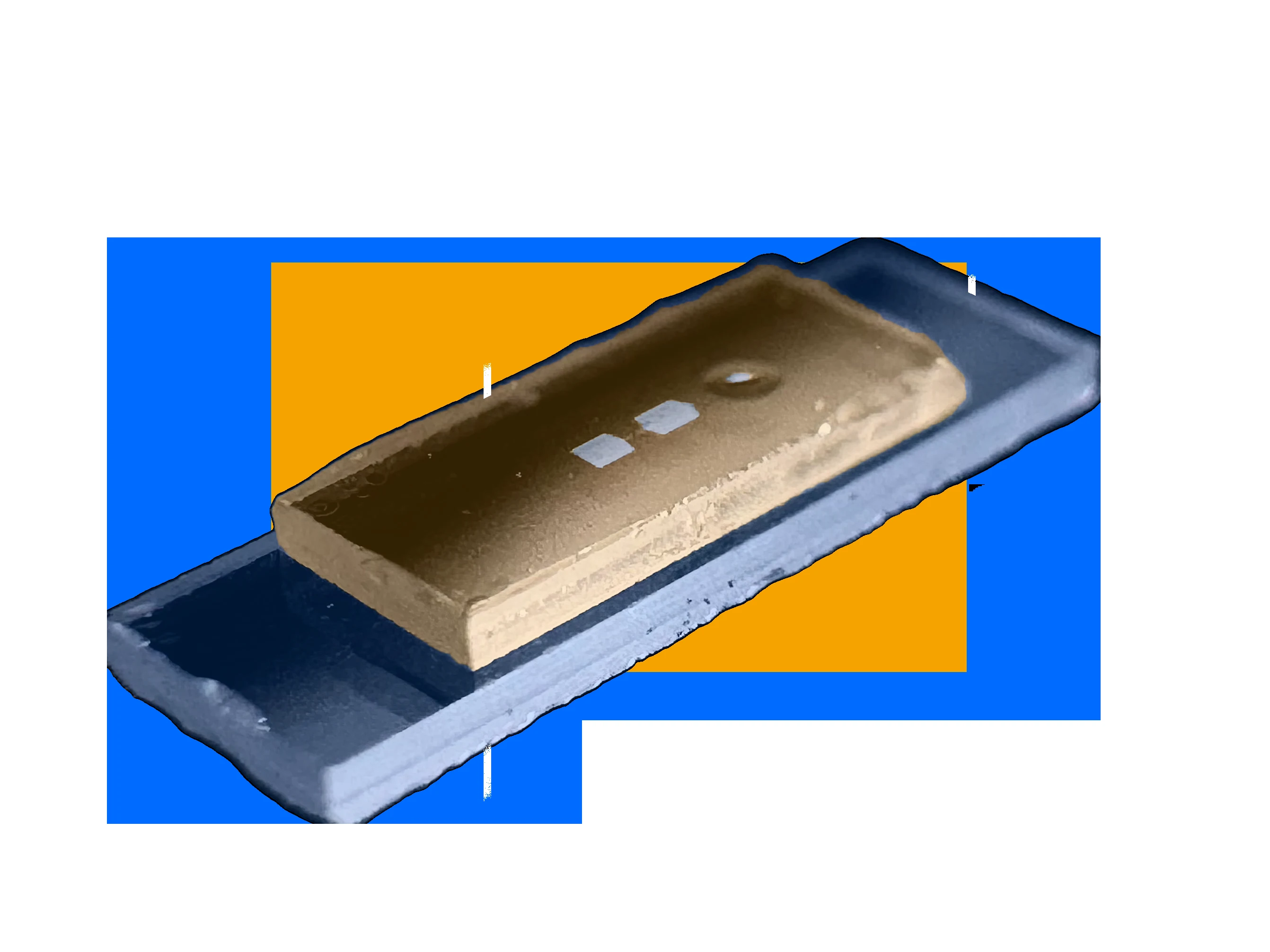
Inside a tiny crystal, sound is trapped like light in a mirrored room. It bounces off the walls and forms standing waves — a multitude of harmonic oscillations, each with its own frequency. Physicists have learned to use these oscillations as qubits — the basic units of quantum information.
The key element is a superconducting qubit that acts as the conductor of an orchestra of acoustic modes. It controls their states by performing single-qubit gates and controlled-phase gates. Such a set is universal: any quantum algorithm can be assembled from it. The experiment confirmed this by running the quantum Fourier transform and a period-finding algorithm.
The result is an important step toward quantum technologies where sound waves serve as memory and computational elements. Such hybrid systems combine the strengths of different platforms: fast superconducting circuits and long-lived mechanical modes.
Mechanical resonators can store quantum information longer than superconducting qubits, thanks to the high coherence of acoustic oscillations.
The idea of using sound waves for computation echoes the science-fiction concept of acoustic computers that process information through vibrations of a crystal lattice.